

In July 2020, amidst the peak of the COVID-19 pandemic, the US administration under President Donald Trump's first term announced a public-private partnership project to build a quantum internet.
Unlike conventional internet, which slows down as the volume of data increases, the quantum internet maintains its speed regardless of the amount of information. This is due to the unique properties of quantum computers, which can simultaneously store both '0' and '1', unlike traditional computers that can only distinguish between these two values.
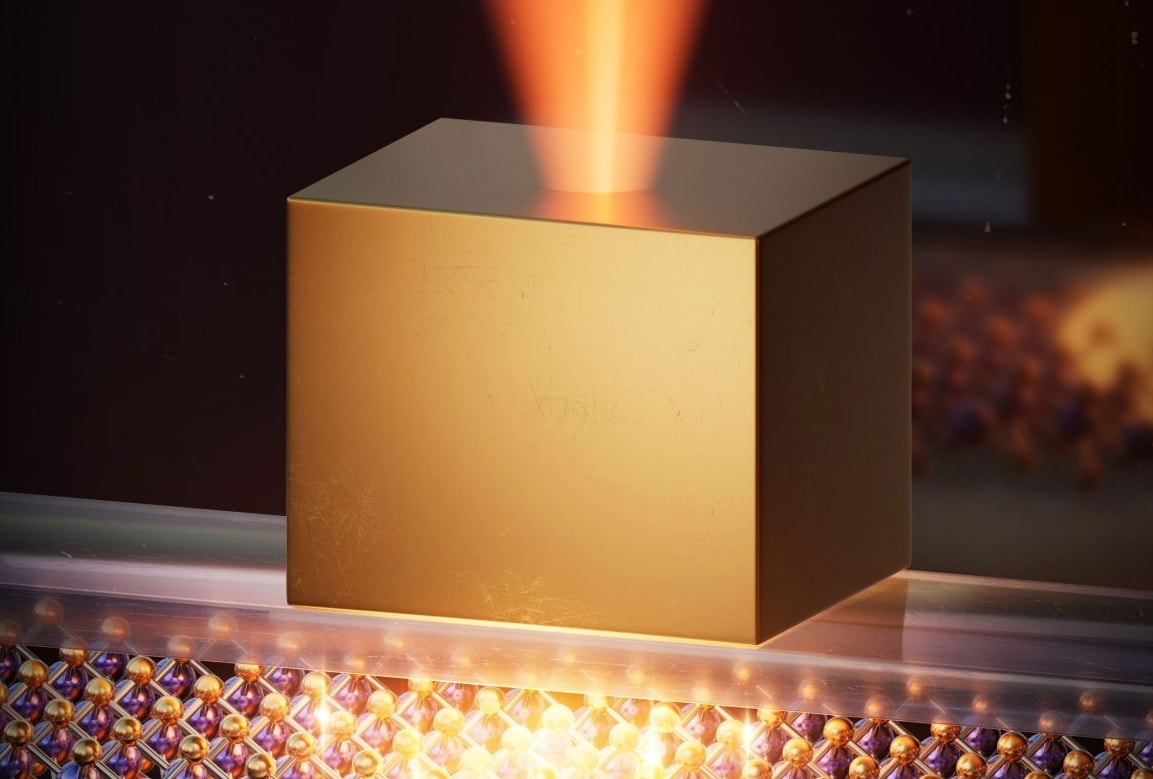
This initiative was led by Paul Dabbar, then Deputy Secretary of Energy. Despite debates about its commercial viability and the then-dominant focus on healthcare , Dabbar remained steadfast, stating that the quantum internet was "one of the most important technologies of the 21st century." During his tenure, he increased the Department of Energy's quantum research budget fivefold.
After President Joe Biden's administration took office, Dabbar left his government job and founded Bore Quantum Technologies, a quantum computing company. Following Trump's re-election, he was appointed Deputy Secretary of Commerce, leading efforts to support the quantum industry.
Meanwhile, at the 4th Plenary Session of the 19th Central Committee of the Communist Party of China, held from October 20 to 23, China identified quantum computing, sixth-generation (6G) communications, fusion energy, and hydrogen as key industries to drive the national economy from 2026 to 2030.
On November 13, the South China Morning Post reported that China's CHIPX quantum research lab and Turing Quantum had developed a quantum semiconductor that is 1,000 times faster than Nvidia's GPUs. The day before, IBM in the United States announced that it had developed a quantum computing chip called "Loon," which it believes could be commercialized within four years.
Besides the two leading global powers in both economics and new technologies mentioned above, many other countries and technology companies are also making significant bets on quantum computing.
The 2025 Nobel Prize in Physics was also awarded for groundbreaking discoveries concerning quantum mechanical tunneling effects and energy quantization in electrical circuits, which the organizers said “opened up opportunities for the development of the next generation of quantum technologies, including quantum cryptography, quantum computers, and quantum sensors.”
Source: https://congluan.vn/my-va-trung-quoc-chay-dua-phat-trien-internet-va-may-tinh-luong-tu-10318331.html
![[Photo] General Secretary and President To Lam presides over a meeting with the Central Organizing Committee.](https://vphoto.vietnam.vn/thumb/1200x675/vietnam/resource/IMAGE/2026/06/03/1780482764658_a1-bnd-4741-3342-jpg.webp)


![[Photo] First session of the 14th Congress of the Vietnam Trade Union](https://vphoto.vietnam.vn/thumb/1200x675/vietnam/resource/IMAGE/2026/06/03/1780465947883_ndo_br_img-3852-jpg.webp)
![[Photo] Secretary of the National Assembly Party Committee, Chairman of the National Assembly presides over the meeting of the Standing Committee and Executive Committee of the National Assembly Party Committee.](https://vphoto.vietnam.vn/thumb/1200x675/vietnam/resource/IMAGE/2026/06/03/1780480353201_ndo_br_bnd-2585-jpg.webp)













































![[Video] Sunset at Lap An Lagoon – Where the sun sets over the fishing nets](https://vphoto.vietnam.vn/thumb/1200x675/vietnam/resource/IMAGE/2026/05/31/1780192137701_beach-landscape-sea-water-nature-grass-745871-pxhere-com.jpeg)




































Comment (0)