

The fragile ecosystem in the Southern Hemisphere is vulnerable to negative impacts from the rapidly increasing number of tourists.
According to the International Association of Antarctic Tour Operators (IAATO), the southernmost region of the South Hemisphere recorded a record number of visitors in 2022-2023, with 105,331 people. This past summer, approximately 32,730 people arrived in Antarctica by cruise ship, and 71,258 tourists departed. Experts predict that visitor numbers are on the rise in the coming period.
Ianenkov, an engineer and souvenir shop owner at the Bellingshausen Antarctic research station, says his small shop in the Southern Hemisphere has recently been packed with tourists buying souvenirs. The shop sells items like refrigerator magnets and keychains for $5 each, and fur-lined hats for $100. Ianenkov shared that his and his colleagues' income largely depends on wealthy tourists visiting Antarctica. Tourists spend an average of $12,700 per trip.
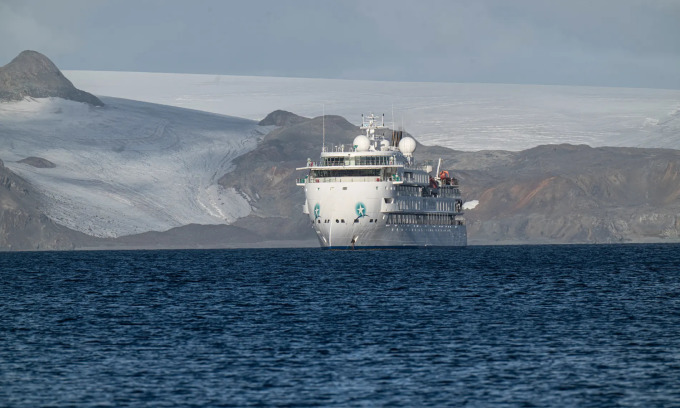
A tourist boat docks at King George Island. Photo: Sean Smith/The Guardian.
Some people come for scientific research, while others are tourists who come to climb icebergs, ski, and enjoy helicopter tours. Antarctic tourism is considered to be for those with ample financial resources. Of the tourists who arrived on the continent this past summer, more than half were from the United States, followed by Australia, Germany, and the United Kingdom.
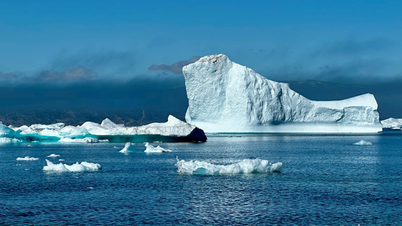
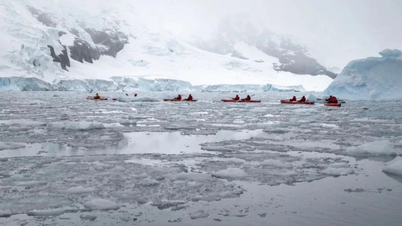
Traveling to Antarctica incurs significant costs for tourists, from airfare, clothing, and equipment to vaccinations. Furthermore, this region offers unique experiences not found in everyday life. Visitors can admire surreal icebergs, observe cold-climate wildlife up close, and explore Fildes Bay from the Chilean Air Force landing strip. The majority of visitors to the Southern Hemisphere travel during the summer when the weather is less icy. Additionally, activities such as kayaking and snorkeling in the bone-chilling cold of the Southern Ocean are also popular choices for tourists.
Dr. Daniela Liggett, an associate professor at the University of Canterbury in New Zealand specializing in Antarctic tourism management, stated that the impact of increased tourism on the Antarctic environment is enormous. Seasonal tourism and the fragile polar ecosystem face massive visitor surges in the summer and abrupt drops in the winter.
"During peak season, Fildes Bay can easily become overcrowded with long lines of tourist boats, fuel spills, and collisions between vessels and marine life. Some historical sites are even vandalized," Liggett said.
Researchers have found that snow in popular tourist destinations has higher concentrations of black carbon due to ship emissions. This leads to an accelerated rate of ice melting. It is estimated that between 2016 and 2020, the increase in tourist numbers had a significant impact, melting approximately 75 tons of snow in Antarctica.
Dr. Luis Miguel Pardo, a Chilean biologist, said that many tourists know Antarctica brings economic benefits from the tourism industry. However, he also expressed concern about the potential introduction of invasive species as this previously uninhabited land continues to receive visitors.
Several invasive species have appeared on the peninsula, and coupled with climate change and warmer temperatures, this will lead to negative consequences in the future.
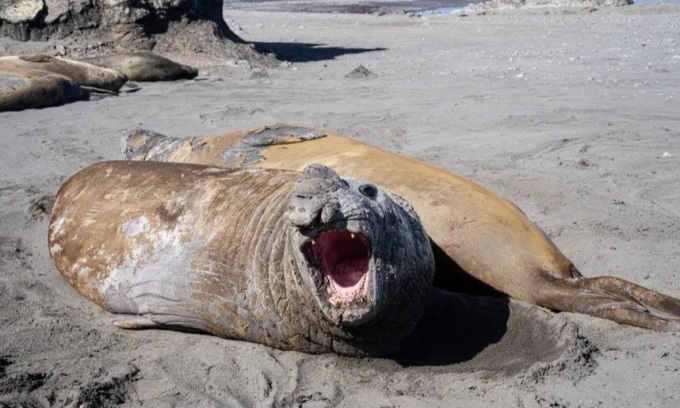
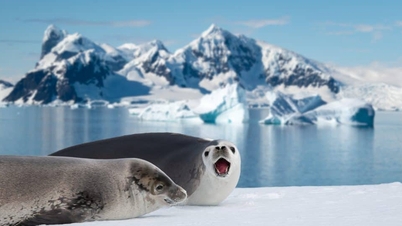
Elephant seals live in Antarctica. Photo: Sean Smith/The Guardian.
Tourism in Antarctica began to develop in the 1950s. In 1991, the IAATO organization was established to promote safe and environmentally responsible tourism in the South Pole.
IAATO sets strict guidelines regarding the protection of wildlife habitats, waste disposal to avoid damaging vegetation, or the introduction of invasive species to Antarctica.
In 1959, the Antarctic Treaty System (ATS) was established, providing legally binding regulations for international relations between nations concerning the only continent on Earth without indigenous inhabitants.
The current challenge for ATS in Antarctica is the lack of consensus on limiting the scale of the rapidly growing tourism industry. Most activities remain permitted, and there are no annual limits on the number of tourists who can visit.
Bich Phuong
According to The Guardian
Source link
![[Image] Hanoi's urban life under the challenge of a "scorching hot" environment](https://vphoto.vietnam.vn/thumb/1200x675/vietnam/resource/IMAGE/2026/05/25/1779706979265_nang-nong-t5-2026-minh-duy-7-4636-jpg.webp)














































































Comment (0)