

Expanding the realm of knowledge
The Ministry of Education and Training is drafting a Circular on Regulations for the Exploitation and Use of Open Educational Resources in Higher Education Activities to solicit feedback from the public and experts. The drafting aims to promote equality in access to education, contribute to improving the quality of training, the effectiveness of teaching, learning and research, and support lifelong learning.
However, the development of open educational resources must comply with intellectual property laws and be consistent with the conditions and scope of use specified in the accompanying open license.
The Ministry of Education and Training prioritizes the development of diverse open educational resources, including resources in Vietnamese, while expanding access to international knowledge sources in accordance with legal regulations. Open educational resources must also ensure information security, data confidentiality, and the sustainability of technical infrastructure.
Open educational resources are one of the key solutions in the development of digital higher education. These are crucial learning resources that enable educational institutions to organize teaching on digital platforms, continuously update new technologies, and implement diverse forms and methods of training as prescribed. The effective development and utilization of open educational resources not only ensures connectivity and data sharing between educational institutions and stakeholders, but also facilitates learning without limitations of space and time, contributing to improved quality, flexibility, and accessibility of higher education in the digital age.
Regarding open educational resources, the Ministry of Education and Training also advises that the development process must not affect national security, defense, social order and safety, or the interests of the State, organizations, or individuals. Open educational resources must not violate traditional customs and morals, distort academic content, or infringe on protected copyrights…
Organizations and individuals have the right to access, exploit, and use open educational resources under the conditions of the open license associated with the open educational resource; to copy, share, reuse, modify, and combine resources within the permitted scope; to use resources for teaching, learning, research, innovation, and other legitimate purposes; and to retrieve information about the origin, license, and conditions of use of the open educational resource.
However, users of open educational resources must fully comply with the conditions of the open license; clearly state the author's name and the source of the open educational resource as required. Users must respect intellectual property rights; not exploit or use beyond the permitted scope; and not use open educational resources for purposes that violate the law. In addition, users are encouraged to provide feedback, report errors, evaluate, and suggest improvements to open educational resources through appropriate channels.
The Ministry of Education and Training is expected to establish a national open educational resource portal, based on data from access portals at educational institutions.
Luu Dinh Quy, a student at the University of Economics and Law (Vietnam National University Ho Chi Minh City), observes that when learning materials are shared and connected, students anywhere have the opportunity to access quality resources. This solves many difficulties for students when searching for materials and textbooks for their studies.
"In class, we already have textbooks based on the curriculum. However, to expand my knowledge, I often have to go to forums, search the internet, and verify the source of the materials. Therefore, having a system for sharing learning resources would be very convenient for students in accessing new sources of knowledge," Quy said.

Shared digital ecosystem
From an expert's perspective, Master's student Tu Huu Cong (Binh Duong University) believes this is a very correct and necessary policy in the context of higher education entering a period of profound digital transformation. He argues that for many years, a reality has existed where each university invests in building its own learning materials, lectures, textbooks, and data repositories, but the level of sharing remains limited. This leads to the dispersion of resources, duplication of investment, and the creation of a knowledge access gap between training institutions.
The Ministry of Education and Training's development of a legal framework for open educational resources is not simply about digitizing learning materials, but also aims to create a shared knowledge ecosystem in higher education.
“Open educational resources will contribute to changing the training mindset from a knowledge ownership model to a knowledge sharing model. In the context of artificial intelligence, big data, and lifelong learning becoming global trends, access to high-quality open educational resources will help learners proactively study, research, and develop self-learning abilities,” said Mr. Cong.
However, for this policy to be truly effective, Master's student Tu Huu Cong believes that the core value of open educational resources lies in their quality, practical usability, and contribution to improving the quality of training. Therefore, management agencies need to build mechanisms for quality assurance of learning materials, ensure intellectual property rights, and have policies to encourage lecturers to participate in building open educational resources in a substantive way.
Regarding the model for the National Open Educational Resources Access Portal, Mr. Tu Huu Cong, M.Sc., suggested that this tool should unify resources but should not centralize all data. The national portal should act as a platform for centralized connection and retrieval, while the original data remains managed at universities. This model ensures interoperability while enabling educational institutions to proactively update and take responsibility for their own learning materials.
Furthermore, the system needs to integrate intelligent search tools, suggest learning materials based on learner needs, personalize the learning experience, and support more efficient data exploitation. When using data from the access portal, learners, lecturers, and researchers should be involved in evaluating, commenting on, and providing feedback on the resources used. The academic community itself will contribute to filtering, improving quality, and creating motivation for continuous improvement of the system.
"If operated according to the above principles, the National Open Educational Resource Portal will not only be an electronic data repository but can also become a national digital knowledge infrastructure serving training, research, and lifelong learning," said Mr. Cong.
With the National Open Educational Resources Access Portal, the Ministry of Education and Training is responsible for building, managing, operating, and developing the technical infrastructure, ensuring information security, connectivity, integration, and data sharing with educational institutions' systems; and issuing regulations on the management, exploitation, and use of the National Open Educational Resources Access Portal. In addition, the Ministry of Education and Training organizes the issuance and management of electronic access accounts, and stipulates the conditions, scope, rights, and responsibilities of organizations and individuals in using these accounts in accordance with the law…
Source: https://giaoducthoidai.vn/nen-tang-cho-mo-hinh-dai-hoc-so-post780229.html
![[Photo] Secretary of the National Assembly Party Committee, Chairman of the National Assembly presides over the meeting of the Standing Committee and Executive Committee of the National Assembly Party Committee.](https://vphoto.vietnam.vn/thumb/1200x675/vietnam/resource/IMAGE/2026/06/03/1780480353201_ndo_br_bnd-2585-jpg.webp)




![[Photo] General Secretary and President To Lam presides over a meeting with the Central Organizing Committee.](https://vphoto.vietnam.vn/thumb/1200x675/vietnam/resource/IMAGE/2026/06/03/1780482764658_a1-bnd-4741-3342-jpg.webp)

























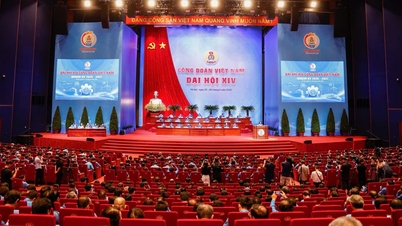
![[Photo] First session of the 14th Congress of the Vietnam Trade Union](https://vphoto.vietnam.vn/thumb/1200x675/vietnam/resource/IMAGE/2026/06/03/1780465947883_ndo_br_img-3852-jpg.webp)




















![[Video] Sunset at Lap An Lagoon – Where the sun sets over the fishing nets](https://vphoto.vietnam.vn/thumb/1200x675/vietnam/resource/IMAGE/2026/05/31/1780192137701_beach-landscape-sea-water-nature-grass-745871-pxhere-com.jpeg)






















Comment (0)