

According to Bild , the German military is reportedly preparing for a direct military confrontation between Russia and NATO. They are also developing a hypothetical scenario of a conflict involving hundreds of thousands of Russian and NATO troops fighting around the Baltic region in the summer of 2025.
According to this scenario, NATO countries do not want to continue supporting Ukraine, and Russia seizes the opportunity to eliminate Kyiv's forces by spring 2025. Following this, Russia expands its military operations to the Baltic states through hybrid warfare.
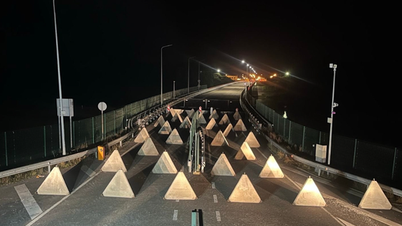
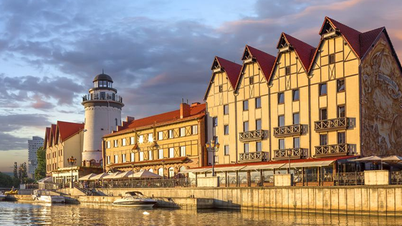
According to the German military, the Suwalki Corridor – a 100-kilometer-long strip of land between Poland separating Belarus and Russia's Kaliningrad exclave – would be the focal point of a potential military confrontation between Russia and NATO if it were to occur.
However, the German Ministry of Defence later stated that the scenario was based on other situations, even if they were unlikely to occur. They also emphasized that this was simply part of the German military's training program in response to threats from Russia.
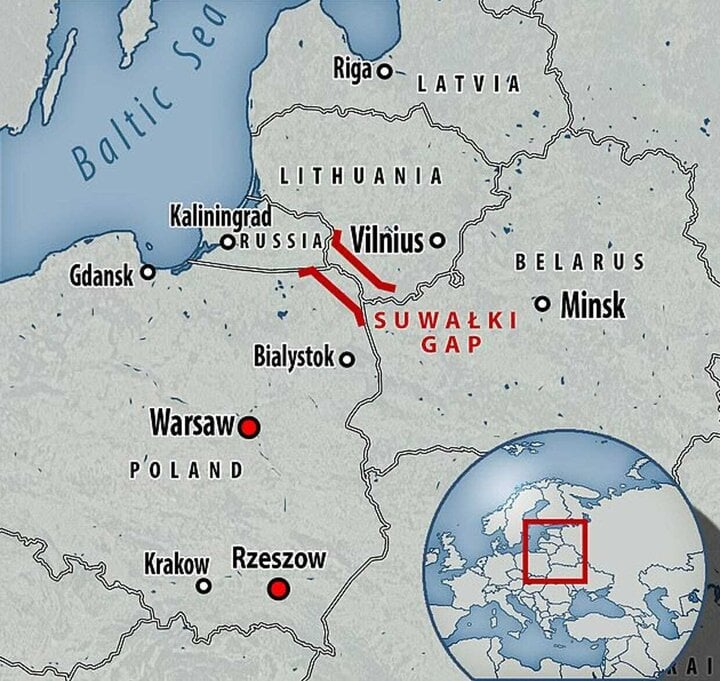
The German military believes that the Suwalki Corridor – a strip of land between Poland separating Belarus and Russia's Kaliningrad exclave – would be the focal point of a potential military confrontation between Russia and NATO if it were to occur.
"Ambiguous tactics"
The German military's fear of a potential "Russian aggression against NATO" in Suwalki is not new. In fact, NATO military officials have made similar statements since 2015, after the Pentagon first began warning that Russia might attempt to control Suwalki, thereby cutting off the Baltic region from Poland and the West.
However, neither the US nor other NATO member states have ever provided evidence of Russia's ability to conduct military operations in Suwalki.
Furthermore, in 2017, the Wall Street Journal continued to mention the possibility of Russia wanting to control the Suwalki corridor. However, Russian military expert Yevgeny Krutikov argued that the "fear" of Suwalki was a product of NATO's imagination.
According to Krutikov, much of the Suwalki area consists of forests, lakes, and swamps, including a national park, and there are no national highways in the region. Krutikov emphasized that driving a tank across the Suwalki forest is impossible.
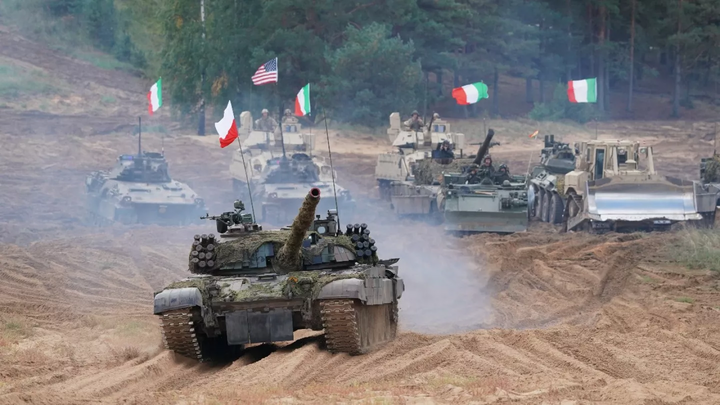
Russian military experts believe that driving tanks through the swamps of Suwalki is not feasible.
NATO is still haunted by Suwalki.
In 2024, the Suwalki Corridor resurfaced in the minds of Western military planners as a potential flashpoint for conflict between the two sides. Setting aside tactical ambiguities, any attack by Moscow on Poland – a NATO member – would be a strategic mistake, while the Baltic region, comprising Lithuania, Latvia, and Estonia, would also be drawn into the conflict.
Such a military action would lead to World War III.
The Russian military demonstrated its ability to confront NATO in the conflict in Ukraine, with superior troops, equipment, and weapons production capabilities compared to Kyiv's army, which was trained, armed, and funded by the West. However, the conflict was limited to Ukraine, and NATO did not directly participate in the fighting.
That being said, a direct confrontation with NATO would be disadvantageous for Russia, given that the alliance has more than four times the total number of troops, three times the number of paramilitary forces, five times the number of aircraft, six times the number of armored vehicles, and 3.5 times the number of warships.
According to Article 5 of NATO, members are required to defend other members in the event of an enemy invasion, at least theoretically, and are obligated to deploy weapons, including nuclear weapons, if necessary.
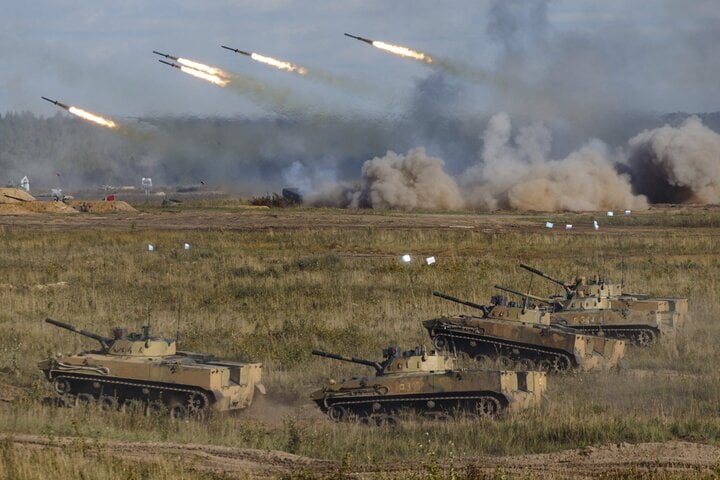
Russia understands that it would face many disadvantages if it engaged in direct military confrontation with NATO.
That, combined with Washington's policy on nuclear weapons deployment (including allowing the use of nuclear weapons for preemptive strikes and even against adversaries without nuclear weapons), means that a Russian attack on the Baltic region would very likely push humanity toward nuclear war, something Russian political and military leaders have repeatedly demonstrated they are not interested in.
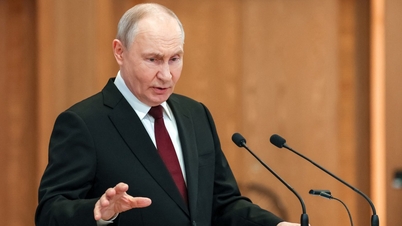
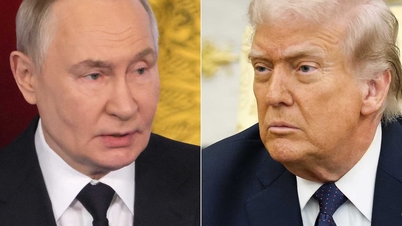
President Vladimir Putin said in an interview with Russian media in December 2023: "NATO cannot fail to understand that Russia has no reason, no interest, no geopolitical, economic, political or military interests in confronting NATO countries."
President Putin also reiterated that Moscow and NATO have no territorial claims against each other, and stressed that Russia prefers peaceful coexistence rather than confrontation with NATO members.
Perhaps if NATO had spent more time listening to what the Russian president had to say and kept its promise not to expand eastward, the German military wouldn't have to worry about a conflict with Moscow.
Tra Khanh (Source: Sputnik)
Source
![[Photo] Admire the coral "masterpiece" amidst the million-year-old heritage of Dak Lak province.](https://vphoto.vietnam.vn/thumb/1200x675/vietnam/resource/IMAGE/2026/05/31/1780221235105_anh-man-hinh-2026-05-31-luc-16-53-27.png)
![[Photo] Solemn bathing ceremony and Buddha procession in Hue](https://vphoto.vietnam.vn/thumb/1200x675/vietnam/resource/IMAGE/2026/05/31/1780228263543_1-jpg.webp)
![[Photo] The General Secretary, President and his wife begin their state visit to the Philippines.](https://vphoto.vietnam.vn/thumb/1200x675/vietnam/resource/IMAGE/2026/05/31/1780230559452_anh-man-hinh-2026-05-31-luc-19-28-11.png)













![[Video] Sunset at Lap An Lagoon – Where the sun sets over the fishing nets](https://vphoto.vietnam.vn/thumb/340x192/vietnam/resource/IMAGE/2026/05/31/1780192137701_beach-landscape-sea-water-nature-grass-745871-pxhere-com.jpeg)
































![[Photo] Admire the coral "masterpiece" amidst the million-year-old heritage of Dak Lak province.](https://vphoto.vietnam.vn/thumb/402x226/vietnam/resource/IMAGE/2026/05/31/1780221235105_anh-man-hinh-2026-05-31-luc-16-53-27.png)






























Comment (0)