

Russian Central Bank (CBR) Governor Elvira Nabiullina said that the Russian economy will fully recover by 2024.
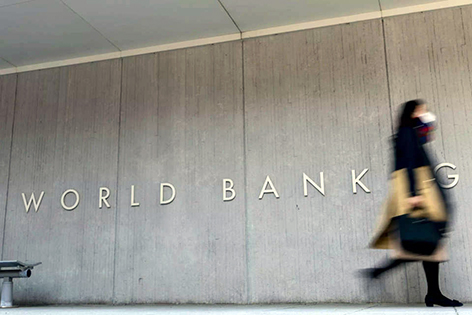
The World Bank forecasts that the Russian economy will grow despite Western sanctions. Photo: AP
Many sectors of the Russian economy are experiencing steady growth. Specifically, official statistics from April showed that business activity in many key sectors of the Russian economy – including manufacturing, construction, retail, services, and public catering – has grown.
The Governor of the Central Bank of Russia noted that the business climate index is near its highest level in 10 years.
However, given the increasing inflationary pressure, Ms. Nabiullina acknowledged the possibility that the CBR may have to raise the benchmark interest rate at upcoming meetings to curb inflation. The extent of the increase will depend on the estimated risks of achieving the target of returning to 4% by 2024.
Meanwhile, on June 9th, the CBR decided to keep the benchmark interest rate unchanged for the sixth consecutive session, at 7.5% per year. The CBR noted that domestic economic activity is growing faster than previously anticipated. The agency also forecasts that the Russian economy will grow by up to 2% this year.
The World Bank has also projected that Russia's real GDP will improve in 2024, despite the impact of Western sanctions.
Russia's gross domestic product (GDP) growth rate is projected to improve in 2024, albeit at a modest 1.2%. "This change mainly reflects the unexpected recovery in oil production and the higher-than-expected growth momentum from 2022," RT quoted the World Bank report as saying.
According to World Bank experts, in an effort to counter Western sanctions, Moscow has diverted oil exports to "friendly" countries, thereby maintaining fuel export volumes. "The price cap of $60 per barrel imposed on Russian oil by the G7 and some Western countries has not significantly impacted Moscow's crude oil export sector," the World Bank experts' report stated.
For its part, the Russian government maintains a positive outlook on the economy. Russian Prime Minister Mikhail Mishustin predicts that by 2024, the Russian economy could surpass developed countries in terms of growth rate. Recently, the Russian Ministry of Economic Development projected that the country's GDP would increase in 2023.
In his latest statement on June 7, President Vladimir Putin affirmed that self-sufficiency is key to Russia's economic growth amidst Western sanctions and the threat of a global economic recession.
According to the Kremlin leader, Russia will prioritize the development of the technology and financial sectors, optimized logistics routes, improved infrastructure, and addressing inequality and poverty.
President Putin predicts that the global economy will continue to slow down in 2023, while Russia's GDP could grow by as much as 2%.
To date, the European Union (EU) has adopted 10 rounds of sanctions against Russia for its special military operation in Ukraine. These sanctions have targeted various sectors of the Russian economy, as well as numerous individuals and organizations.
According to the Financial Times, nearly 1,500 individuals and more than 200 legal entities in Russia have been banned from traveling and had their assets frozen. These sanctions packages have prohibited bilateral trade flows worth more than $148 billion, including energy imports from Russia, as well as exports of technology, machinery, and electronics.
In addition, the Group of 7 leading industrialized nations (G7), the EU, and Australia imposed a price ceiling of $60 per barrel on Russian crude oil, effective December 5, 2022. The aim was to restrict Moscow's financial support for the war in Ukraine. Western insurance and shipping companies were prohibited from providing services for Russian oil and oil products unless they purchased them at or below the price ceiling.
Compiled by Nguyen Tan
Source link

![[Photo] General Secretary To Lam attends the Inauguration Ceremony of the Ho Chi Minh Memorial House at the E2 Hill historical site.](/_next/image?url=https%3A%2F%2Fvphoto.vietnam.vn%2Fthumb%2F1200x675%2Fvietnam%2Fresource%2FIMAGE%2F2026%2F01%2F31%2F1769831648495_vna-potal-tong-bi-thu-to-lam-du-le-khanh-thanh-nha-tuong-niem-chu-tich-ho-chi-minh-tai-di-tich-doi-e2-8564287-1-2231-jpg.webp&w=3840&q=75)


![[Photo] Close-up view of the most modern multi-level boarding school in the border region.](/_next/image?url=https%3A%2F%2Fvphoto.vietnam.vn%2Fthumb%2F1200x675%2Fvietnam%2Fresource%2FIMAGE%2F2026%2F01%2F31%2F1769825352253_z7485066371145-45cccc741d77ee89a371005bcaa2e314-7270-jpg.webp&w=3840&q=75)


![OCOP during Tet season: [Part 3] Ultra-thin rice paper takes off.](/_next/image?url=https%3A%2F%2Fvphoto.vietnam.vn%2Fthumb%2F402x226%2Fvietnam%2Fresource%2FIMAGE%2F2026%2F01%2F28%2F1769562783429_004-194121_651-081010.jpeg&w=3840&q=75)


![OCOP during Tet season: [Part 2] Hoa Thanh incense village glows red.](/_next/image?url=https%3A%2F%2Fvphoto.vietnam.vn%2Fthumb%2F402x226%2Fvietnam%2Fresource%2FIMAGE%2F2026%2F01%2F27%2F1769480573807_505139049_683408031333867_2820052735775418136_n-180643_808-092229.jpeg&w=3840&q=75)



Comment (0)