

After nearly a decade of implementing Resolution 36-NQ/TW on the Strategy for Sustainable Development of Vietnam's Marine Economy and enforcing the Law on Marine and Island Resources and Environment, many new opportunities have emerged, but numerous challenges have also arisen, including conflicts over maritime use, limitations in the mechanism for allocating sea space, and the need to transition to a blue marine economy model.
The series "Sustainable Development of the Marine Economy" documents the developments in coastal localities, perspectives from experts, businesses, management agencies, and international organizations to identify opportunities, challenges, and institutional "bottlenecks" in the journey to make Vietnam a strong maritime nation and prosper from the sea.
From port investment to marine spatial development thinking
After more than 7 years of implementing Resolution No. 36-NQ/TW on the Strategy for Sustainable Development of Vietnam's Marine Economy to 2030, with a vision to 2045, the maritime sector is witnessing significant changes in both development thinking and the scale of infrastructure investment.
Previously, maritime development was primarily viewed in terms of investing in individual seaports, shipping routes, or separate logistics projects. Now, the issue is placed within the overall context of national maritime development. The short-term exploitation mindset is gradually shifting towards an integrated, multi-purpose, and sustainable approach to organizing maritime space.

By 2025, VIMC 's port system will increase its container capacity by approximately 1.7 million TEU and its bulk cargo capacity by about 25 million tons, further strengthening its position as a leading enterprise in the maritime sector. Photo: VIMC.
According to Vietnam Maritime Corporation (VIMC), instead of scattered investments, VIMC focuses its resources on international gateway port clusters, transshipment centers, and integrated logistics ecosystems in key economic regions.
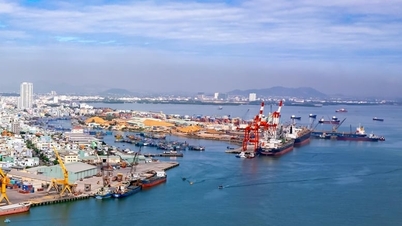
Many large-scale projects have been put into operation or accelerated, such as Container Terminals No. 3 and No. 4 at Hai Phong International Gateway Port, Can Gio International Transshipment Port, Lien Chieu Port, along with the system of inland ports and logistics centers.
These are not just individual infrastructure projects, but are considered links in the maritime transport - logistics - coastal industry chain, contributing to shaping the economic growth poles of the sea in the new era.
VIMC's business performance indicators for the 2020-2025 period also recorded positive growth. Average sea transport volume reached over 21.45 million tons per year; cargo throughput through the port system reached approximately 130.48 million tons/year, growing by nearly 8%/year. Average consolidated revenue reached VND 15,749 billion/year, while pre-tax profit reached over VND 2,600 billion/year.
By 2025, VIMC's port system is expected to increase its container capacity by approximately 1.7 million TEU and handle around 25 million tons of bulk cargo, further strengthening its role as a core enterprise in the maritime sector.
In its new development strategy, VIMC prioritizes investment in international gateway port clusters and transshipment centers in Hai Phong, Ho Chi Minh City, and Da Nang to effectively utilize water surface areas, coastal regions, and port hinterland connectivity systems.
In addition to infrastructure investment, the maritime industry is also accelerating digital transformation and green transformation. Many modern operational management systems such as TOS, E-port, Smartgate, and centralized data management platforms have been implemented at VIMC's member units to optimize port operations, shorten berth times, and improve management efficiency.
In the field of green development, VIMC is implementing a green port project across its entire system with 89 berths; investing in equipment electrification, applying solar energy and environmental monitoring technology to reduce greenhouse gas emissions according to international standards.
These developments show that the maritime industry is no longer just playing a role in the transshipment of goods, but is becoming a fundamental infrastructure for the development of the marine economy.
Institutional and maritime space bottlenecks
Despite acknowledging many positive results, VIMC believes that the process of realizing the goal of developing the marine economy is still facing many major bottlenecks, especially in terms of institutions, planning, and infrastructure connectivity.
Although the National Marine Spatial Planning has been approved, its implementation in many localities is slow, leading to overlaps in marine resource utilization zoning and conflicts in project implementation. In the context of increasing demand for marine space exploitation, conflicts between maritime activities, fisheries, oil and gas, offshore wind power, tourism, and ecological conservation are becoming increasingly evident.
According to VIMC, there is still a lack of specific criteria to determine the priority order for using marine space in overlapping areas. This makes it difficult for businesses to invest, access water surfaces, and implement long-term projects.
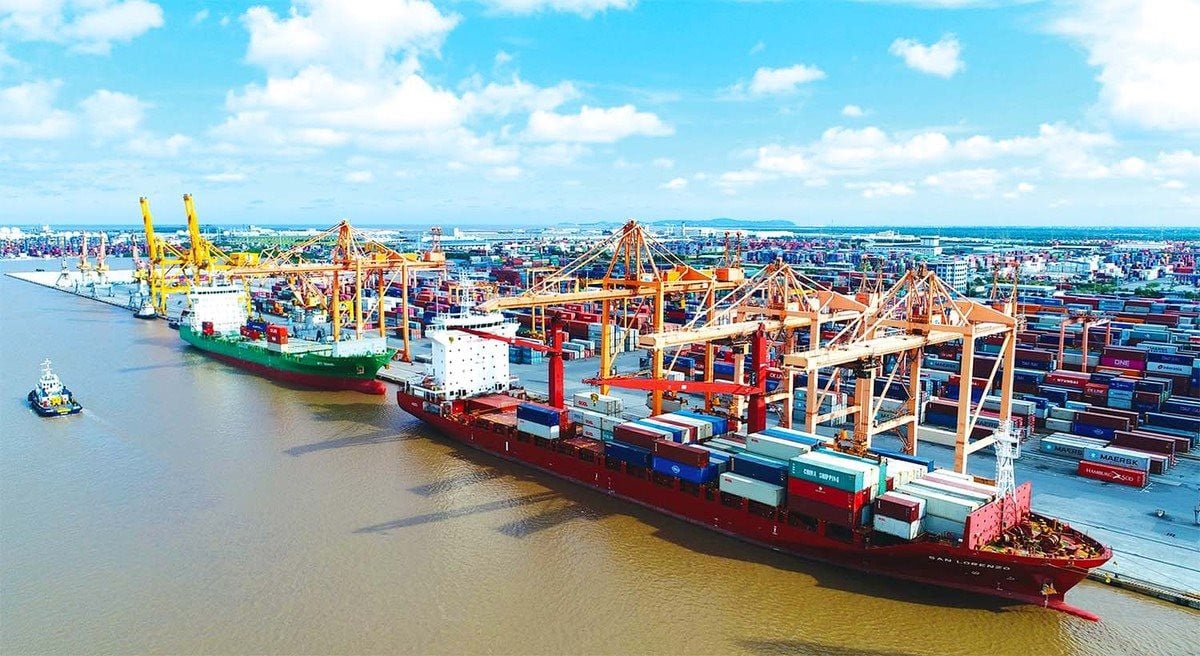
VIMC recommends accelerating the development and implementation of the National Maritime Spatial Planning, ensuring close coordination with coastal zone and provincial planning, thereby maintaining consistency in functional zoning and prioritizing land and water resources for strategic maritime infrastructure. Photo: VIMC.
Another difficulty is that the process of establishing maritime usage rights is still lengthy due to the lack of synchronization between digitized data systems and zoning maps. Determining water boundaries, granting permits, and completing procedures for port and logistics projects still takes a long time.
Mr. Nguyen Canh Tinh, Chairman of the Board of Directors of VIMC, believes that it is necessary to continue improving the institutional framework for the marine economy and marine spatial planning in a unified manner between the central and local governments; and to resolve overlapping points between the Maritime Law, the Investment Law, the Land Law, and other regulations related to marine resources and the environment.
VIMC also recommended establishing a sufficiently strong inter-sectoral coordination mechanism to handle conflicts in the use of maritime space; prioritizing land and water resources for strategic maritime projects; and accelerating the development of infrastructure connecting seaports, logistics, and multimodal transport.
In parallel, businesses are proposing the early issuance of a green classification list for the maritime sector to create a basis for businesses to access green financing to support the development of green ports, green fleets, and promote digital transformation.
The maritime economy cannot thrive without the shipbuilding industry.
According to experts, for the maritime economy to truly become a strategic growth engine, Vietnam cannot rely solely on port or logistics infrastructure but needs to develop a complete maritime industrial ecosystem. Within this ecosystem, shipbuilding is considered a strategic link, connected to maritime transport capacity, logistics, supporting industries, and the ability to proactively manage the national supply chain.
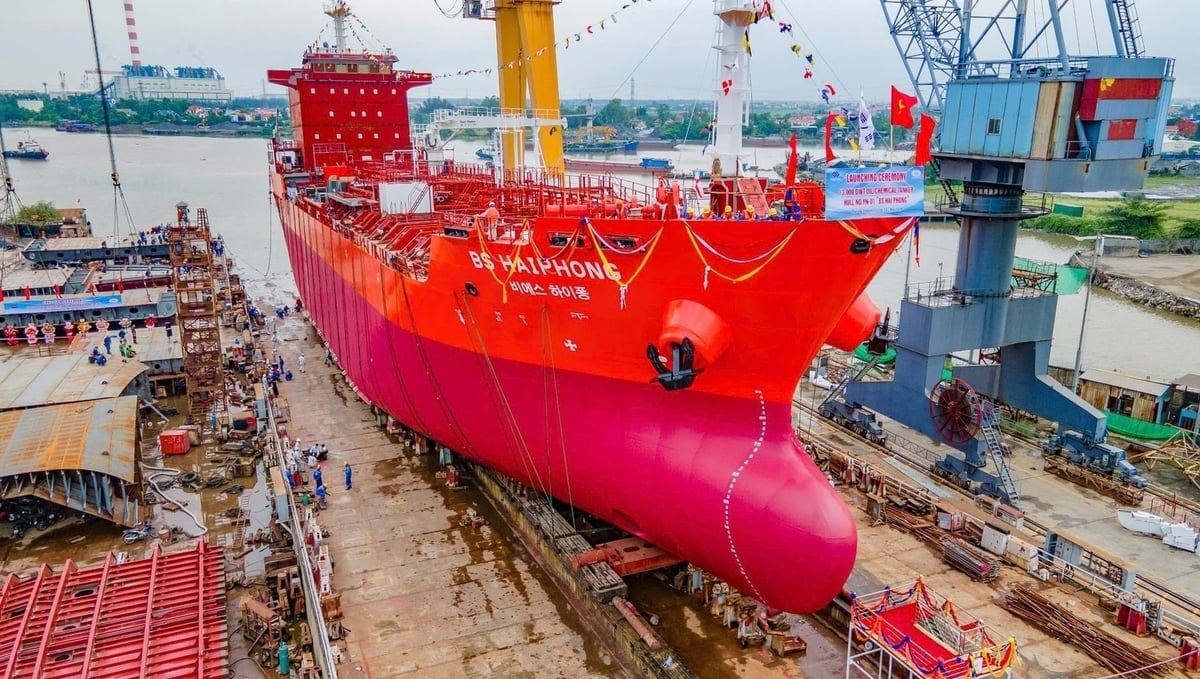
Pha Rung Shipyard is constructing a 13,000 DWT chemical tanker for a South Korean shipowner. Photo: Ta Hai .
At the recent seminar "Vietnam's Maritime Economy in the New Era: The Role of Enterprises and Shipbuilding Industry" organized by the Vietnam Shipbuilding Science and Technology Association, Mr. Nguyen Tien Dat, Deputy General Director of the Shipbuilding Industry Corporation (SBIC), stated that while previously the shipbuilding industry was mainly viewed from the perspective of specialized industrial production, it now needs to be placed within the overall national development strategy as the "backbone of the maritime industry".
According to experts, without rapid investment in technology and high-quality human resources, Vietnam's shipbuilding industry will struggle to participate deeply in the global value chain. Many opinions at the workshop suggested the need to develop a national fleet development strategy linked to domestic shipbuilding orders; and simultaneously formulate a long-term strategy for the development of Vietnam's shipbuilding industry. Furthermore, it is necessary to plan and develop shipbuilding-logistics-port industrial clusters in areas with outstanding potential to reduce logistics costs and create a synchronized maritime industrial ecosystem.
From the story of maritime spatial planning, port development, logistics, to the shipbuilding industry, it's clear that the goal of making the maritime economy a strategic growth driver is no longer a problem for a single sector. What Vietnam needs now is not just more infrastructure projects, but a sufficiently strong mechanism to link the entire maritime-logistics-marine industry chain.
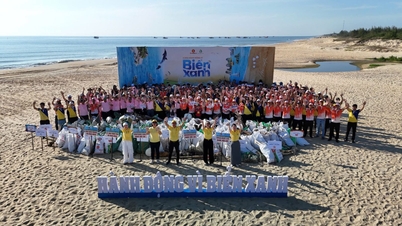
From June 4-6, 2026, in Cua Lo ward (Nghe An province), the Ministry of Agriculture and Environment, in coordination with the People's Committee of Nghe An province, will organize a series of communication events in response to World Environment Day (June 5), World Ocean Day (June 8), the Month of Action for the Environment, and Vietnam's Sea and Islands Week 2026.
1. National Forum on Environment and Climate - From Policy to Action
- Time: 8:00 AM, June 5, 2026
- Location: Vinpearl Cua Hoi, Cua Lo Ward, Nghe An Province.
- Online participation: ID: 942 6837 3034. Password: KH0605.
2. National Workshop “Improving Institutions and Policies to Promote Sustainable Marine Economic Development”
- Time: 2:00 PM, June 5, 2026
- Location: Vinpearl Cua Hoi, Cua Lo Ward, Nghe An Province.
- Online participation: ID: 934 2999 5099. Password: HT0506.
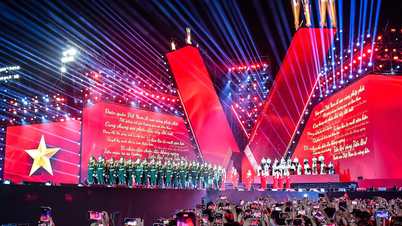
3. Art program “Vietnam's Sea - A Journey Through Green Space”
- Time: 8:00 PM, June 5, 2026
- Location: Binh Minh Square, Cua Lo Ward, Nghe An Province.
4. National Launch Ceremony in response to World Environment Day, World Ocean Day, the Month of Action for the Environment, and Vietnam's Sea and Islands Week in 2026; Launching the movement "All citizens join hands to protect the environment, for a green, clean, and beautiful Vietnam"
- Time: 6:00 AM, June 6, 2026
- Location: Binh Minh Square, Cua Lo Ward, Nghe An Province.
5. Blue Economy Exhibition - Sustainable Agriculture and Environment
- Time: From June 4-6, 2026
- Location: Binh Minh Square, Cua Lo Ward, Nghe An Province.
Source: https://nongnghiepmoitruong.vn/nganh-hang-hai-can-co-che-dot-pha-de-vuon-ra-bien-lon-d813040.html

![[Image] Checking the security conditions at the exam site, ready for the 10th grade exam.](https://vphoto.vietnam.vn/thumb/1200x675/vietnam/resource/IMAGE/2026/05/28/1779943458889_z7872507660648-d764421a26e8cd7b61d70d142a48a685-jpg.webp)
![[Photo] Opening Ceremony of the National People's Council Conference on the Implementation of Directions and Tasks for the 2026-2031 Term](https://vphoto.vietnam.vn/thumb/1200x675/vietnam/resource/IMAGE/2026/05/28/1779939257690_ndo_br_bnd-1991-jpg.webp)





























































Comment (0)