Kon Tu Ma village, located in Mang Den commune, Quang Ngai province, nestles beside the tranquil Dak S'Nghe river, surrounded by lush green rice fields and vast forests. It is home to the simple and honest Xo Dang ethnic people, whose rich cultural identity is deeply rooted in the culture of the Central Highlands.
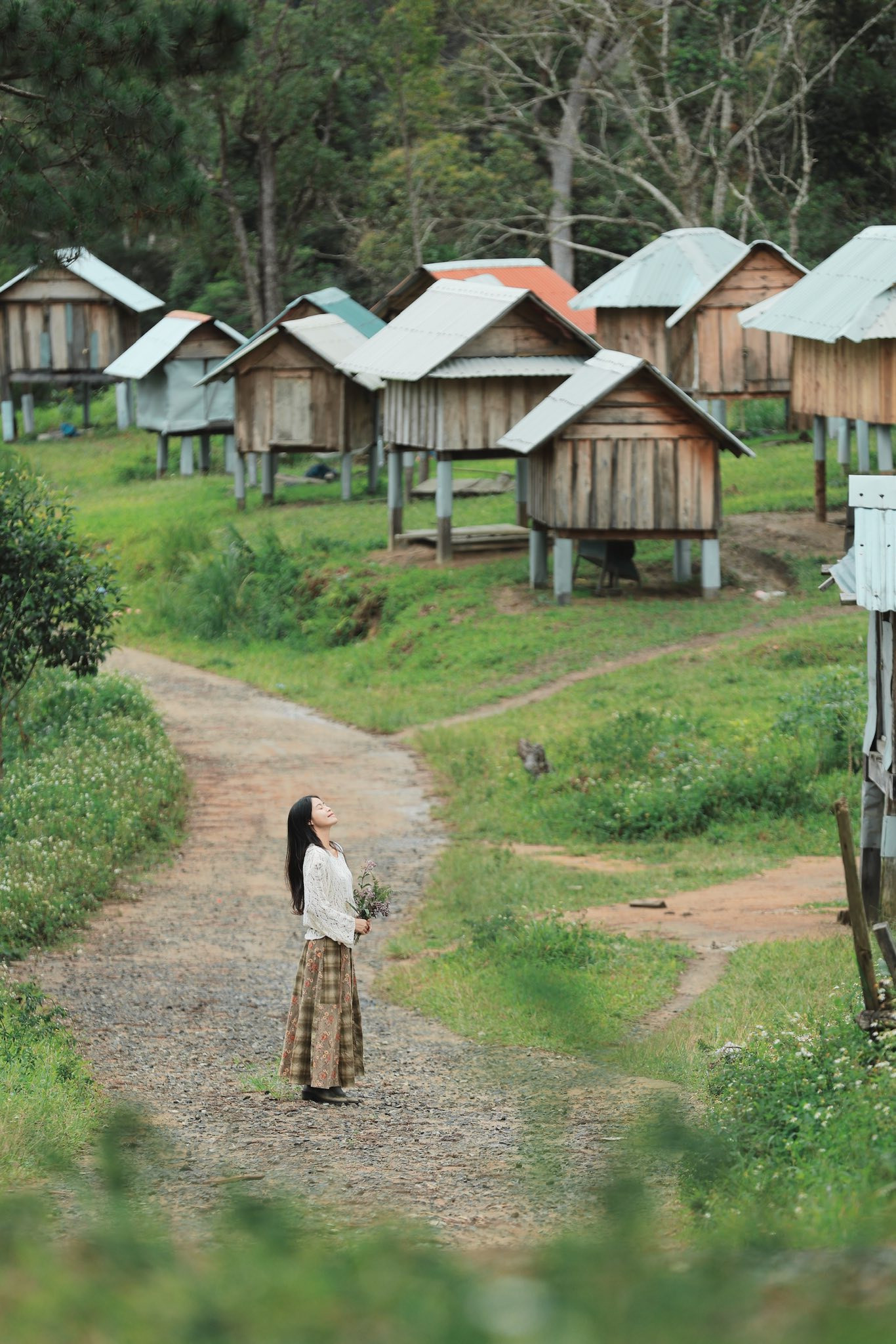
Kon Tu Ma is not only captivating for its scenery and traditions, but also impresses with its dozens of "miniature" stilt houses made of bamboo and wood, scattered from the fields and gardens to the hillside. These unique structures both spark curiosity and become eye-catching photo spots.
In fact, this is the rice granary of the Xơ Đăng ethnic people.
Recently, photos of people checking in with rice storage in Kon Tu Ma have gone viral on social media.
Photo: Minh Le
Since ancient times, people have relied primarily on rice as their main food source. Therefore, they believe that protecting their rice granaries demonstrates respect for the hard work and valuable traditions of their ancestors.
These granaries are built like miniature stilt houses, discreet and sturdy, to preserve rice for extended periods, protecting it from insects, animals, and the effects of weather.
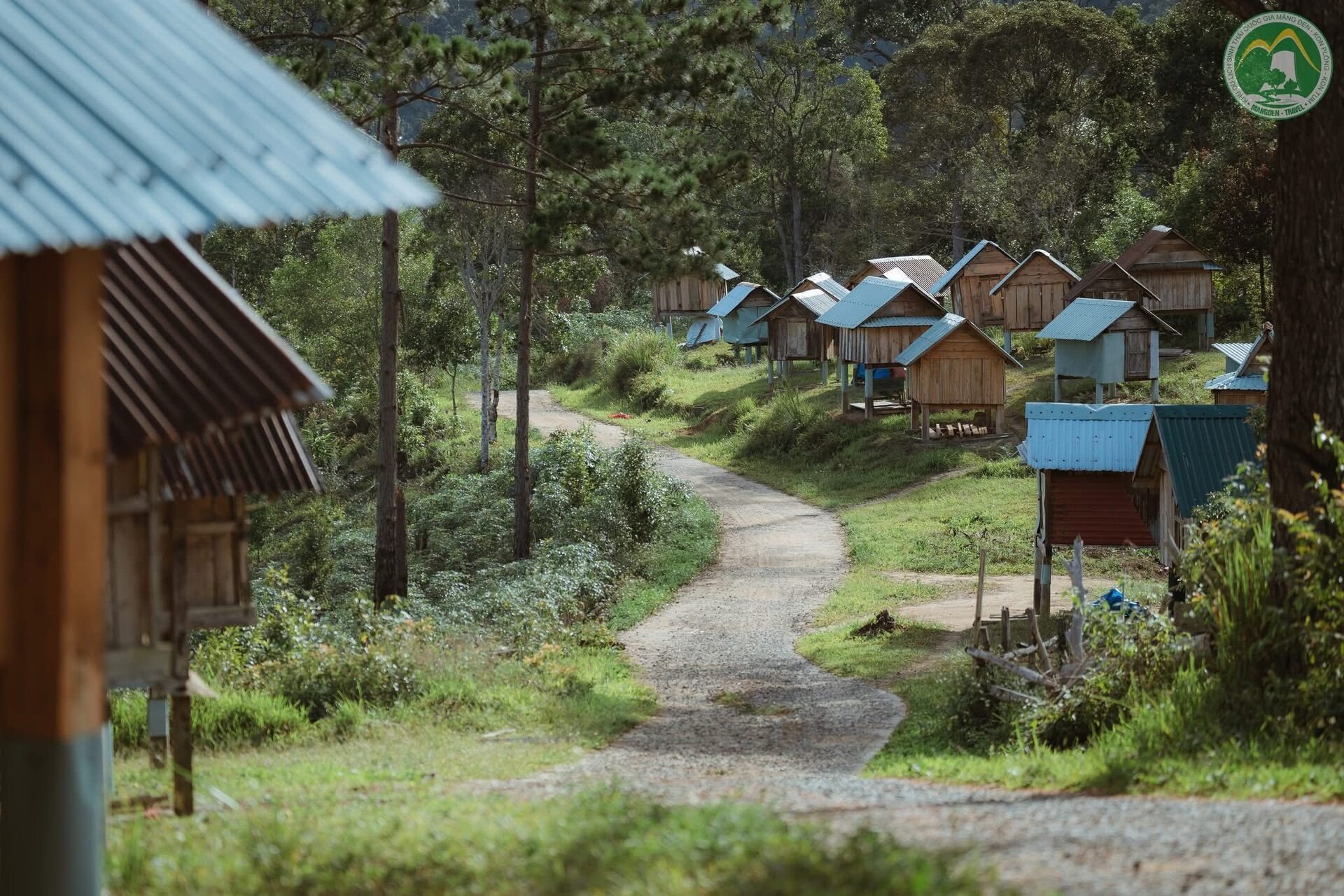
The rice granaries are important assets, cherished and protected by the villagers. Photo: Mang Den Tourism
These granaries are usually built far away from houses to minimize the risk of fire. Although they look quite similar, there is no chance of confusion between families.
More than just a place to store food, the granary is also seen as a symbol of prosperity and community solidarity.
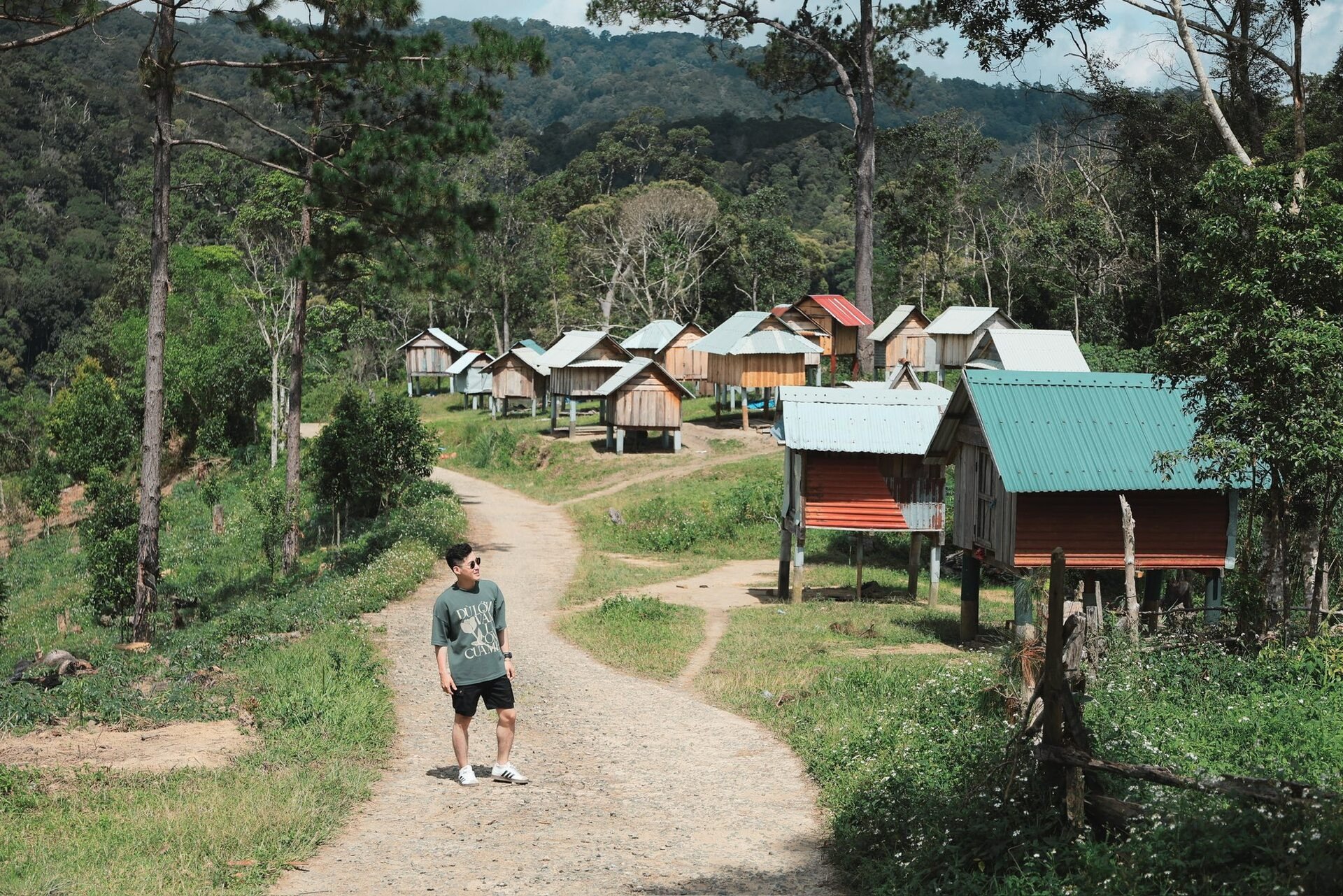
These unique rice granaries attract tourists who come to visit and take photos. Photo: Minh Le
According to the Center for Culture, Sports , Tourism and Communication of Mang Den commune, there are currently more than 50 rice granaries in Kon Tu Ma village. The ideal time for tourists to visit the village is from May to November each year, when the climate is cool and the rivers and streams are lush and clear.
According to Minh Le, a tour guide in Mang Den, this village is one of the places he often recommends to tourists on his Mang Den exploration tours. The majestic yet peaceful beauty and simple way of life in Kon Tu Ma captivate visitors.
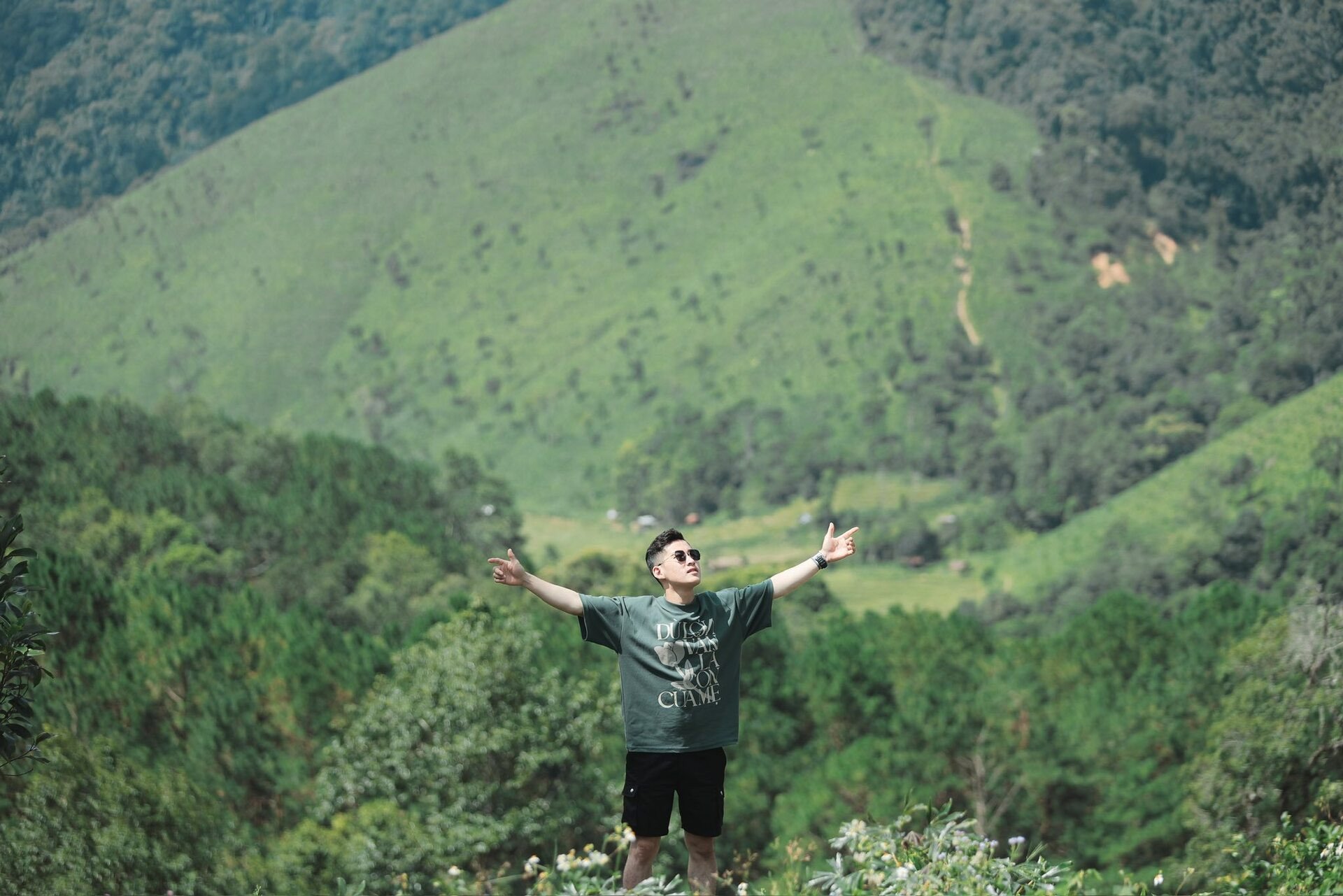
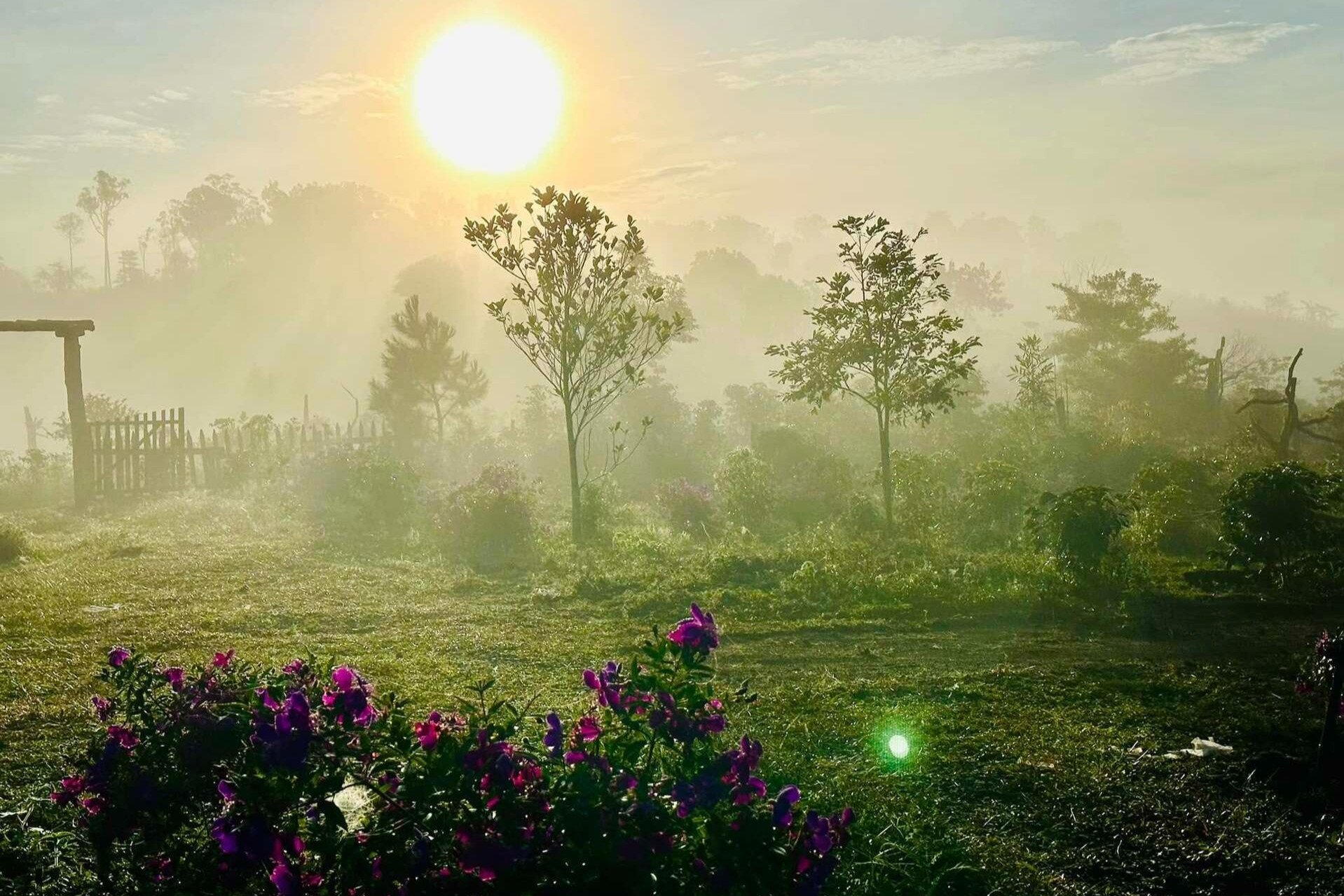
Every morning and evening, the village exudes a peaceful and idyllic beauty, with birds chirping and streams murmuring.
The scenery at Kon Tu Ma makes visitors feel "healed," truly immersed in nature. Photo: Minh Le/ Kon Tu Ma Village
Upon arriving at the village, tourists can join the Xơ Đăng people in wading through the streams and using traditional fishing nets to catch fish, enjoying the fun while gaining a deeper understanding of their daily lives and their love for nature that has been passed down through generations.
Visitors also have the opportunity to experience handicrafts such as weaving brocade, basket weaving, cooking, or enjoy authentic mountain cuisine with sticky rice, charcoal-grilled pork, stream fish, field snails, free-range chicken, cassava leaves, and various fresh wild vegetables.
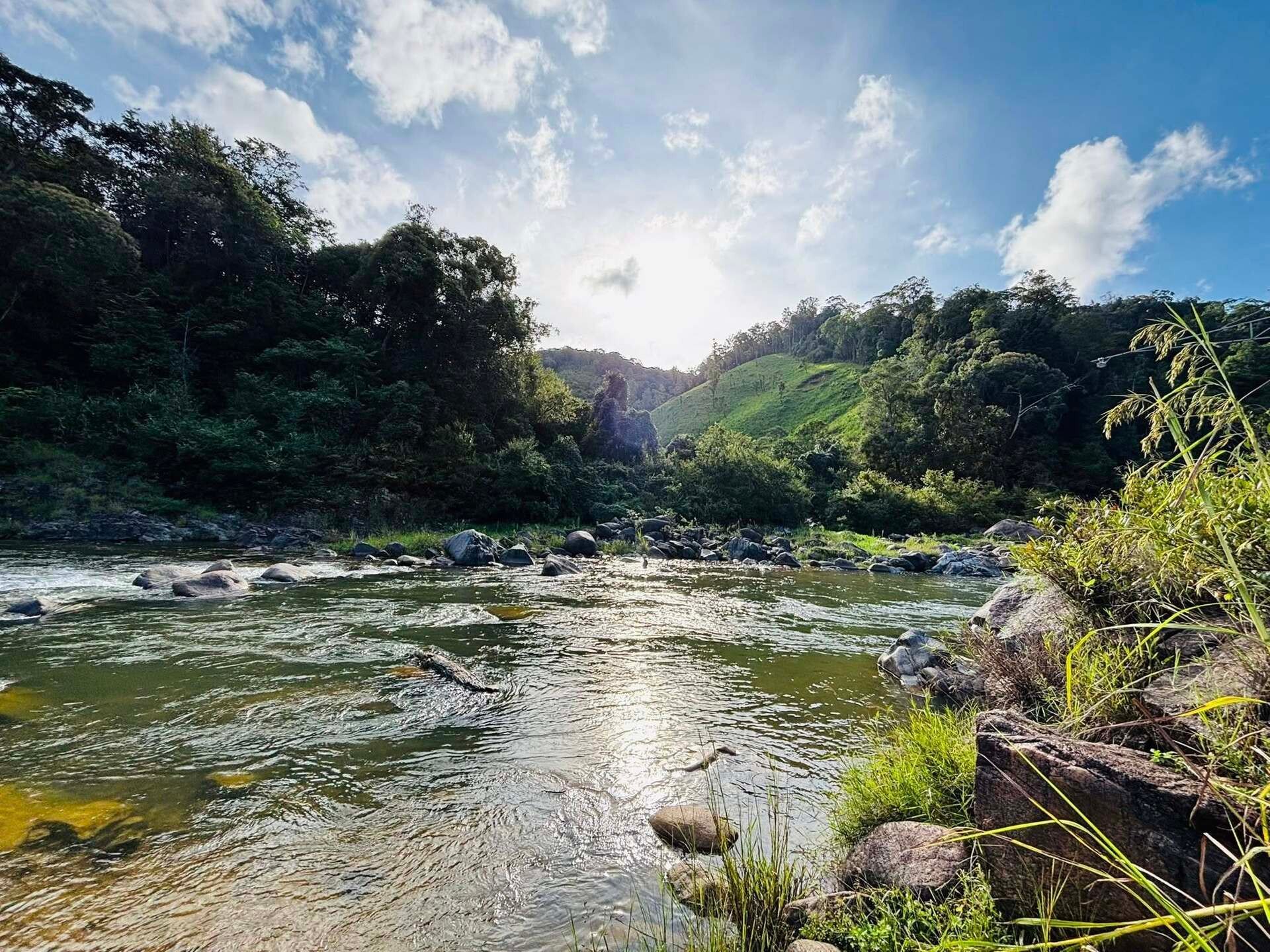
The stream flows gently through the village. Photo: Ut Phuong
The people of Kon Tu Ma village are developing homestays to accommodate tourists for overnight stays, promoting sustainable tourism. Tourists can combine a visit to Kon Tu Ma village with visits to Kon Tu Rang village, Kon Chenh village, and the Kon Tum hydroelectric reservoir.
Kon Tu Rang village is home to the famous 292-meter-long suspension bridge, an attractive backdrop for tourists visiting Mang Den.
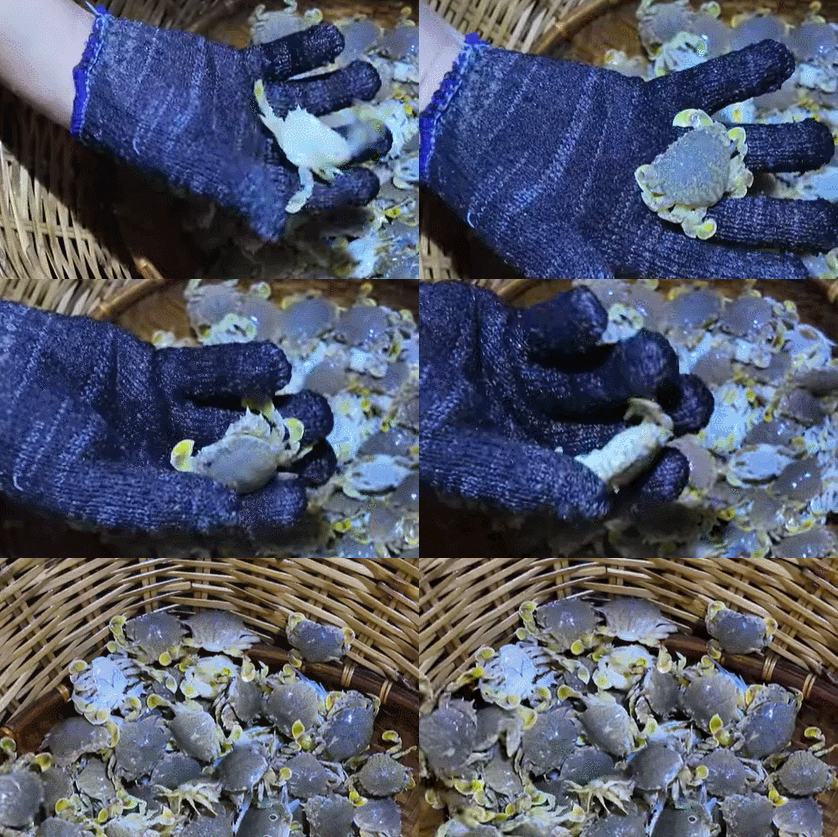
A unique delicacy from Quang Ngai, washed ashore by the waves, is delicious whether cooked in a stew or stir-fried with tamarind. At first glance, this delicacy resembles crabs or sea crabs, but its shell is green or yellow, its legs are short, and it's bright yellow. People in Quang Ngai often catch them to stir-fry with tamarind or make crab noodle soup, which has a sweet, fragrant, and rich flavor.
Source: https://vietnamnet.vn/ngoi-lang-binh-yen-o-mang-den-bat-ngo-hut-khach-nho-nhung-kho-lua-2445894.html





![[Photo] General Secretary and President To Lam presides over a meeting with the Central Organizing Committee.](https://vphoto.vietnam.vn/thumb/1200x675/vietnam/resource/IMAGE/2026/06/03/1780482764658_a1-bnd-4741-3342-jpg.webp)
![[Photo] First session of the 14th Congress of the Vietnam Trade Union](https://vphoto.vietnam.vn/thumb/1200x675/vietnam/resource/IMAGE/2026/06/03/1780465947883_ndo_br_img-3852-jpg.webp)

![[Photo] Secretary of the National Assembly Party Committee, Chairman of the National Assembly presides over the meeting of the Standing Committee and Executive Committee of the National Assembly Party Committee.](https://vphoto.vietnam.vn/thumb/1200x675/vietnam/resource/IMAGE/2026/06/03/1780480353201_ndo_br_bnd-2585-jpg.webp)












































![[Video] Sunset at Lap An Lagoon – Where the sun sets over the fishing nets](https://vphoto.vietnam.vn/thumb/1200x675/vietnam/resource/IMAGE/2026/05/31/1780192137701_beach-landscape-sea-water-nature-grass-745871-pxhere-com.jpeg)





































Comment (0)