

This 40-year-old woman, originally from Hai Phong , works as a teacher. She is usually introverted, a perfectionist, and has a normal family life. Frequent insomnia has left her feeling lethargic, sleepy, with headaches, unable to concentrate on her work, easily irritable, with poor appetite, and she has lost 2 kg in 2 months.
After visiting a local health facility and taking medication without improvement, she went to a central-level hospital. The examination revealed she had a sleep disorder and required hospitalization.
After 7 days of medication combined with relaxation exercises, sleep hygiene, and psychological therapy, the patient's condition improved, sleeping 5-6 hours each night and sleeping more soundly.

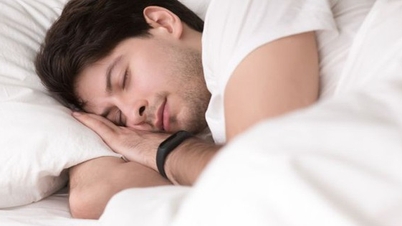
People who frequently suffer from insomnia are at risk of depression and mental disorders. (Illustrative image)
According to Dr. Doan Thi Hue, Deputy Head of the Department of Geriatric Mental Disorders and Sleep Medicine (M8), Institute of Mental Health, Bach Mai Hospital, in reality, over 50% of patients examined have sleep disorders. “Insomnia exacerbates depression or anxiety, and vice versa. People with insomnia have a four times higher risk of depression compared to those without insomnia,” Dr. Hue said.
Sleep disorders are conditions related to problems with the quality, duration, and quantity of sleep, leading to daytime fatigue and impaired learning, work, and social functioning. There are many different sleep disorders, with insomnia being the most common.
Studies show that in recent years, approximately 80% of patients seeking treatment have been found to have sleep disorders related to life stress, such as insomnia, sleep-wake rhythm disorders, and nightmares. Of these, 5% - 6.7% with severe insomnia also have depression and anxiety.
The causes of insomnia can be related to many chronic medical conditions, such as heart disease and diabetes. It can also be a warning sign of physical or neurological problems, such as congestive heart failure, osteoarthritis, and Parkinson's disease. Additionally, some patients experience insomnia due to medication use or other factors such as alcohol, caffeine, theobromine, and methyl xanthenes.
Alarmingly, sleep disorders are often co-occurring with mental disorders. 35% of patients with insomnia have a mental disorder, and half of those have an emotional disorder.
To treat sleep disorders, patients need guidance on healthy sleep habits and establishing proper sleep routines. In addition, they should adopt a healthy lifestyle, incorporate exercise, and avoid stimulants.
Source: https://vtcnews.vn/ngu-2-tieng-ngay-nguoi-phu-nu-nhap-vien-tam-than-ar905369.html


![[Image] Close-up of the newly discovered "sacred road" at My Son Sanctuary](/_next/image?url=https%3A%2F%2Fvphoto.vietnam.vn%2Fthumb%2F1200x675%2Fvietnam%2Fresource%2FIMAGE%2F2025%2F12%2F13%2F1765587881240_ndo_br_ms5-jpg.webp&w=3840&q=75)

























































































Comment (0)