

According to Le Thanh Dung, Director of the Population Department of the Ministry of Health and a member of the National Steering Committee on Population and Development, Vietnam's population is currently 100.3 million, with urban population accounting for 38.13%. Vietnam is currently in a period of demographic dividend with 67.7 million people of working age, representing 67.4% of the total population.
According to the results of the Population and Family Planning Survey conducted on April 1, 2022, by the General Statistics Office, the largest migration flow in Vietnam is from urban to urban areas, accounting for 44.6% of all migration flows nationwide. The areas with the highest emigration rates are the Mekong Delta and the Northern Midlands and Mountains.
The areas attracting the most migrants are the Southeast and the Red River Delta. Provinces with high emigration rates include: Lang Son, Soc Trang, Tra Vinh, Ca Mau, and Bac Lieu. Provinces and cities with high immigration rates include: Bac Ninh, Binh Duong, Da Nang, Ho Chi Minh City, Thua Thien Hue, and Long An.
The highest proportion of migrants is in the 20-24 age group for both men and women. This is followed by those in the 25-29 age group and the 15-19 age group. The main reasons for migration are employment (54.5%), family/housewarming (15.5%), and "going to school" (16%).
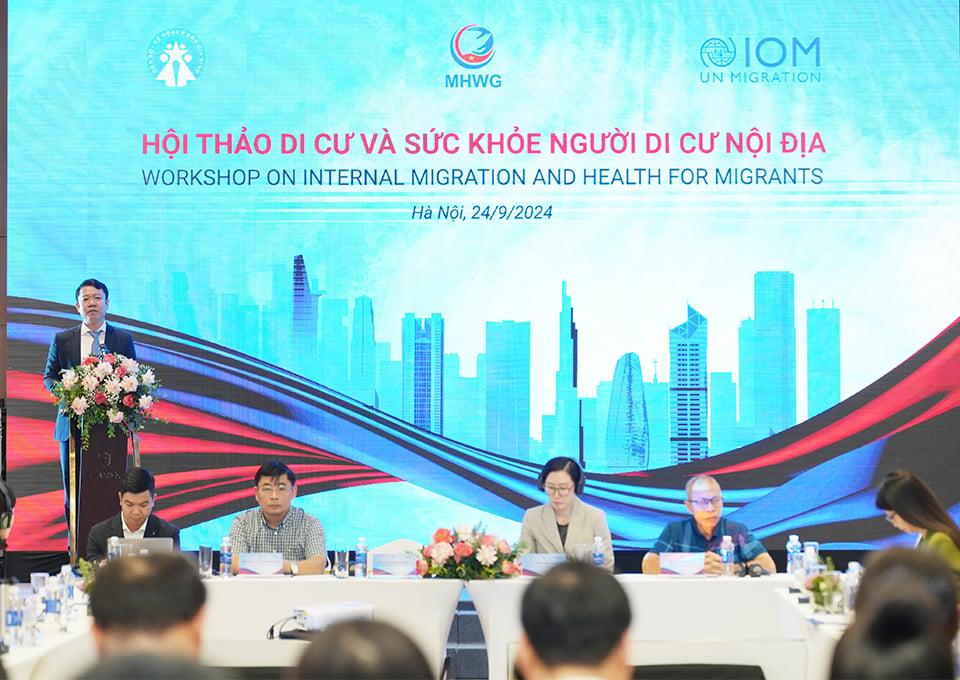
The feminization trend in migration has been observed over the past several years. In 2022, female migrants accounted for 53.2%. The proportion of female migrants is higher than that of male migrants in most migration flows, except for rural-urban migration, where the proportion of male migrants is 3.4 percentage points higher than that of female migrants.
Migration offers opportunities for education, employment, income, technology transfer, cultural exchange, and promotes cooperation between places of origin and destination. Migration is inevitable and a driving force of development.
However, migration also creates difficulties and challenges for both places of origin and destination; migrants belong to vulnerable populations and face difficulties and challenges in accessing social services.
Regarding the health of migrants, the 2015 National Internal Migration Survey results showed that 60% of migrants surveyed reported having normal health, and two-thirds (70.2%) had health insurance. The majority of migrants (63%) paid for their most recent illness/disease themselves; over 70% of migrants used public health services.
The rate of contraceptive use among migrant women (37.7%) is lower than among non-migrant women (58.6%). The rate of alcohol consumption among migrants is higher than among non-migrants. These habits are not only harmful to health but also incompatible with the work environment.
The 2019 report on the health status of migrants in Vietnam by the International Organization for Migration, the World Health Organization (WHO), and the Ministry of Health also pointed out barriers and difficulties related to accessing healthcare services, such as a lack of knowledge about health insurance benefits, a lack of public health communication programs, and insufficient stakeholder participation.
Furthermore, both domestic and international studies show that migrants are among the most vulnerable population groups in public health emergencies (the recent Covid-19 pandemic is an example). Migrants face numerous challenges such as mobility restrictions, reduced wages, job losses, risks, delays, and disruptions in healthcare.
"The health of migrants is a cross-cutting issue involving multiple levels and sectors, requiring a comprehensive, interdisciplinary approach with consultation from stakeholders. The health of migrants is also the health of businesses and the economy," emphasized the Director of the Population Department, Ministry of Health.
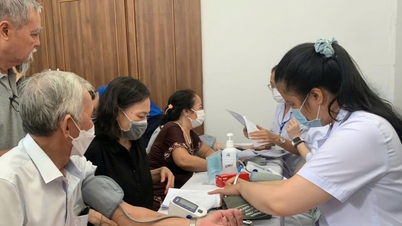
To support the health of internally displaced persons, measures are needed to provide health knowledge through guides, enhance communication and education; strengthen social care networks such as providing housing, education, hygiene, health insurance, and improving primary healthcare; develop policies and regulations on occupational safety, working conditions, and primary care facilities at companies; monitor and conduct regular health check-ups.
Dr. Vu Dinh Huy - Technical Officer, WHO in Vietnam
Source: https://kinhtedothi.vn/nguoi-di-cu-doi-mat-voi-nhieu-rao-can-cham-soc-suc-khoe.html
![[Photo] Secretary of the National Assembly Party Committee, Chairman of the National Assembly presides over the meeting of the Standing Committee and Executive Committee of the National Assembly Party Committee.](https://vphoto.vietnam.vn/thumb/1200x675/vietnam/resource/IMAGE/2026/06/03/1780480353201_ndo_br_bnd-2585-jpg.webp)

![[Photo] General Secretary and President To Lam presides over a meeting with the Central Organizing Committee.](https://vphoto.vietnam.vn/thumb/1200x675/vietnam/resource/IMAGE/2026/06/03/1780482764658_a1-bnd-4741-3342-jpg.webp)

![[Photo] First session of the 14th Congress of the Vietnam Trade Union](https://vphoto.vietnam.vn/thumb/1200x675/vietnam/resource/IMAGE/2026/06/03/1780465947883_ndo_br_img-3852-jpg.webp)



















































![[Video] Sunset at Lap An Lagoon – Where the sun sets over the fishing nets](https://vphoto.vietnam.vn/thumb/1200x675/vietnam/resource/IMAGE/2026/05/31/1780192137701_beach-landscape-sea-water-nature-grass-745871-pxhere-com.jpeg)



































Comment (0)