

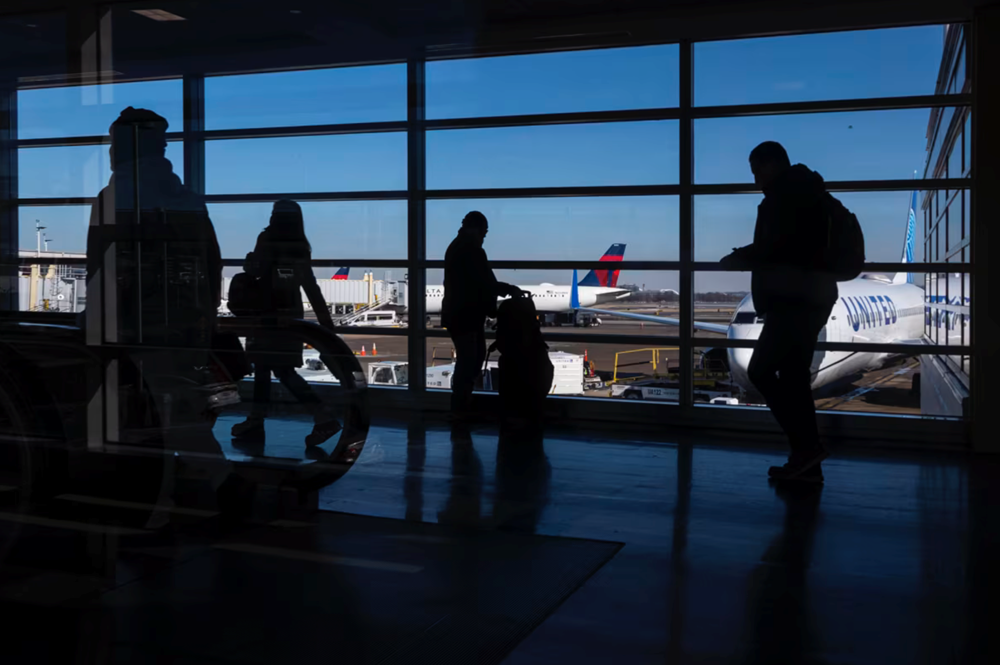
Consumer habits are changing.
The most frequently mentioned economic keyword in recent years has been "K-shaped".
CEOs, economists, and policymakers alike use the letter K to describe the widening gap between rich and poor in the American economy, from the housing market to gasoline spending.
The wealthiest Americans are increasingly diverging from the poorest. Tensions in Iran are exacerbating the situation, putting pressure on low-income households, who must spend a large portion of their income on gasoline and essential necessities.
It is becoming increasingly clear that the income distribution in the US is not actually K-shaped, and that letter is no longer an appropriate way to explain the economy.
A new interpretation of America's economic problems is emerging: the "premium economy," defined as an economy for the "upper-class" population.
More and more Americans are leaving the cramped, austere "basic economy" lifestyle to move up to a higher class, also known as premium.
They can afford better flights, higher-quality food, and more luxurious experiences in this "upgraded cabin," but they still can't reach the truly premium level of service, such as owning a private home or enjoying a comfortable retirement in the next "class."
Therefore, Americans have a habit of "upgrading" what they can still afford, using their increased salaries to spend on small but feasible "premium" amenities.
This shift has made things difficult for companies that compete solely on low prices, such as Spirit Airlines or Dollar General, but it has benefited brands like Walmart and United Airlines, as consumers perceive them as higher-quality options.
Last year, Delta and United accounted for more than 90% of the total profits of the entire airline industry.
"Many people thought consumer spending was weakening, but the reality is they're still spending," said Simeon Siegel, a retail analyst at Guggenheim Partners.
Americans are "upgrading" their standard of living.
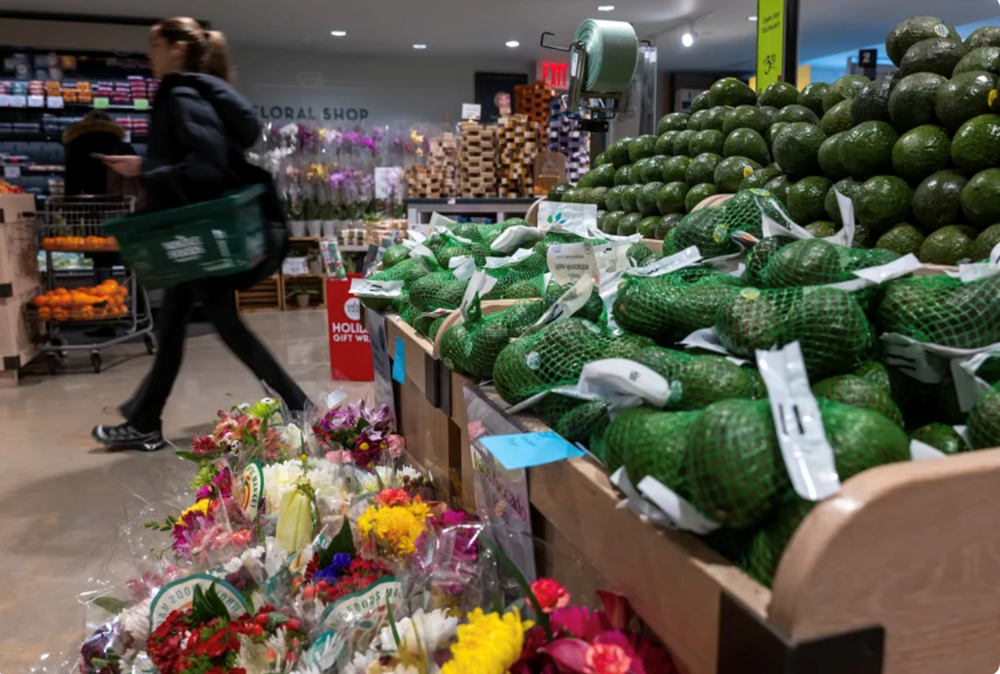
The upper -middle class in the US has grown from 10% of households in 1979 to 31% in 2024.
According to a recent study by the American Enterprise Institute, the income share of this group has also doubled. A family of three with an income of $133,000 to $400,000 per year is classified as upper-middle class.
Meanwhile, the proportion of families classified as poor and lower-middle class has also decreased over the past five decades.
“The entire income distribution has shifted upwards. This refutes the notion that the middle class is hollowing out,” said Scott Winship, senior research fellow at the American Enterprise Institute and co-author of the study.
The American dream of home ownership has now vanished for many younger generations. Nearly 40% of Americans are homeless, meaning they missed out on the dramatic post-pandemic real estate price surge. Home prices have now skyrocketed to five times the average income, leaving many trapped in their current predicament.
Therefore, new members of the upper-middle class are redirecting their increased income towards spending on products and services they can afford. Travel , concerts, and other leisure activities are replacing home ownership in the “premium economy.”
Retail sales also increased for the third consecutive month, driven by a stable labor market and higher tax refunds.
Source: https://baovanhoa.vn/kinh-te/nguoi-my-lua-chon-nang-cap-cuoc-song-thay-vi-mua-nha-231889.html

![[Photo] Ba Lang An Lighthouse - the "eye of the sea" amidst the "rock museum" of Quang Ngai province.](https://vphoto.vietnam.vn/thumb/1200x675/vietnam/resource/IMAGE/2026/05/29/1780038698840_anh-man-hinh-2026-05-29-luc-14-10-42.png)

![[Image] Pleasant weather helps students enter the 10th grade entrance exam with confidence.](https://vphoto.vietnam.vn/thumb/1200x675/vietnam/resource/IMAGE/2026/05/29/1780034401612_ngay-1-thi-lop-10-minh-duy-8-5009-jpg.webp)
























































































Comment (0)