

US consumer spending fell for the first time in nearly two years in January of this year, while the goods trade deficit reached a record high.
US consumer spending declines.
US consumer spending fell for the first time in nearly two years in January, while the goods trade deficit hit a record high, potentially leading to weak economic growth or even contraction this quarter.
Data from the Commerce Department on February 28 also showed that annual inflation had eased slightly last month, but prices remained on a stable trend, with steady monthly increases.
Consumer inflation expectations rose sharply in February. The Federal Reserve Bank of Atlanta revised down its forecast for first-quarter GDP growth, suggesting the economy could contract at an annualized rate of 1.5%, instead of the previously projected 2.3%.
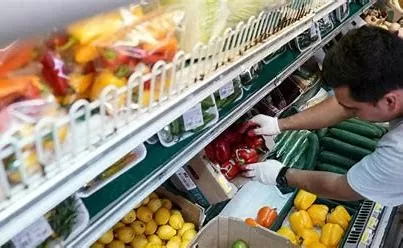 |
| Spending on goods decreased by 1.2%, with automobiles, entertainment items, home furnishings, clothing, footwear, and food and beverages being among the groups experiencing the sharpest declines. (Illustrative image) |
Financial markets are now forecasting that the Federal Reserve will continue to cut interest rates in June after pausing in January to allow time to assess the economic impact of current policies.
Olu Sonola, head of US economic research at credit rating agency Fitch Ratings, said: " The combination of stable inflation and concerns about growth will create a dilemma for the Federal Reserve 's monetary policy . "
Consumer spending, which accounts for more than two-thirds of U.S. economic activity, fell 0.2% in January of this year, according to a report from the Commerce Department's Bureau of Economic Analysis. This is the first decline since March 2023 and the largest drop in nearly four years. This comes after December 2024 data was revised upward to 0.8%, instead of the initially reported increase of 0.7%.
Economists forecast consumer spending will increase by 0.1%. Unusually cold temperatures and snowstorms covering many parts of the country may have impacted spending, along with wildfires devastating areas in Los Angeles.
Spending on goods fell 1.2%, with automobiles, entertainment, home furnishings, clothing, footwear, and food and beverages being among the hardest hit categories. Meanwhile, spending on services increased 0.3%, driven by increases in housing, utilities, food, and accommodation. This increase partially offset the decline in spending by non-profit organizations, which economists attribute to significant spending cuts at the U.S. Agency for International Development (USAID).
This agency has become the biggest victim in the unprecedented campaign by the Department for Government Effectiveness (DOGE), created by tech billionaire Elon Musk, an organization established under US President Donald Trump with the goal of cutting spending and shrinking the size of the federal government.
"Although it's called the Agency for International Development, USAID spends a lot on domestic activities," said Chris Low, chief economist at FHN Financial, a financial services research and development firm.
When adjusted for inflation, U.S. consumer spending fell 0.5% at the start of this year, the largest decline since February 2021, reversing a 0.5% increase in December. This sharp drop in real spending follows a slump in home construction last month.
A separate report from the U.S. Commerce Department's Census Bureau showed the goods trade deficit increased 25.6%, reaching $153.3 billion last month, its highest level ever, as imports surged 11.9%.
The economy grew at a rate of 2.3% in the fourth quarter of last year, primarily driven by consumer spending.
Nevertheless, spending was supported by a strong labor market, helping to keep household incomes high. Personal income increased by 0.9%, largely due to cost-of-living adjustments for social security beneficiaries. Wages also rose by 0.4%.
With incomes growing faster than expenses, the savings rate has risen to its highest level in seven months, reaching 4.6%, compared to 3.5% in December 2024.
Stocks on Wall Street showed mixed performance. The dollar remained stable against a basket of currencies. U.S. Treasury yields fell.
Inflation is contradictory.
Inflation data is mixed. The personal consumption expenditure (PCE) index rose 0.3% in January, the same increase as in December 2024 and in line with economists' forecasts.
Goods prices rose 0.5%, mainly due to increased costs of automobiles and gasoline. Services prices increased 0.2%, with a sharp rise in entertainment costs partially offsetting a decline in healthcare prices.
Over the 12 months to January 2025, the PCE index rose 2.5%, a slight decrease from the 2.6% increase in December.
Excluding volatile factors such as food and energy, the core PCE index rose 0.3% last month, after increasing 0.2% in December. Over the 12 months to January, core inflation rose 2.6%, down from the 2.9% increase in December.
The Federal Reserve (Fed) monitors the PCE index to achieve its 2% inflation target. The US central bank paused interest rate cuts in January, keeping the overnight benchmark rate at 4.25%-4.50%, after having cut it 100 basis points since September, when it began its easing cycle.
| Consumer spending, which accounts for more than two-thirds of U.S. economic activity, fell 0.2% in January, according to a report from the U.S. Commerce Department's Bureau of Economic Analysis. This marks the first decline since March 2023 and the largest drop in nearly four years. This follows an upward revision of December 2024 data to 0.8%, instead of the initially reported 0.7% increase. |
Source: https://congthuong.vn/nguoi-tieu-dung-my-that-chi-tieu-lan-dau-sau-2-nam-376322.html


![[Image] Pleasant weather helps students enter the 10th grade entrance exam with confidence.](https://vphoto.vietnam.vn/thumb/1200x675/vietnam/resource/IMAGE/2026/05/29/1780034401612_ngay-1-thi-lop-10-minh-duy-8-5009-jpg.webp)


![[Photo] Ba Lang An Lighthouse - the "eye of the sea" amidst the "rock museum" of Quang Ngai province.](https://vphoto.vietnam.vn/thumb/1200x675/vietnam/resource/IMAGE/2026/05/29/1780038698840_anh-man-hinh-2026-05-29-luc-14-10-42.png)





































































































Comment (0)