

According to a market study by consulting firm Consumer Intelligence Research Partners (CIRP), iPhone users are increasingly waiting longer before upgrading their phones. Specifically, 39% of users keep their iPhones for three years or more, while 33% keep them for two years or less. Meanwhile, only 28% of users upgrade their devices within a period of two to three years.

Many users place their trust in iPhones when they are concerned about durability.
PHOTO: AFP
One of the main reasons users decide to replace their iPhones relates to battery and screen condition. According to research, 79% of users who replaced their iPhones within a year reported that the battery still lasted all day. However, this number drops to 50% for those who kept their iPhones for three years or more, due to the natural degradation of components. Many people choose to buy a new phone instead of repairing it when they experience wear and tear.
Screen issues such as drops, scratches, or cracks after years of use also diminish the user experience. 72% of customers upgraded before the first year due to screen problems, but this rate dropped to 45% in the group using the phone for one to two years, then increased to 59% in those who kept their phones for more than three years. This shows that users tend to replace their phones as soon as they experience screen damage.
Furthermore, internal storage issues are a leading reason why users upgrade their iPhones. Storage space is often filled up by ever-increasing photos, videos , and apps. When storage reaches its limit and the system starts to slow down, users often choose to upgrade to a device with larger storage capacity, considering this a more sensible investment than managing memory or using cloud storage.
What does Apple do to maintain profitability when users are slow to upgrade their iPhones?
The CIRP report also reveals a maturation in consumer behavior. Tech users today are more cautious, focusing on budget and the practical performance of their investment (battery life, storage capacity, and durability) rather than social status or outward design. While this behavior has a positive impact on the environment, the long innovation cycle also means Apple sells fewer products per customer each year, leading the company to increase prices on high-end models to maintain profitability.
Faced with this challenge, Apple has shifted its business model towards subscription services, proprietary software development, and artificial intelligence (AI) features, with AI being the area where the company has recently focused its efforts to maintain competitiveness.
Overall, smartphones have reached a high level of development, making aesthetic changes over the years very minor. An iPhone from two generations ago is still perfectly useful and competitive, or at least that's what most people think.
Source: https://thanhnien.vn/nguyen-nhan-lon-nhat-khien-nguoi-dung-nang-cap-iphone-185260602111759148.htm
![[Photo] General Secretary and President To Lam presides over a meeting with the Central Organizing Committee.](https://vphoto.vietnam.vn/thumb/1200x675/vietnam/resource/IMAGE/2026/06/03/1780482764658_a1-bnd-4741-3342-jpg.webp)
![[Photo] Secretary of the National Assembly Party Committee, Chairman of the National Assembly presides over the meeting of the Standing Committee and Executive Committee of the National Assembly Party Committee.](https://vphoto.vietnam.vn/thumb/1200x675/vietnam/resource/IMAGE/2026/06/03/1780480353201_ndo_br_bnd-2585-jpg.webp)


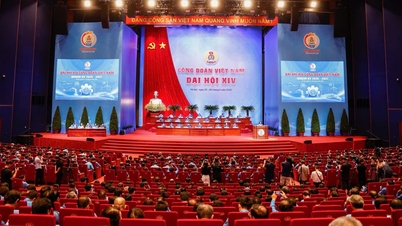
![[Photo] First session of the 14th Congress of the Vietnam Trade Union](https://vphoto.vietnam.vn/thumb/1200x675/vietnam/resource/IMAGE/2026/06/03/1780465947883_ndo_br_img-3852-jpg.webp)




















































![[Video] Sunset at Lap An Lagoon – Where the sun sets over the fishing nets](https://vphoto.vietnam.vn/thumb/1200x675/vietnam/resource/IMAGE/2026/05/31/1780192137701_beach-landscape-sea-water-nature-grass-745871-pxhere-com.jpeg)
































Comment (0)