

Goods trade with the US is growing strongly, but Vietnam is facing a series of major challenges related to its trade surplus and the increasing risk of being sued for circumventing import tariffs.
Goods trade with the US is growing strongly, but Vietnam is facing a series of major challenges related to its trade surplus and the increasing risk of being sued for circumventing import tariffs.
Identifying the challenges
Following the 2024 US presidential election, bilateral trade relations between Vietnam and the US face both challenges and opportunities in the coming years. Vietnam is currently facing three key challenges: a significant increase in both the proportion and rate of its trade surplus; the continued classification of Vietnam as a non-market economy by the US; and, with its high degree of economic openness and participation in numerous bilateral and multilateral trade agreements, Vietnam serves as a gateway for third-country goods to circumvent US import tariffs.
If these challenges are not identified and addressed promptly to mitigate their impact, they will create more difficult problems for export goods and risk affecting production. Therefore, finding solutions to significantly reduce the trade deficit, including achieving reciprocity in tariff schedules, as well as resolving issues of transshipment and origin fraud, are real, complex, and likely challenges.
At a recent online seminar titled "Assessing the Impact of US Trade Policy on Vietnam's Goods Trade," organized by the European and American Market Department ( Ministry of Industry and Trade ), Dr. Le Huy Khoi, Deputy Director of the Institute for Strategic and Policy Research in Industry and Trade, stated that many businesses and the international community have different predictions about the new trade policies under President Trump. However, above all, these policies will prioritize ensuring core interests for the US, namely protecting domestic production, avoiding excessive dependence on foreign sources, and attracting investment for domestic production.
In the first 11 months of 2024, bilateral trade between Vietnam and the US reached nearly $123 billion, an increase of nearly $13 billion compared to the whole of last year. The US continued to be Vietnam's largest export market with a turnover of $108.9 billion, an increase of 23.9%; imports from the US reached $13.5 billion, an increase of 7.3%; Vietnam had a trade surplus of $95.4 billion, an increase of 26.7% compared to the same period last year.
Vietnam's key export products to the US are diverse, ranging from agricultural products (coffee, cashews, pepper, rice), seafood (shrimp, basa fish), and garments, footwear, electronic components, wood and wood products, playing an important role in the global supply chain.
According to Dr. Khoi, in the coming period, processing and manufacturing industries such as textiles, footwear, electronics, machinery, and equipment, which have large export turnovers to the US, need to pay attention to trade defense measures. Agricultural products, which are essential consumer goods for Vietnam exported to the US, will not be significantly affected in the short term.
Virginia Foote, President and CEO of Bay Global Strategies, warned: “Under President Donald Trump 2.0, the U.S. may continue to implement protectionist measures such as import controls, tariffs, and stringent labor and environmental standards to protect domestic production and reduce the entire supply chain’s dependence on China.”
Diversify markets and increase imports from the US.
Vietnam's import and export figures for 2025 are projected to continue growing, driven by increased demand in many major markets, including the US, and declining inflation in several markets (EU, Japan). These factors positively impact Vietnam's trade with the world .
However, the risks of trade-restrictive policies and tariff barriers are always present, especially given the projected increase in export volume in 2025, which is expected to far exceed the $400 billion mark (the General Department of Customs estimates that total import and export for 2024 reached $782.33 billion).
To minimize risks, Dr. Le Huy Khoi emphasized that Vietnam needs to accelerate economic reforms, diversify export markets, and enhance competitiveness. Businesses should proactively improve technology, comply with international standards, and develop long-term strategies to meet the requirements of the US market. Major export industries to the US must proactively regulate themselves to limit scrutiny.
According to Mr. Diep Thanh Kiet, Vice President of the Vietnam Leather and Footwear Association (Lefaso), exports to the US have consistently accounted for over 40% of Vietnam's total leather and footwear exports for many years. Analysis shows that the national challenge is to reduce the trade deficit between the two sides to ensure fair trade, in line with the goals of the new US administration, as Vietnam currently has a large trade deficit with this market.
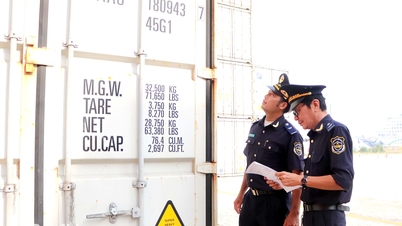
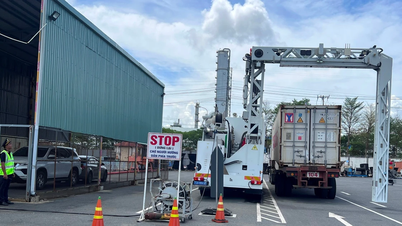
Regarding solutions, Mr. Kiet suggested that, on the government's side, to reduce the trade deficit, they could either reduce exports or increase imports. However, reducing exports is not feasible as it would affect economic growth, but exports should be controlled effectively to prevent fraudulent practices regarding the origin of goods. "Regarding imports, in my opinion, we should find import sources from the US, as this is a way to ensure fair trade with this market," Mr. Kiet suggested.
Source: https://baodautu.vn/nhan-dien-thach-thuc-thuong-mai-hang-hoa-voi-my-d233799.html


![[Image] Pleasant weather helps students enter the 10th grade entrance exam with confidence.](https://vphoto.vietnam.vn/thumb/1200x675/vietnam/resource/IMAGE/2026/05/29/1780034401612_ngay-1-thi-lop-10-minh-duy-8-5009-jpg.webp)


![[Photo] Ba Lang An Lighthouse - the "eye of the sea" amidst the "rock museum" of Quang Ngai province.](https://vphoto.vietnam.vn/thumb/1200x675/vietnam/resource/IMAGE/2026/05/29/1780038698840_anh-man-hinh-2026-05-29-luc-14-10-42.png)


































































































Comment (0)