

The 2026 Cloud Security State Overview report, sponsored by Fortinet and conducted by Cybersecurity Insiders based on a comprehensive survey of 1,163 senior cybersecurity leaders and experts worldwide , reveals a growing gap in the complexity of cloud environments.

Based on in-depth analysis of survey data, Fortinet identified three main factors that created the gap and increased complexity:
Fragmented defense system
Security solutions are expanding alongside the growth of cloud computing, but often lack coordinated efforts. This results in fragmented tools, inconsistent control mechanisms, and limited comprehensive monitoring capabilities.
Cybersecurity teams are forced to manually cross-reference alerts from multiple systems not designed to work together, even though nearly 70% of organizations consider tool overlap and monitoring gaps to be the top obstacles in building an effective cloud security solution.
Overstaffing
In addition to facing poorly synchronized systems, organizations are also grappling with a skills gap and an inability to recruit enough qualified cybersecurity professionals. This compounding challenge overwhelms cybersecurity teams worldwide, leading to slow responses and missed critical alerts or signals.
74% of those surveyed reported that their organizations are severely lacking qualified cybersecurity professionals, while 59% are still in the early stages of cloud security maturity.
These threats operate at machine-like speeds.
Cyber threat actors are using automation and artificial intelligence tools to detect misconfigurations, map permission paths, and identify exposed data faster than human-run defenses can respond. As the time between vulnerability discovery and attack shortens, over 80% of cybersecurity professionals surveyed said they lack confidence in their ability to detect and respond to cloud threats in real time – an alarming increase (up 16 points from the previous year's survey).
Cloud environments are inherently complex, even when built on a single vendor, due to their distributed architecture, dynamic identifiers, rapidly scaling services, and complex data flows. For many businesses, this complexity is further amplified by hybrid and multi-cloud deployments encompassing multiple public clouds, on-premises infrastructure, Software as a Service (SaaS) applications, and distributed users and devices.
Fortinet's survey shows that 88% of organizations are now operating in a hybrid or multi-cloud environment, up from 82% in last year's report. Of those, 81% rely on two or more cloud providers to run critical workloads (compared to 78% last year), and 29% of organizations are using more than three providers.
To address the security challenges associated with agile cloud environments, organizations are re-evaluating their security strategies. Survey data reveals a clear shift from individually managed, functionally specialized tools to unified security ecosystems.
To achieve the most effective cloud security, organizations must focus on addressing critical current issues, including hyper-growth, fragmentation, a limited number of cybersecurity professionals, and threats from artificial intelligence (AI). For organizations pursuing an AI strategy, this becomes even more crucial to ensuring a solid foundation of security and operational practices.
Source: https://doanhnghiepvn.vn/chuyen-doi-so/an-ninh-mang/nhan-dinh-an-ninh-dam-may-nam-2026-ngay-cang-phuc-tap/20260123024219339
![[Photo] General Secretary and President To Lam presides over a meeting with the Central Organizing Committee.](https://vphoto.vietnam.vn/thumb/1200x675/vietnam/resource/IMAGE/2026/06/03/1780482764658_a1-bnd-4741-3342-jpg.webp)
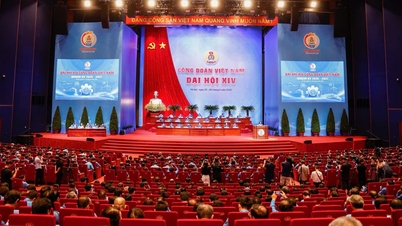
![[Photo] First session of the 14th Congress of the Vietnam Trade Union](https://vphoto.vietnam.vn/thumb/1200x675/vietnam/resource/IMAGE/2026/06/03/1780465947883_ndo_br_img-3852-jpg.webp)
![[Photo] Secretary of the National Assembly Party Committee, Chairman of the National Assembly presides over the meeting of the Standing Committee and Executive Committee of the National Assembly Party Committee.](https://vphoto.vietnam.vn/thumb/1200x675/vietnam/resource/IMAGE/2026/06/03/1780480353201_ndo_br_bnd-2585-jpg.webp)



























































![[Video] Sunset at Lap An Lagoon – Where the sun sets over the fishing nets](https://vphoto.vietnam.vn/thumb/1200x675/vietnam/resource/IMAGE/2026/05/31/1780192137701_beach-landscape-sea-water-nature-grass-745871-pxhere-com.jpeg)

































Comment (0)