

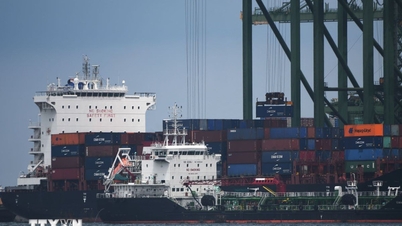
According to a Eurostat report, the European Union (EU) has significantly increased its grain imports from Russia despite the bloc's sanctions against the country.
In September 2023 alone, the EU increased its imports of Russian grain by 22% compared to August, reaching 180,000 tons, almost ten times the amount imported during the same period last year. This is the highest figure since the Ukraine conflict and the subsequent Western sanctions imposed on Russia.
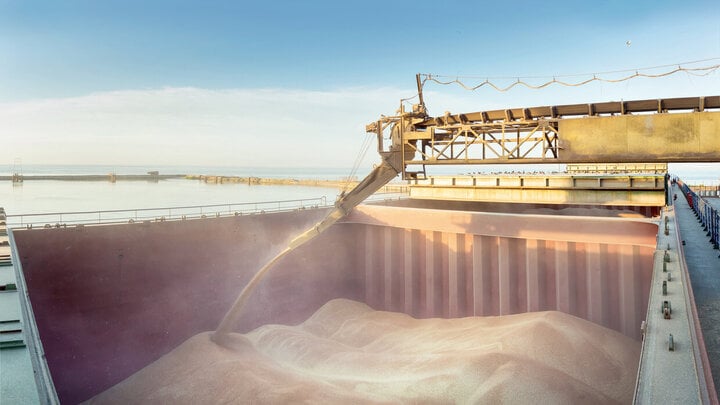
The EU increased its imports of Russian grain in September 2023 to 180,000 tonnes, almost tenfold compared to the same period last year. (Photo: RT)
Currently, Ukraine remains the largest supplier of grain to the EU this period with 1.2 million tons, down a quarter from the same period last year. Brazil ranks second with 1.1 million tons, followed by Türkiye with 204,000 tons. Canada is in the top 5 with 139,000 tons.
According to Eurostat statistics, the EU has also increased its imports of Russian fertilizers in recent months. Data shows that between July and September, Russia's share of fertilizer imports in the EU rebounded to 27%, similar to the third quarter of 2021.
Although neither Russian grain nor fertilizers are directly subject to Western sanctions, their exports have been hampered in recent months by financial, shipping, and insurance restrictions imposed on Moscow. Russia has repeatedly called for the lifting of these restrictions.
To date, the EU has imposed 11 rounds of Ukraine-related sanctions on Russia since the beginning of 2022, restricting the country's access to technology and markets. The bloc's total purchases from Russia have fallen by almost fivefold since the sanctions were imposed, dropping from 9.5% in February 2022 to just 2% in September 2023.
Meanwhile, Russia has diverted much of its trade to Asia, primarily to India and China.
Tra Khanh (Source: russian.rt.com)
Source
![[Photo] General Secretary To Lam visits the exhibition space showcasing books, photo exhibitions, and achievements of digital transformation in journalism.](/_next/image?url=https%3A%2F%2Fvphoto.vietnam.vn%2Fthumb%2F1200x675%2Fvietnam%2Fresource%2FIMAGE%2F2025%2F12%2F19%2F1766110879215_1766110240024-jpg.webp&w=3840&q=75)


![[Photo] Enchanting ancient rose garden on the mountainside in Nghe An](/_next/image?url=https%3A%2F%2Fvphoto.vietnam.vn%2Fthumb%2F1200x675%2Fvietnam%2Fresource%2FIMAGE%2F2025%2F12%2F19%2F1766109900916_vuon-hong-chin-do-thu-hut-du-khach-toi-check-in-o-ha-noi-3-20162778-1671624890024-1671624890104198100259.jpeg&w=3840&q=75)
































![[INFOGRAPHIC] Overview of the Hoa Phat Dung Quat Rail and Special Steel Production Plant Project](https://vphoto.vietnam.vn/thumb/402x226/vietnam/resource/IMAGE/2025/12/19/1766111183203_z7339170069817-126a3e5a095f62e606a0be41015c1b80.jpeg)





































Comment (0)