

When thinking of Tokyo, people often picture dazzling neon-lit skyscrapers, a modern high-speed rail system, or science fiction films like Akira and Ghost in the Shell depicting a futuristic Japan full of robots and holographic images. However, the reality of daily life is quite different: fax machines, floppy disks, and personalized seals (hanko) still persist – tools that have disappeared in most developed countries.
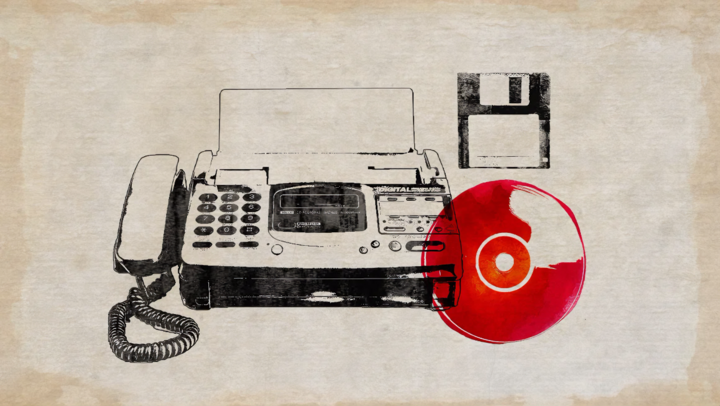
Will Japan give up fax machines? (Source: CNN)
The delays in digitalization and the cumbersome administrative system have caused significant inconvenience for citizens. One Facebook user once quipped, "Japanese banks are the gateway to hell," adding sarcastically, " Perhaps sending a fax would help. "
From technological pinnacle to technological decline
During the 1970s and 1980s, Japan was a global technology icon with names like Sony, Toyota, Panasonic, and Nintendo. Products such as the Walkman music player and the Mario Bros. game became cultural icons.
However, as the world shifted to a software and internet economy , Japan – which was strong in hardware – was slow to adapt. According to Daisuke Kawai, Director of the Policy Innovation and Economic Security Program at the University of Tokyo, Japan did not invest enough in information and communication technology, leading to the decline of the electronics industry and a brain drain to foreign companies.
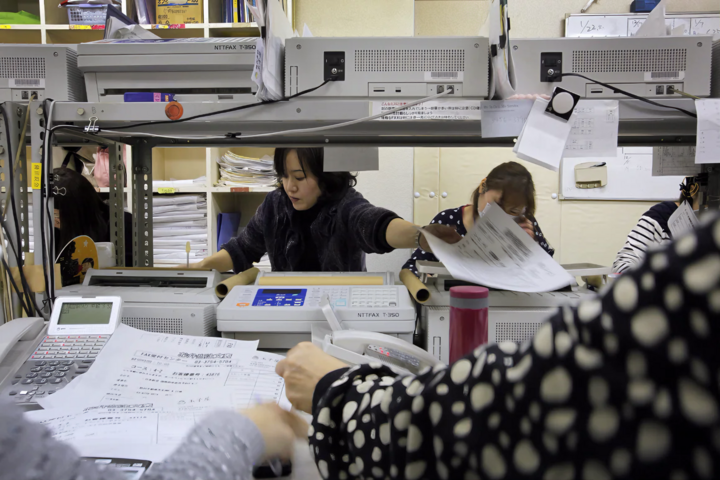
Employees at a company receive orders via fax and telephone in Tokyo in 2013. (Source: New York Times)
As a result, the government lacks digital literacy, there is a shortage of technology workers, and government agencies implement fragmented IT strategies, leading to a reliance on paper documents and manual seals.
Kawai argued: “Japanese companies are known for their risk-averse culture, seniority-based hierarchies… and slow, consensus-based decision-making processes – all of which hinder innovation.”
In addition, the high proportion of elderly people makes society skeptical of new technologies, worried about digital fraud, and still prefers traditional methods.
According to Jonathan Coopersmith, Professor Emeritus of History at Texas A&M University, small businesses don't see the need to switch from fax to computers because " fax still works well and everyone uses it ." Larger organizations, such as banks or hospitals, are concerned about service disruptions during the transition.
Digitalization also requires changes to thousands of legal regulations – a challenge that lawmakers are not particularly enthusiastic about, as it is not an issue that appeals to voters.
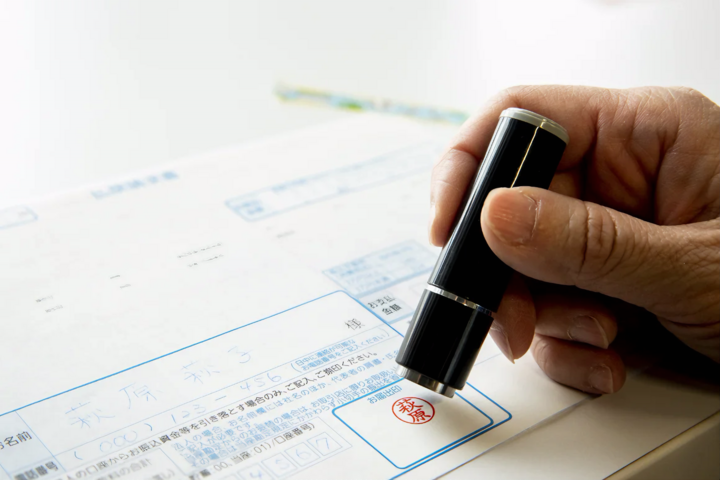
The hanko seal is stamped on a bank document in Tokyo, Japan. (Source: Getty Images)
The pandemic forced change.
Japan's digital backwardness became apparent during the COVID-19 pandemic. The government lacked the digital tools to handle the crisis, leading to overload. It wasn't until May 2020 that the Ministry of Health launched an online portal for reporting infections – replacing fax, telephone, and email.
A contact tracing app suffered a glitch that lasted for months. Remote learning and work were hampered because many people had never used Zoom or other file-sharing services. In 2022, a town inadvertently transferred its entire COVID-19 relief fund of approximately 46.3 million yen ($322,000) into a single individual's account. The mix-up stemmed from the bank being provided with both a floppy disk containing the information and a paper application form – but by the time authorities realized their mistake, the man had gambled away almost all of the money.
The situation became so dire that at one point, Takuya Hirai – who was appointed to the newly created position of Minister of Digital Transformation in 2021 – described the country's handling of the pandemic as a " digital failure ".
Since 2021, the Digital Agency has been established to promote digitalization. According to Professor Coopersmith, this is the result of “a combination of fear and opportunity.” The agency has deployed smart social security cards, promoted cloud infrastructure, and declared victory in the “war against floppy disks” last July – eliminating over 1,000 related regulations.
However, there were initial difficulties. On one occasion, the government asked citizens to provide feedback on metadata via Excel spreadsheets sent via email – which drew public backlash. Digital Minister Taro Kono subsequently pledged to use online forms.

Numerous hanko name seals are displayed at a hanko shop in Toshima Ward, Tokyo. (Source: AP)
Japan's digital future
According to Kawai, companies are quickly catching up, hiring outside experts to overhaul their systems. Masahiro Goto, a member of the digital transformation team at Nomura Research Institute (NRI), said many businesses are “ eager to move forward but don’t know where to start.” They are still using old systems and need support to transition.
The demand for digitalization consulting has increased sharply over the past five years, as Japanese companies that previously outsourced IT now lack the internal skills to digitize in-house.
“ Essentially, they want to operate more efficiently, and I believe they want to proactively adopt digital technology as a means of survival, ” Kawai observed. With a declining population, improving productivity is inevitable.
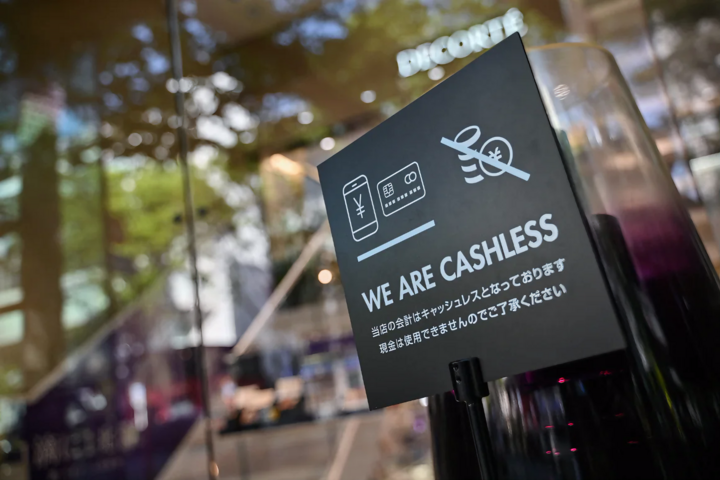
A sign indicating cashless payment is displayed outside a store in Tokyo's trendy Omotesando district. (Source: Getty Images)
Despite opposition – such as the 400 objections to the removal of fax machines from the government in 2021 – experts remain optimistic. Kawai predicts Japan could catch up with some Western countries within the next 5-10 years.
The public is also eager for digitalization, with many businesses accepting cashless payments and deploying online services. “ I’m sure that young people and the public in general want to digitize as quickly as possible ,” said Kawai.
Source: https://vtcnews.vn/nhat-ban-tu-cuong-quoc-cong-nghe-den-loi-thoi-ky-thuat-so-ar959017.html



![[Photo] First session of the 14th Congress of the Vietnam Trade Union](https://vphoto.vietnam.vn/thumb/1200x675/vietnam/resource/IMAGE/2026/06/03/1780465947883_ndo_br_img-3852-jpg.webp)
![[Photo] Secretary of the National Assembly Party Committee, Chairman of the National Assembly presides over the meeting of the Standing Committee and Executive Committee of the National Assembly Party Committee.](https://vphoto.vietnam.vn/thumb/1200x675/vietnam/resource/IMAGE/2026/06/03/1780480353201_ndo_br_bnd-2585-jpg.webp)
![[Photo] General Secretary and President To Lam presides over a meeting with the Central Organizing Committee.](https://vphoto.vietnam.vn/thumb/1200x675/vietnam/resource/IMAGE/2026/06/03/1780482764658_a1-bnd-4741-3342-jpg.webp)

















































![[Video] Sunset at Lap An Lagoon – Where the sun sets over the fishing nets](https://vphoto.vietnam.vn/thumb/1200x675/vietnam/resource/IMAGE/2026/05/31/1780192137701_beach-landscape-sea-water-nature-grass-745871-pxhere-com.jpeg)






































Comment (0)