

Mountainous communes in particularly difficult areas are not striving to achieve new rural standards because they fear losing social insurance support, rice for students, and benefits for officials and civil servants.
This situation was highlighted in the report of the National Assembly's Supervisory Delegation on the results of implementing the Resolution on the National Target Program for building new rural areas, sustainable poverty reduction in the period 2021-2025 and socio -economic development in ethnic minority and mountainous areas in the period 2021-2030.
The monitoring team assessed that the results of the national target program for building new rural areas varied greatly across regions, with the lowest figures in the northern mountainous areas and the Central Highlands. Some mountainous communes did not register to strive for new rural area standards by 2025 because achieving the standards would mean they would no longer be classified as particularly disadvantaged communes and would not be eligible for social welfare benefits such as health insurance, rice support for students, and benefits for officials and civil servants.
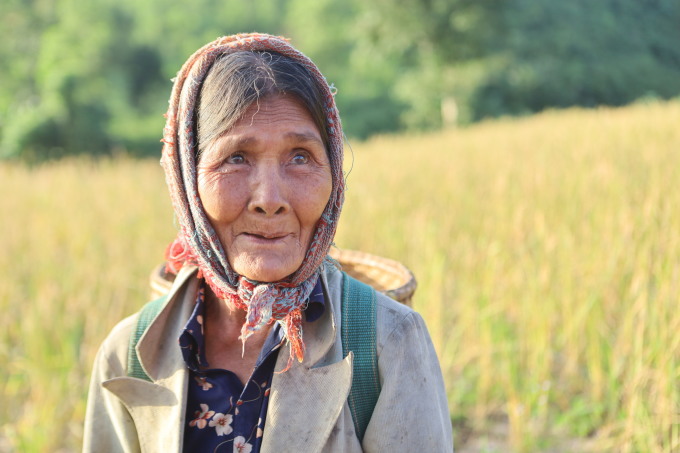
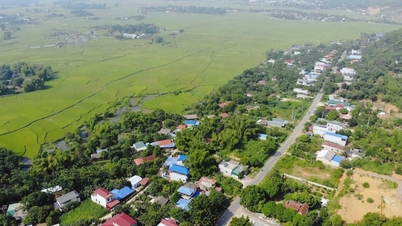
People in Khanh Vinh district, Khanh Hoa province, harvest upland rice in 2022. Most communes in this district are particularly disadvantaged. Photo: Xuan Ngoc .
According to Decision 861 of 2021 by the Prime Minister, the whole country has more than 3,400 communes in ethnic minority and mountainous areas. Of these, nearly 1,700 communes are in Area I (initial development), 210 communes are in Area II (still facing difficulties), and more than 1,500 communes are in Area III (extremely difficult).
Communes in areas III and II, if recognized as meeting the new rural standards, will be reclassified as communes in area I and will no longer be eligible for policies applicable to communes in areas III and II.
According to regulations, officials, civil servants, and public employees working in particularly difficult areas are entitled to attraction allowances; long-service allowances; initial allowances; allowances for purchasing and transporting fresh and clean water; and one-time allowances when transferring out of areas with particularly difficult socio-economic conditions or upon retirement.
In addition, they receive reimbursement for transportation costs; allowances for sightseeing, studying, and professional development; preferential allowances based on occupation; mobility allowances; and allowances for teaching ethnic minority languages for teachers and education administrators. Students in this area also receive government support for food, housing, and rice.
The monitoring team assessed that the results of the new rural development program are uneven and not truly sustainable; some localities lack decisiveness and show signs of stagnation. The mechanism for integrating central government budget funds from various programs to support new rural development in particularly difficult communes and poor districts has not been truly effective.
The quality of achieving new rural standards and maintaining the sustainability of results in some communes after achieving the standards remains limited, especially in the criteria of environment, income, and social security and order. The quality of infrastructure projects after achieving the standards in some localities has shown signs of deterioration due to a lack of regular attention and maintenance.
The supervisory delegation recommended that the Government and the Prime Minister definitively resolve difficulties and pressing issues regarding land for housing, production land, and clean water, and arrange stable settlements for ethnic minority and mountainous areas; and address inadequacies in the implementation of policies for communes that have been recognized as achieving new rural standards. Policies supporting communes in particularly difficult circumstances, poor districts, poor and near-poor households, and vulnerable groups in rural and ethnic minority areas should be revised and supplemented.
"Policies are needed regarding vocational training, job creation, housing support in rural areas, and social protection for poor households unable to work," the monitoring team proposed.
The National Assembly will dedicate the entire day of October 30th to discussing the monitoring report on the implementation of the Resolution on the three aforementioned national target programs.
Source link




























![[Photo] Reception to welcome General Secretary and President To Lam and his wife on their State visit to the Philippines](https://vphoto.vietnam.vn/thumb/1200x675/vietnam/resource/IMAGE/2026/06/01/1780295488620_vna-potal-chieu-dai-chao-mung-tong-bi-thu-chu-tich-nuoc-to-lam-va-phu-nhan-tham-cap-nha-nuoc-toi-philippines-8798060-7855-jpg.webp)



















































Comment (0)