

The historic pandemic
Many years ago, Beijing's rapid development brought about significant negative consequences of a megacity, such as overpopulation, severe traffic congestion, and air pollution.
Faced with this challenge, in 2014, Chinese policymakers approved a landmark strategy: the coordinated planning of the Beijing-Tianjin-Hebei region (abbreviated as the Beijing-Tianjin-Hebei region). At its core, this strategy addresses the "majority urbanization syndrome" of the capital by optimizing, adjusting, and restructuring urban space.
To realize this goal, Beijing has undertaken an unprecedented "major overhaul," proactively shifting non-essential functions outwards and retaining only four core elements: politics , culture, international exchange, and technological innovation.
In the initial phase alone, hundreds of low-efficiency or polluting manufacturing businesses, wholesale markets, and logistics centers were closed or relocated to surrounding areas. Even core administrative offices of the Beijing city government were among the first to move out of the city center to Tongzhou District – a comprehensively planned satellite city to the east.
This strategic shift not only frees up core space for the capital city of Beijing but also creates new growth poles, paving the way for more balanced development across the entire region.

The modern look of Beijing today
"Two wings" Thong Chau - Hung An and the solution to the spatial problem
Beijing's transformation today is closely linked to its unique "one axis, two wings" model. If Tongzhou District acts as the "right wing," carrying out the administrative functions of the city government, then the Xiong'an New Area (Hebei Province), located 100km southwest of Beijing, is the solid "left wing," housing a system of universities, major hospitals, research institutes, and headquarters of central state-owned enterprises (SOEs).
Dubbed the "city of the future," the Hung An New Area, after more than nine years since its establishment, has transformed its blueprints into a modern, tangible urban center. From a purely agricultural region, Hung An has now emerged as a modern, green, and smart megacity. It employs a unique "twin city" model, where a digital city built on big data operates synchronously alongside the physical city. Leading technology corporations such as Satellite Network Group and Hua Neng Group have relocated their headquarters here and are fully operational.
The harmonious collaboration between Tongzhou and Xiong'an has created an optimal solution to alleviate the burden on Beijing, helping the capital maintain its position as the cultural and political center of China while effectively addressing the problem of overloaded infrastructure.

The Xiong'an Commercial Service Center at sunset in Xiong'an, Hebei Province, on March 15, 2025. Photo: Xinhua News Agency
Transportation networks and green spaces are changing the definition of distance.
One of the most noticeable achievements in Beijing's urban landscape today is its ultra-fast inter-regional transportation infrastructure. The geographical distance between Beijing, Tianjin, and Hebei has been erased thanks to a dense network of high-speed rail, inter-provincial highways, and inter-provincial bus systems. Residents can easily travel from central Beijing to Xiong'an by high-speed train in less than an hour.
The emergence of Beijing Daxing International Airport, located right on the border between Daxing and Langfang districts (Hebei province), along with the upgrading and synchronization of the entire regional airport system, has established a comprehensive air transport system, transforming Beijing, Xinjiang, and Jizhou into an urban cluster effectively connecting global supply chains.
Along with the development of a modern highway network, the ecological landscape and environmental protection system of "green infrastructure" is also witnessing impressive transformations. To improve the quality of life, Beijing and neighboring provinces have embarked on a vigorous campaign to clean up water and air. Millions of hectares of forest have been replanted, and the concentration of PM2.5 fine particulate matter has decreased by nearly half compared to before the inter-regional strategy was implemented.
Now, the blue sky and expansive ecological parks like Jinhu Park have become an integral part of daily life for residents of the capital and surrounding areas.

Workers from the China Railway Construction Engineering Group Corporation (CRCEG) work at the Xiong'an branch campus of Beijing Forestry University on February 11, 2026. Photo: Xinhua News Agency
The human-centered philosophy in the heart of the modern city.
Behind the skyscrapers, microchip research centers, and AI-trained humanoid robots, the core value behind Beijing's urban success today lies in its people-centered governance philosophy. Development policies prioritize not scale or speed, but rather focus on improving the quality of life and well-being of its residents.
When implementing large-scale relocation projects, the government not only provides adequate compensation but also creates sustainable livelihoods for the people. Previously small traders in rural Hebei can now own large-scale wholesale warehouses in modern logistics centers. Personnel and professionals relocating from central Beijing to new urban areas are guaranteed maximum benefits through a "Talent Card" system, allowing them easy access to high-quality healthcare services, pensions, and national-standard schools for their children without any administrative obstacles.
The continuous increase in the number of permanent residents in satellite cities is the clearest evidence of the attractiveness and reassurance people have in the government 's long-term vision.
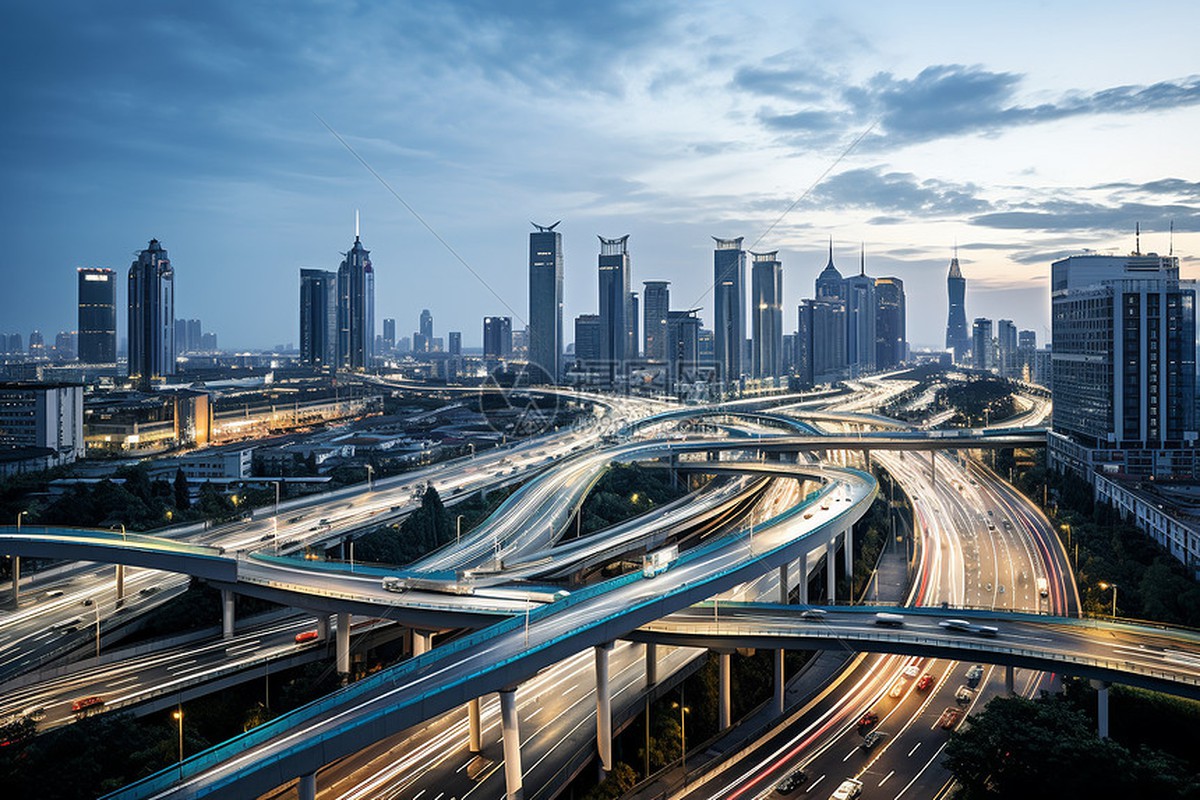
The urban landscape of Beijing today is the result of a strategic vision, a long-term, generational perspective, and strong political determination. By repositioning its development space, closely coordinating with neighboring localities, and persistently pursuing green growth and innovation, Beijing has not only thoroughly addressed the shortcomings of a megacity but also forged a model for sustainable urban development trends worldwide.
Well-planned urban development, smart infrastructure, and sustainable welfare – these are clear examples of the effectiveness that Beijing is demonstrating vividly.
Source: https://phunuvietnam.vn/nhin-lai-cuoc-dai-dich-chuyen-lich-su-cua-bac-kinh-238260521172713409.htm






















![[Photo] Reception to welcome General Secretary and President To Lam and his wife on their State visit to the Philippines](https://vphoto.vietnam.vn/thumb/1200x675/vietnam/resource/IMAGE/2026/06/01/1780295488620_vna-potal-chieu-dai-chao-mung-tong-bi-thu-chu-tich-nuoc-to-lam-va-phu-nhan-tham-cap-nha-nuoc-toi-philippines-8798060-7855-jpg.webp)
















































Comment (0)