


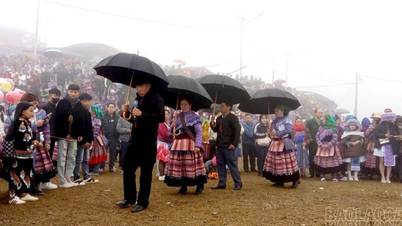
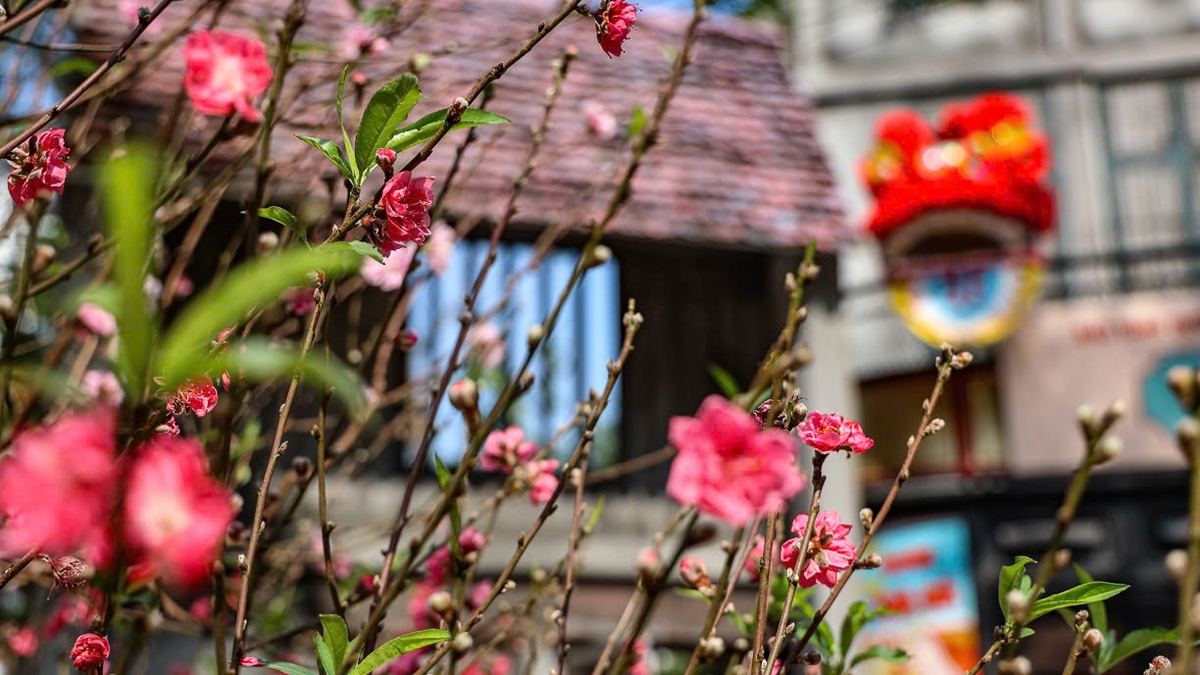
Spring arrives on the slopes of Northwest Vietnam with the slow pace of clouds and sunshine. As the fading peach blossoms linger on the verandas, and the sound of the flute calling to lovers echoes through the early morning mist, the highland villages seem to awaken from their long slumber. In the sacred atmosphere of the first days of the new year, Cat Cat village, nestled beneath the Hoang Lien mountain range, appears both familiar and new, carrying the spirit of traditional Tet (Lunar New Year) blended with the rapidly evolving tourism industry.
More than just a destination for scenery and experiences, spring in Cat Cat is also a season of subtle yet enduring changes: changes in preserving identity, in the mindset of community-based tourism, and in the aspiration to cherish cultural values for sustainable development. Amidst the vibrant colors of spring, the story of Cat Cat today is therefore not just the story of tourists, but also the journey of a village seeking harmony between tradition and modernity.

Cat Cat Village is not a land rich in resources or material conditions. Since the French colonial era, the lives of the Hmong people here have been difficult, but they are hardworking, thrifty, and self-reliant. Hardship has forged their unique character: the people of Cat Cat are resilient, deeply connected to their community, and appreciate what they have.
Since 2004, when the concept of community-based tourism was still quite new in the highlands, a tourism project was quietly "planted" in Cat Cat village. Not driven by short-term profit motives, the project from the outset set a dual objective: to create sustainable livelihoods for the people while preserving the indigenous cultural values, cherished over generations, creating jobs, increasing revenue, and contributing to the local budget.

Mr. Nguyen Trung Kien, Deputy Director of Cat Cat Tourism Co., Ltd., shared: “We don't follow the purely tourism approach of building houses, opening services, and welcoming guests. What we aim for is to build a happy village, where the people are not left out, but become the main actors in the development process; where tourists not only come to visit, but also live, experience, and learn to appreciate the local culture.”
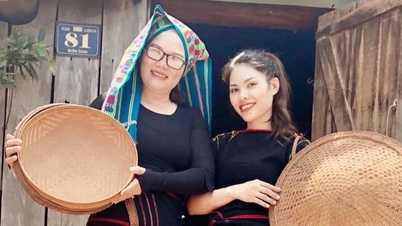
From its initial cautious steps, after more than 20 years, the community-based tourism model in Cat Cat has taken shape. To date, the project employs approximately 250 people, the majority of whom are local residents representing multiple generations in the village, from young people and middle-aged women to elderly individuals. Only eight are staff members or experts from elsewhere, providing technical support and management; the rest of the operational activities, services, production, and tourist reception are handled entirely by the Mong people of Cat Cat themselves.
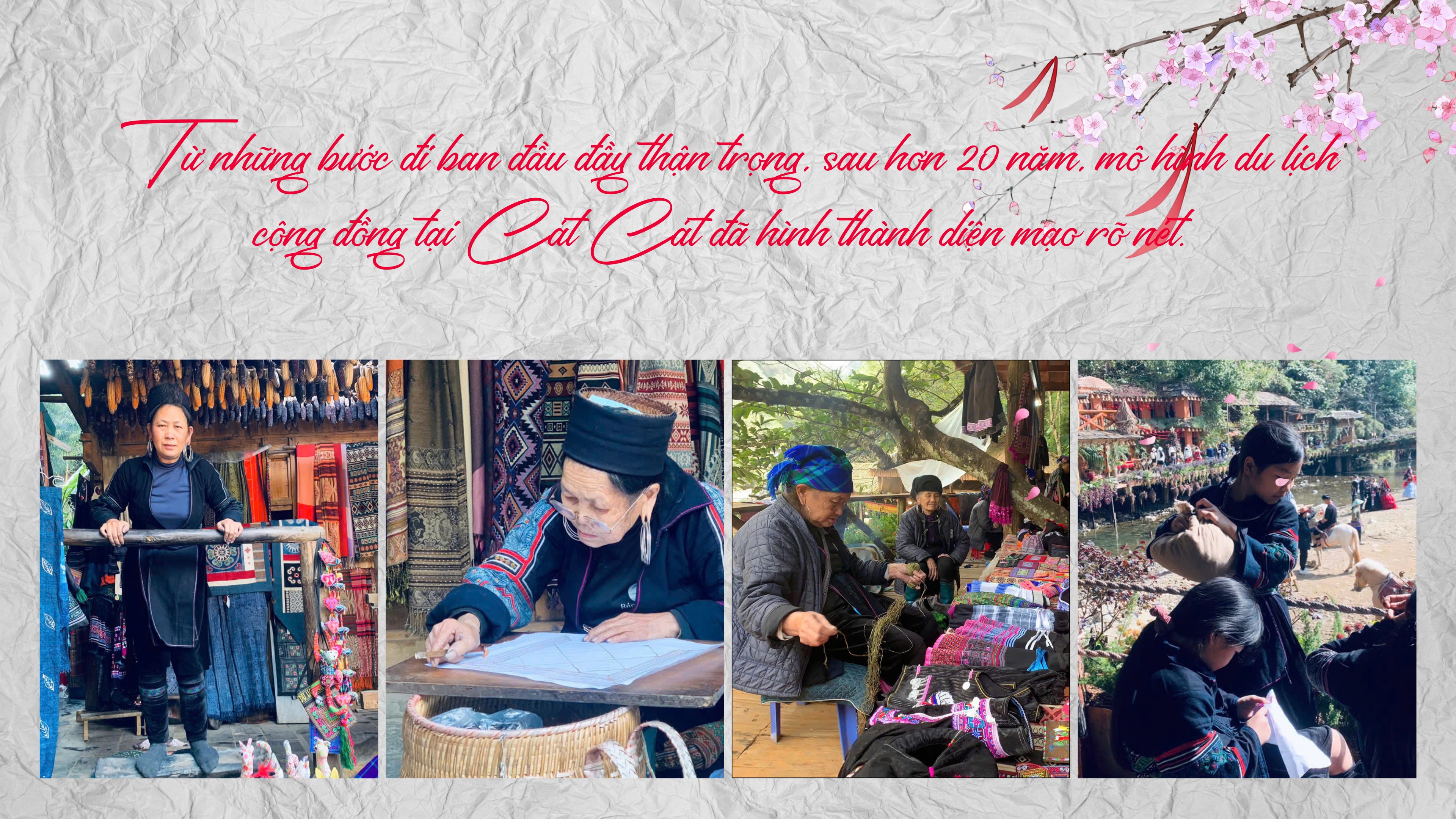
Mr. Ma A Pao, manager of Cat Cat Tourist Area, said: “What we value most is the genuine participation of the people. Those who are strong do the heavy work, while the older people participate in tasks that are within their capabilities, such as handicrafts, flower care, and guiding tourists on experiences. No age discrimination; no one is left out of the development process.”
According to him, it is this inclusiveness that has created the special vitality of Cat Cat tourism, where each resident feels they have a role, responsibility, and rights linked to the overall development.
Based on that model, Cat Cat Tourism Company Limited not only creates stable livelihoods for the people but also awakens and nurtures pride in their homeland and cultural identity, which was once in danger of disappearing. When tourism becomes an integral part of daily life, people no longer view traditional customs, practices, and lifestyles as outdated, but as "common assets" that need to be preserved and passed on to future generations. Therefore, tourism does not diminish culture but becomes a catalyst for the "awakening" of local culture, retold through everyday stories, vividly reflected in the rhythm of daily life in the village.

What makes Cat Cat special is not only its harmonious natural landscape of mountains, forests, rice paddies, and flowers, but also the way the people are closely connected to tourism. For them, tourism is not simply business or a service, but an opportunity to protect the land, preserve the living space, and build sustainable livelihoods. Spanning approximately 70 hectares, Cat Cat has no enclosed fences or rigid boundaries, yet it is protected by a strong sense of community that has endured through generations. This land does not belong to anyone in particular; it is a place where the community shares a common responsibility.
Every morning in Cat Cat, when the mist still lingers on the mountain slopes, one can easily witness the scene: adults heading to the fields, tending to flowers and gardens; elderly people meticulously working on tasks within their capabilities; and children following their parents, learning how to sow seeds and interacting with tourists. These rhythms of labor unfold naturally, without noise, yet they reflect the close bond between people and the land, between generations within the same community. It is this simple picture of life that makes visitors not only come to see, but also stay to feel, understand, and love Cat Cat as if it were their own home.
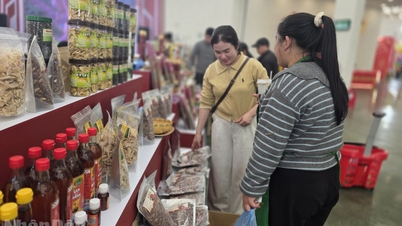
Handicrafts, agricultural products, fruits, and souvenirs in Cat Cat all bear the mark of the local people. When tourists come, they not only see the beautiful scenery but also feel the pride, love, and responsibility towards the community. The elderly here are not only caregivers for their grandchildren but also a source of motivation and inspiration for the younger generation, helping them to go to school, participate in activities, and continue to preserve their cultural identity.
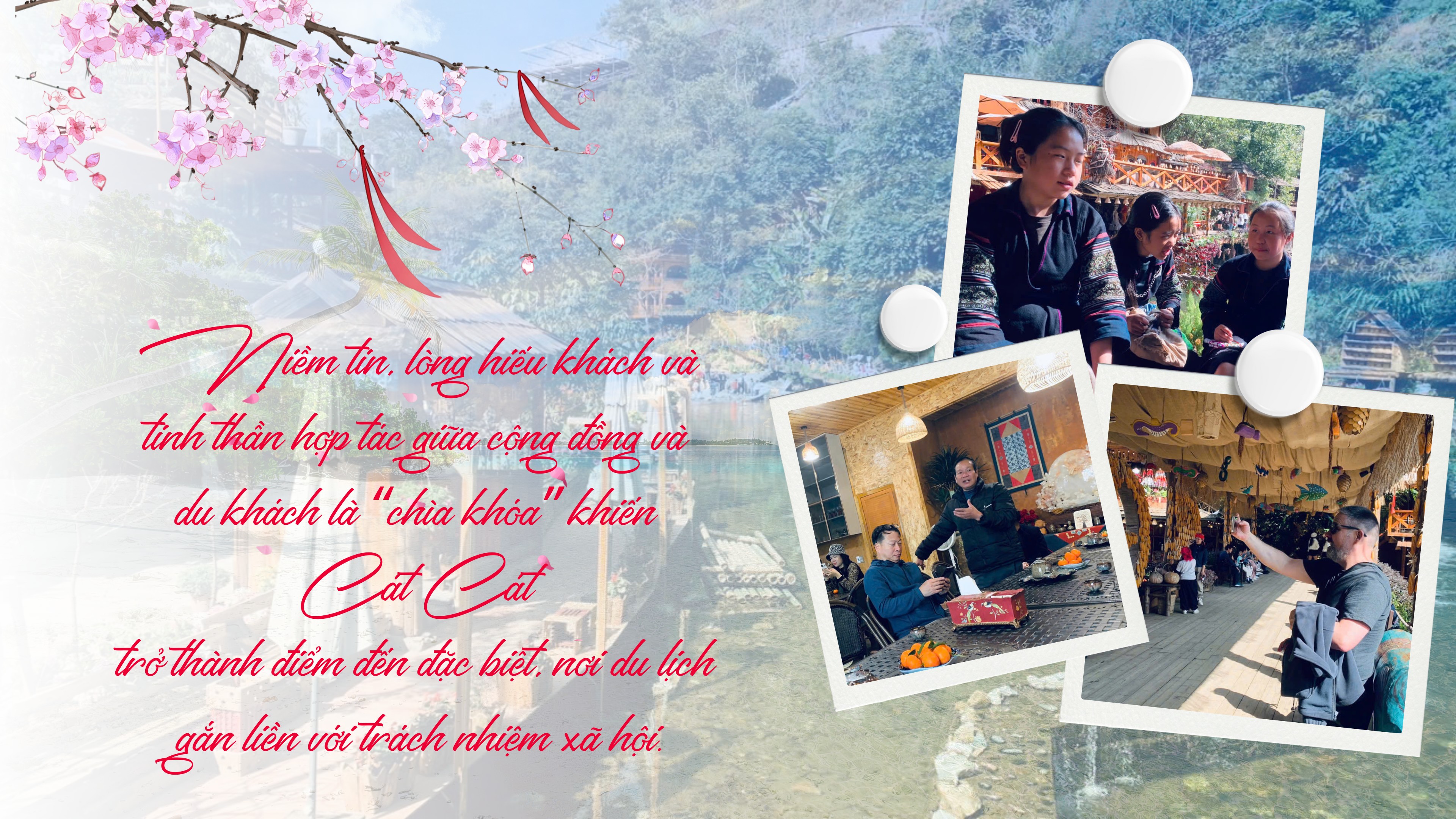
Mr. Nguyen Trung Kien shared: “There are elderly people who have participated in the project for 10-20 years. They are role models for their children and grandchildren, guiding them on how to care for the flowers, manage the fields, and communicate with visitors. It is they who have created trust and attraction for tourists.”
Tourism in Cat Cat is not a passive service delivery, but a journey of building shared happiness with the local people. Trust, hospitality, and a spirit of cooperation between the community and tourists are the "keys" that make Cat Cat a special destination, where tourism is linked to social responsibility.
Today, Cat Cat serves as a model for sustainable community tourism: preserving culture while creating livelihoods for the people, bringing happiness to everyone. Amidst the booming tourism industry in Northwest Vietnam, Cat Cat still maintains its unique rhythm – the rhythm of the land, its people, and their love for the very place they live.
Presented by: Thuy Thanh
Source: https://baolaocai.vn/nhip-dieu-du-lich-cat-cat-post894002.html



































































Comment (0)