

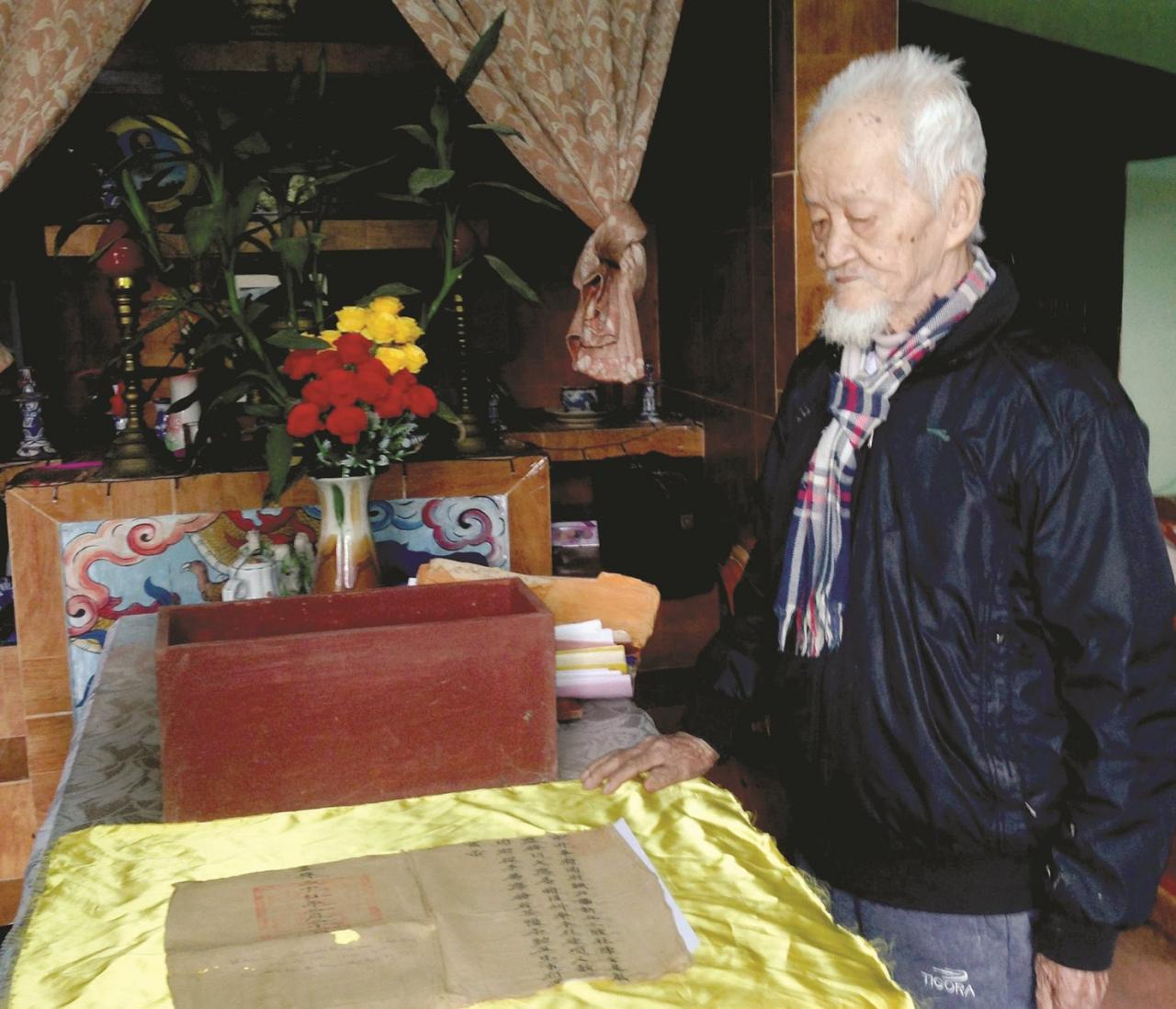
Village teacher
His name was Le Van Phu (he passed away in 2019). He taught while traveling throughout his hometown to collect folklore materials. This elderly teacher used the pen name Phu Van - the word Phu comes from Phu Hung, the name of his old hometown.
The old teacher devoted all his energy during his retirement to writing three volumes: "Folk Songs," "Homeland," and "Old Stories of the Old Villages." These three books record information about old villages such as Phu Hung, Vinh An, Tich Dong, Thach Kieu, Bich Ngo, Khuong My, etc., south of the Tam Ky River, which he had diligently researched throughout his life.
Connecting with the memories of previous generations, Mr. Phu pointed out that the original name of his hometown was Tan Khuong commune, later changed to Phu Khuong, then to Phu Hung. The final name was Tam Xuan - which has been retained to this day.
Following up on Mr. Phu's initial findings, I diligently searched for surviving Chinese-language documents in the locality and found many texts proving the name changes of Tam Xuan 1 and Tam Xuan 2 communes in Nui Thanh district over different periods.
These elderly men – the "living historical records" – have "lived and died with their villages." Through their stories and accounts, and through the "notes" of author Phu Binh - Le Dinh Cuong, readers can easily visualize the history of these villages dating back to the time of the founding of the southern region of Quang Nam province.
Like a bridge, the names of places and villages, or more broadly, the soul, meaning, and identity of our homeland, are meticulously and consistently passed down through generations, from the elders Ngo Duy Tri, Tran Van Truyen... to Phu Binh, Hai Trieu, and Pham Huu Dang Dat.
Some have passed away, while others, like the author Phu Binh, remain sharp enough to recount the old stories. But after them, how many will have the dedication to delve to the very origins of these place and village names? (XUAN HIEN)
Former Con Dao prisoner
His name was Tran Van Tuyen, also known as Truyen; during the resistance war from 1954 to 1975, he used the words "Huong" and "Tra" taken from the names of his old hamlets (now Huong Tra Dong and Huong Tra Tay neighborhoods of Hoa Huong ward, Tam Ky city) as his pseudonym.
He retired in 1985. During his retirement, he actively researched surviving classical Chinese documents to use as a basis for reconstructing the ruins of the old Tam Ky commune communal house, originally located in Huong Tra hamlet. Calling for funding from various sources, primarily from people in the hamlet, he mobilized resources to rebuild the communal house from the old wooden frame. Upon completion, he proposed renaming it "Huong Tra" to replace the old Tam Ky commune communal house.
According to him, the scope of Tam Ky commune has expanded too much since its inception, and it is necessary to use the name Huong Tra, the first place of residence of people from Hoang Hoa district, Thanh Hoa province, who came to the Tam Ky river confluence area, to define it.
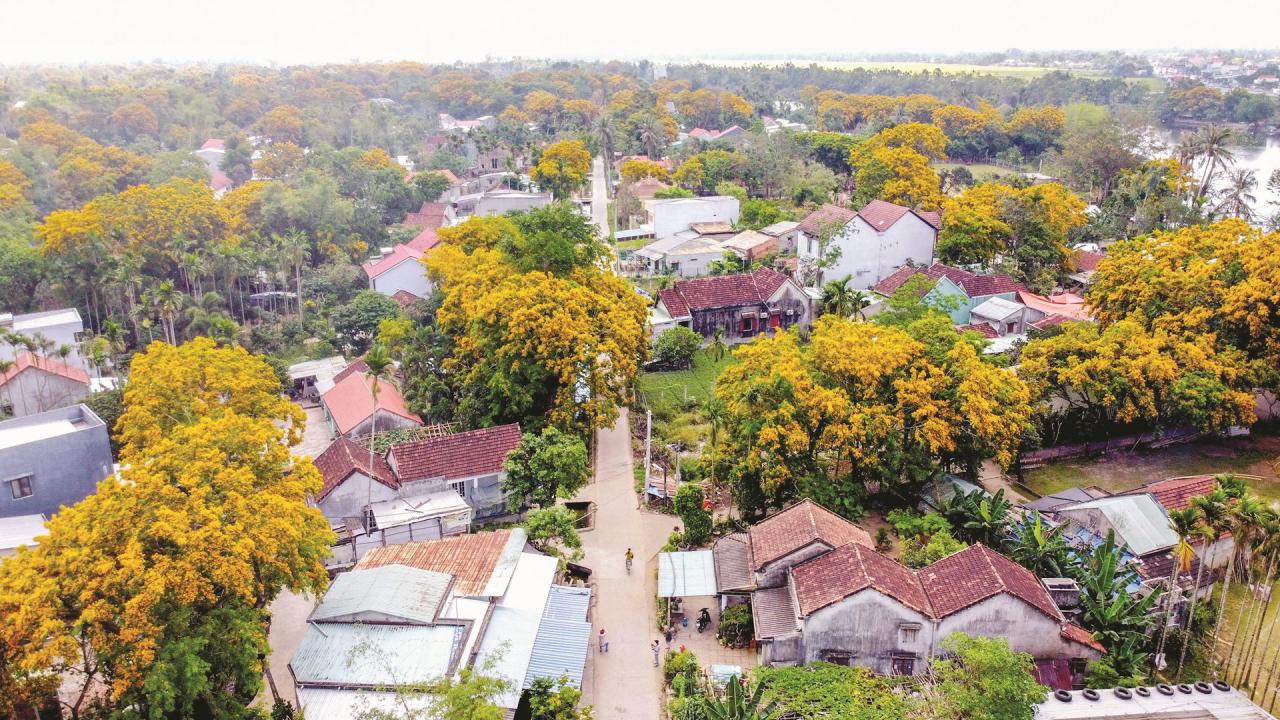
Everyone agreed with his opinion. As a result, once again, the name of a small hamlet, which had been thought to only exist in folklore after numerous changes according to administrative boundaries, became an officially preserved historical place name.
Mr. Tuyen passed away in 2023. The funeral invitation placed on his coffin during the burial ceremony clearly stated the following Chinese characters after the deceased's name: "Huong Tra hamlet, Hoa Huong ward, Tam Ky city" - a hamlet name that accompanied this devoted son of the village to his final moments.
The Party Secretary's surname is Tra.
His name was Tra Xuan Hinh, and he relocated to North Vietnam in 1954. After 1975, he returned to work in Phuoc Hoa ward, Tam Ky town. The author only had access to documents that he collected or copied from his family.
Through this, we learn an interesting detail: Around the years following the Northern border war, his locality launched a campaign to eradicate superstition; taking advantage of this, some fanatics conveniently destroyed the Chinese characters inscribed on the temple and pagoda structures.
Mr. Hinh also participated to some extent in that; and, being proficient in classical Chinese, he secretly copied valuable couplets, horizontal plaques, ancestral tablets, and ceremonial texts.
It wasn't until after his death (2010) that his family showed us those documents, and we were astonished to discover many valuable records related to the origin of the village's name, the architecture of the temples, and the cultural customs of Tu Chanh Ban Thach village (now belonging to Phuoc Hoa and Hoa Huong wards). In his notes, Mr. Hinh estimated that the village's name had very ancient origins.
Following in his footsteps, through the Chinese-language texts found in the former Tam Ky and Tu Ban communes, the author has proven that the original name of this place was "Suoi Da Man" - a name recorded by scholar Le Quy Don in 1776 in his book "Phu Bien Tap Luc".
The cooperative official
On the northeastern slope of the mountain, where the tallest television tower in Quang Nam is located, is the house of Mr. Ngo Duy Tri (a former cadre who relocated to the North; he passed away in 2015).
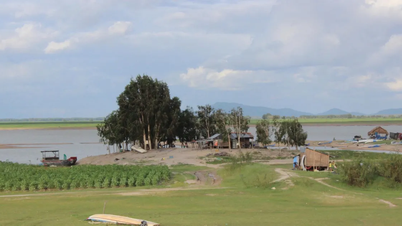
Returning from Thai Nguyen province in the North after April 1975, Mr. Tri participated in the establishment of agricultural cooperatives in his locality. His hometown, Tu Chanh An Ha commune, borders the Chien Dan lagoon, which is historically significant.
Thanks to his prior knowledge of classical Chinese, he quietly read through each page of the village's land register compiled in 1807 during the Gia Long era, noting the area of each plot of land in the village to help local agricultural cooperative officials compare it with reality.
Using the names of landowners dating back to the early 19th century, he contacted various clans to cross-reference genealogies and determine the time periods in which each individual lived within the clan through generations. From there, he began researching the genealogies of clans living around the Chiên Đàn lagoon, which later became known as Bãi Sậy - Sông Đầm.
By linking genealogical records, he reconstructed the village-building journey of the inhabitants of An Ha village and the neighboring villages of My Cang, Thach Tan, Vinh Binh, Tan An, Ngoc My, and Quang Phu.
Through his collection "Ngo Duy Tri's Stories," the land and people of the eastern communes and wards of Tam Ky city from the time of its reclamation are vividly portrayed. Building upon and further exploring his research, the author has been able to paint a lively picture of the area around Chien Dan lagoon – formerly Ha Dong district, which once belonged to Le Duong district of Thang Binh prefecture, Quang Nam province.
Source



![[Image] Nearly 125,000 Hanoi students completed the Literature exam for the 10th grade entrance exam.](https://vphoto.vietnam.vn/thumb/1200x675/vietnam/resource/IMAGE/2026/05/30/1780117233041_ndo_br_thiet-ke-chua-co-ten-2-png.webp)














![[Photo] Admire the coral "masterpiece" amidst the million-year-old heritage of Dak Lak province.](https://vphoto.vietnam.vn/thumb/1200x675/vietnam/resource/IMAGE/2026/05/30/1780107638639_y25-jpg.webp)






































































Comment (0)