

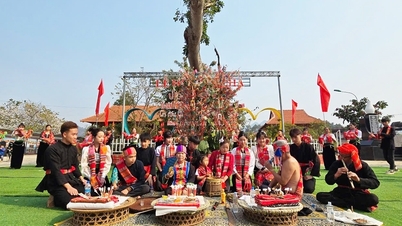
Amidst the hustle and bustle of modern life, the Hết Chá Festival remains almost entirely preserved with its ancient traditions. From the early morning, the ceremonial pole is erected solemnly in the village square. The pole is adorned with brightly colored fabrics, garlands, and various sculpted objects carrying spiritual significance. For the White Thai people, the ceremonial pole not only heralds the festival but also serves as a sacred link connecting people to their ancestors.
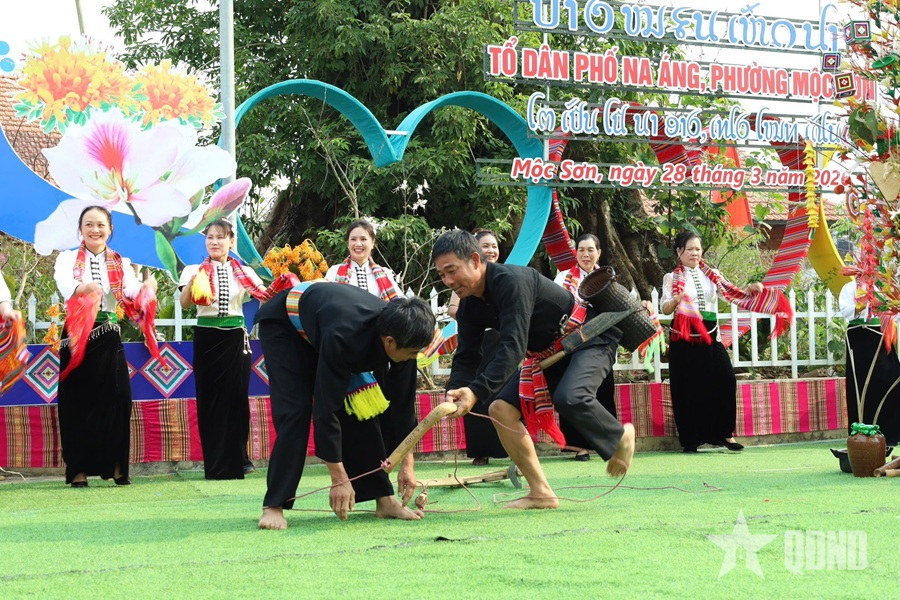 |
| The "Training buffaloes to plow the fields" performance at the festival. |
 |
| Thai folk dances are performed at the festival. |
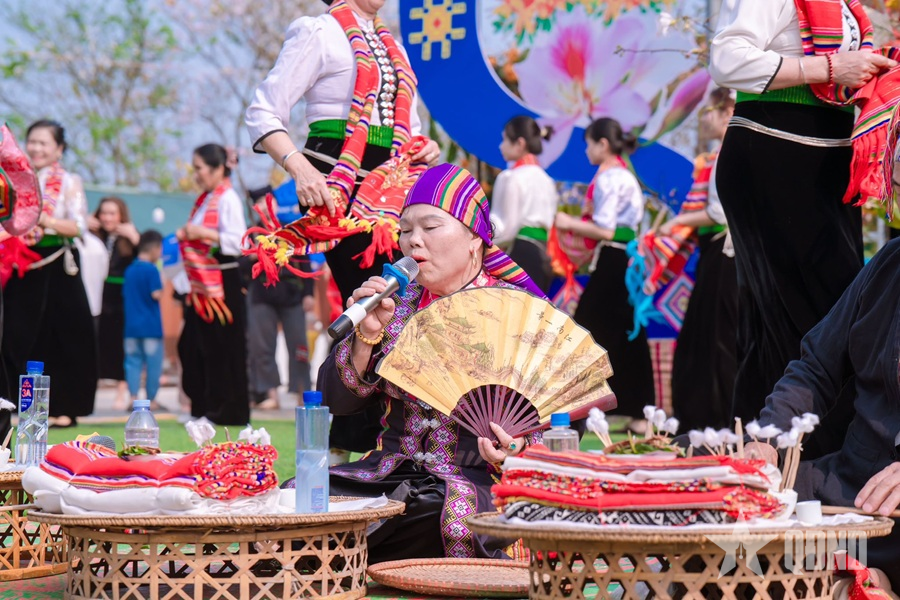 |
| The shaman performs the ritual offerings. |
The festival unfolded on a day of joyful village reunion. The smile and voice of Mrs. Luong Thi Loat (born in 1960, Na Ang residential area) still echo in my mind: “Every time there’s a festival, those who live far away return. Everyone joins hands in the circle dance, sits around the ceremonial table, and visits relatives. Participating in the festival is also a return to our roots, so that our children and grandchildren remember that we are Thai people. As long as the customs remain, the village remains.”
The Hết Chá festival also serves as a bridge connecting generations in the village. The elders teach their children and grandchildren how to erect the ceremonial pole, prepare offerings, and perform traditional rituals; the youth learn each dance and folk song. These lessons about culture are not found in books but are passed down through hands, eyes, and the vibrant rhythm of the drums during the festival.
From early morning on the day of the festival, the village resounded with the sounds of gongs and drums. Amidst the vibrant colors of their traditional costumes, the villagers busied themselves preparing elaborate offerings to respectfully present to the deities and the shaman. The offerings included: boiled duck, boiled rooster, pork, white sticky rice, wine, eggs, tightly woven cloth, local cotton fabric, and money. Each offering tray was covered with a square piece of cloth, about 3 kilograms of sticky rice, two full bowls of rice, two silver rings, two fresh chicken eggs, beeswax candles, and cotton flowers. Beside them were wine, cups, plates, etc., for performing the rituals.
In front of the ceremonial pole, the shamans perform rituals to worship the earth god and other deities, and also carry the rice flower and bauhinia flower offerings to the main courtyard. Amidst the incense smoke, the people respectfully offer their wishes and hopes for a prosperous life and a peaceful village.
Following the solemn ceremony is a vibrant and colorful festival, vividly recreating the life of the Thai people in the early days of establishing their villages and settlements. Simple yet joyful folk performances evoke the familiar rhythm of labor in the highlands. The game of gathering wild vegetables takes visitors along with graceful Thai girls amidst the mountains and hills, working and singing lively love songs. The games of catching fish and hunting create a vivid picture of labor in the mountainous region.
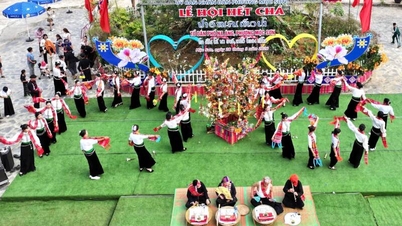
Interspersed among the performances are the graceful Thai xòe dances. In their black skirts, green sashes, and tight-fitting blouses, Thai girls move softly and gracefully to the rhythm of the drums and gongs. Hand in hand, feet moving rhythmically, the circle gradually expands, and tourists, slightly intoxicated, find themselves drawn into the dance without even realizing it.
Source: https://www.qdnd.vn/van-hoa/doi-song/nho-ve-le-hoi-het-cha-1041417
![[Photo] General Secretary and President To Lam presides over the meeting to approve the draft report on the results of the second inspection by the Politburo of the Standing Committee of the Hanoi City Party Committee.](https://vphoto.vietnam.vn/thumb/1200x675/vietnam/resource/IMAGE/2026/05/26/1779789811432_a2-bnd-4430-9620-jpg.webp)






















































Comment (0)