

Sixty-nine years have passed since the victory at Dien Bien Phu, but its echoes still resonate throughout the nation's history. Reading the memoirs of veterans, we are deeply moved by the fascinating stories of that glorious era.
To achieve the Điện Biên Phủ victory, "renowned throughout the world and shaking the earth," as the poet Tố Hữu wrote, countless sacrifices and bloodshed were made by the people and soldiers. Difficulties and dangers were not limited to the 55 days and nights of the campaign, but extended throughout the entire preparation process, from the two times of "pulling artillery in and pulling it out" to transporting weapons and food supplies through bombing raids and shelling....
Tobacco and the soldiers of Dien Bien Phu
In the stories about the logistical preparations for this major campaign, besides the remarkable feat of transporting thousands of tons of rice, salt, herds of buffalo, cattle, and pigs, there were also special goods, deeply rooted in Vietnamese identity, that contributed to the victory.
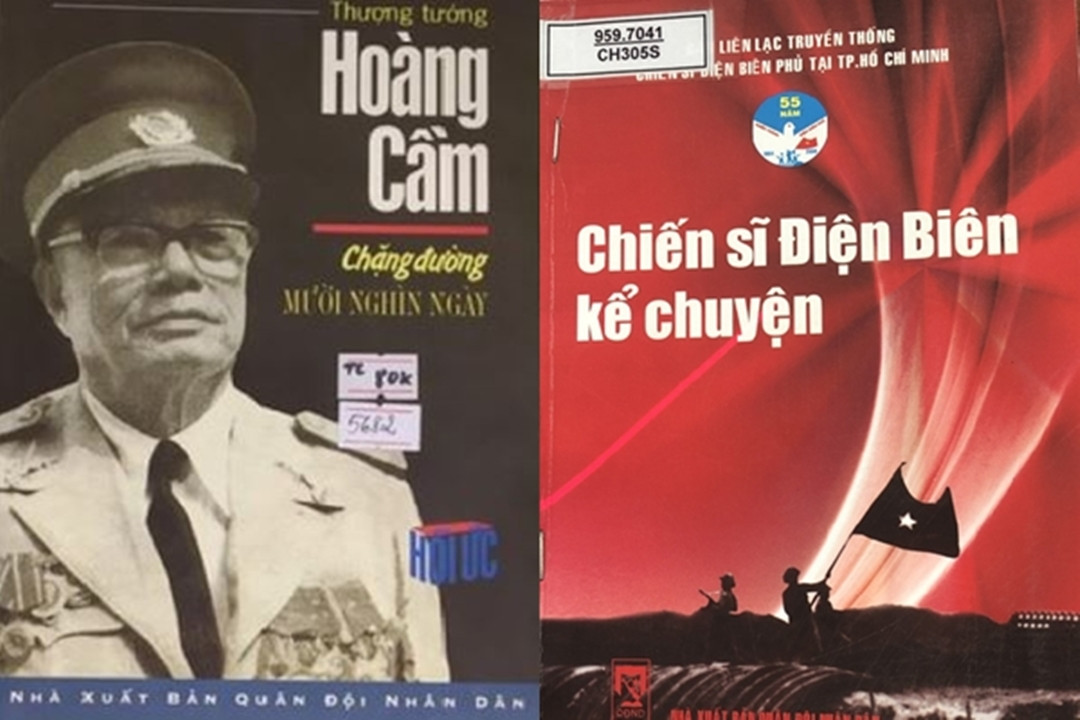
The book "Some Memories of Dien Bien Phu" (People's Army Publishing House, 1964) contains an article titled "Fulfilling the Duty" recounted by Lieutenant General Hoang Cam (recorded by writer Van Phac). At that time, he was serving as the Regiment Commander of Regiment 209, Division 312. The story takes place during a briefing with General Vo Nguyen Giap, Commander-in-Chief:
"While we were eating, Comrade Van asked:
- What are you guys lacking most on the front lines?
I pondered, realizing that everything was lacking, and I didn't know what to say that was truly "the best." Then, remembering the times when the Division's Political Commissar, Tran Do, visited the unit, the soldiers would often only ask for tobacco, I replied:
- Sir, we are most in need of tobacco right now.
Comrade Văn smiled:
- Yes, it's coming soon, it's almost on the way.
As Comrade Van departed, I carried with me a profound impression of the beautiful sentiments of the revolutionary army. I was happy, but even more worried about the regiment's new mission."
President Ho Chi Minh also paid attention to the importance of tobacco to the soldiers. This detail appears in the memoir "The Ten Thousand Day Journey" (People's Army Publishing House, 2001), when Regiment Commander Hoang Cam accompanied the emulation soldiers of the Dien Bien Phu campaign back to Viet Bac to report the victory to the Party, the Government , and President Ho Chi Minh. He recounted:
“We brought back medals, De Castries’ brigadier general insignia, a tattered French flag, and a small radio that De Castries had used. Going to battle involved walking, carrying heavy loads, climbing mountains, crossing streams, and traversing forests with great difficulty. Returning with a military truck driven by Comrade Thong was already a great feeling. Even so, it took almost a week for us to reach the Viet Bac rear area.”
Along the way, I kept thinking about what I would say to Uncle Ho when I met him. The image of him summoning me to report on the plan to attack Dong Khe during the Border Campaign kept coming back to me.
Upon arriving at the General Political Department, Comrade Nguyen Chi Thanh organized a very solemn welcome for the delegation, setting up a welcoming arch and decorating the road leading to the office with flowers. He also arranged for us to speak with Uncle Ho immediately by phone.
I am delighted and genuinely excited:
- Reporting to you, Uncle, I am in charge of the delegation of emulation fighters from the Dien Bien Phu front who came to celebrate your birthday.
"Who told you guys to come up with this idea?" the old man asked sternly.
I was hesitating, not knowing how to answer, when the doctor on the other end of the line finally cleared my throat:
- Is that Uncle Hoang Cam?
- Yes, sir! My name is Hoang Cam!
Are you guys up there hungry?
- Reporting to you, Uncle, we're not hungry, but we're short of food!
The doctor continued to ask:
- Is it difficult?
Nguyen Chi Thanh, standing nearby, cheerfully reminded me: "Just tell Uncle Ho the truth, it's very difficult."
- Yes, Uncle, there are difficulties!
The doctor interrupted:
Do you guys have any tobacco to smoke?
- Yes, I have the report!
General Hoang Cam added: “Please note the issue of tobacco in Dien Bien Phu. Although not a fundamental issue in the fighting, it was a practical and indispensable need. Most of our soldiers at that time were farmers, many of whom were heavily addicted to tobacco. And addiction is like 'burying the pipe and then digging it up again.' Without tobacco, people felt listless and didn't want to do anything. Understanding this small but essential need, the Government and President Ho Chi Minh instructed the rear to pay attention to providing the soldiers with tobacco, along with weapons, ammunition, rice, salt, and medicine. However, due to the prolonged fighting, the shortage of tobacco remained a daily topic of discussion.”
Mortar troops
Reading memoirs about preparing food for the Dien Bien Phu battlefield, one detail that surprises later generations is that the logistics force established a "mortar-making squad" whose job was to operate mortars to mill rice into grain to supply the troops.
This story was recorded by Colonel Tran Thinh Tan, former Director of the Political Department of the General Logistics Department (during the Dien Bien Phu campaign, he was a platoon leader in the General Department of Frontline Supply) in his book "Stories Told by Dien Bien Phu Soldiers" (People's Army Publishing House, 2009):
“To ensure timely food supplies for the Dien Bien Phu front in the initial phase, the General Supply Department's forward command decided to fully exploit the local logistical resources of the Northwest region, including Son La, Lai Chau, and Yen Bai. However, the leadership also had many concerns and anxieties for one reason: the Northwest is a rugged mountainous region with vast land and sparse population, and a backward, self-sufficient agricultural economy – despite having four major rice granaries (Thanh, Lo, Than, and Huy), the people were still poor and hungry. A region that had just been liberated in the Northwest campaign at the end of 1952, still unstable in many aspects, with bandits still causing trouble, would it be able to meet the local food supply needs?”
However, the Supply Councils of Son La, Lai Chau, and Yen Bai boldly mobilized the people of various ethnic groups to support and contribute their efforts alongside the army in fighting the French and liberating Dien Bien Phu, completely liberating the Northwest region. According to statistics, the people of the Northwest contributed over 10,000 tons of glutinous rice (equivalent to over 7,000 tons of milled rice) and hundreds of tons of other food, a significant and unexpected figure. Even more valuable was that this food was mobilized locally, significantly reducing the need for transportation from distant places. Another difficulty was: how to ensure a sufficient supply of milled rice for the army? The custom of the people was to mill rice by hand for daily consumption, and the productivity was very low, only one or two kilograms of rice per milling session, which was a real challenge. Therefore, the Forward Command of the General Department of Supply decided to establish a "mortar-milling team" right on the Dien Bien Phu battlefield, transforming thousands of tons of glutinous rice and fragrant rice into milled rice.
"The 'mill-making team' was quickly recruited from army units, civilian laborers, and even from the rear. They went into the forest to cut bamboo, braid ropes to make mill casings, split strips to make wedges and handles; all the materials for making the mills were bamboo. Before long, several hundred rice mills had been supplied to warehouses and construction sites for milling. Initially, the rice yield was low, but with experience, productivity gradually increased..."
In the book "Dien Bien Phu," published by the People's Army Publishing House in 1969, General Vo Nguyen Giap wrote: "Our people achieved a miracle completely beyond the enemy's expectations; we ensured the supply of provisions to a large number of troops fighting on a front very far from the rear for a long period of time, something the enemy thought we could never have done in the Dien Bien Phu campaign."
Vietnamnet.vn
![[Photo] Standing Committee member of the Party Central Committee Tran Cam Tu working with the Central Inspection Committee](https://vphoto.vietnam.vn/thumb/1200x675/vietnam/resource/IMAGE/2026/05/28/1779969579668_ndo_br_bnd-2495-jpg.webp)























































Comment (0)