

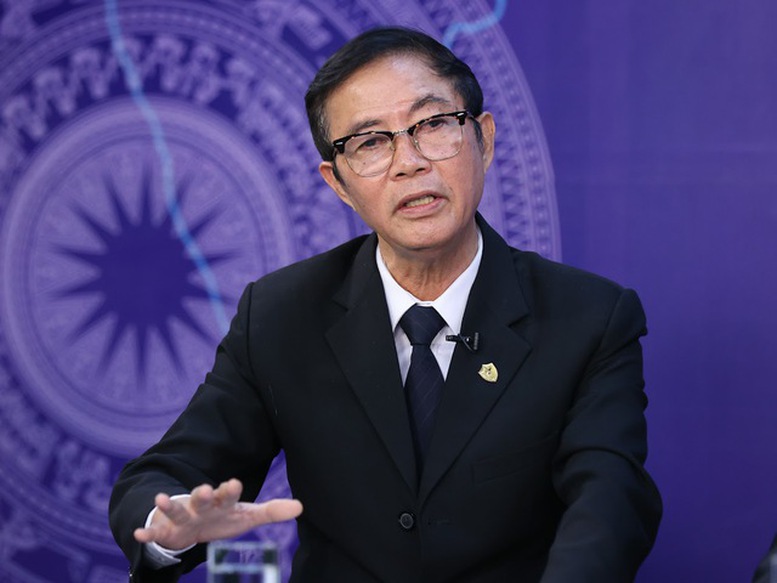
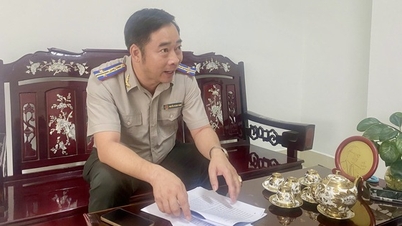
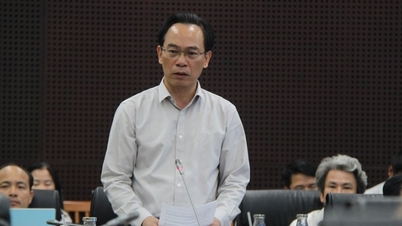
Associate Professor Dr. Do Canh Thin, Deputy Director of the Institute of Non-Traditional Security (Vietnam National University , Hanoi ), criminology expert: The recent serious cases of child abuse are not simply isolated incidents but are "the tip of the iceberg," reflecting many social and psychological issues and changes in the structure of modern families - Photo: VGP
The Government Electronic Newspaper is publishing a series of articles recording the opinions of experts, management agencies, and National Assembly representatives to explain why many tragedies continue to occur, while also seeking solutions to better protect children.
Lesson 1: Child Abuse: The Dark Side Behind Closed Doors
Recent cases of severe child abuse reveal many dark sides behind seemingly peaceful family doors. According to experts, these are no longer isolated incidents but reflect worrying social problems in modern life.
In recent days, public opinion has been repeatedly shocked by the case of a 4-year-old girl in Hanoi who died with many signs of prolonged abuse. The suspects are none other than her own mother and her lover. Not long before that, society was outraged by the case of an 8-year-old girl in Ho Chi Minh City who died from abuse by her stepmother, and the case of a 3-year-old child in Hanoi who had nails hammered into her head, causing public outrage. Many cases of abuse occur over a long period with unusual signs, but are only discovered when the child has suffered severe injuries or even death.
According to a report by the Department of Maternal and Child Health ( Ministry of Health ), in April 2026, the national child protection hotline 111 received 46,111 calls, an increase of 9,519 calls compared to the previous month; and 724 notifications via Zalo and other child protection support apps.
One of the concerning issues noted this month is the continued increase in child violence. The 111 hotline assisted in intervening in numerous cases of children experiencing physical and psychological violence, an increase of nearly 22% compared to March 2026.
Notably, nearly three-quarters of child abuse cases occur within the family and are perpetrated by close relatives such as parents, grandparents, uncles, aunts, or caregivers.
The visible part of the iceberg
Speaking with a reporter from the Government Online Newspaper, Associate Professor Dr. Do Canh Thin, Deputy Director of the Institute of Non-Traditional Security (Vietnam National University, Hanoi), a criminology expert, stated that recent serious cases of child abuse are not simply isolated incidents but rather "the tip of the iceberg," reflecting many social and psychological issues and changes in the structure of modern families.
According to him, economic pressure, the burden of making a living, and the increase in single-parent families, divorces, remarriages, or "stepmother-stepchild" or "stepfather-stepchild" relationships are making family relationships increasingly complicated. In many cases, children unintentionally become targets of anger or "obstacles" in adult conflicts.
"Many parents experience prolonged stress but lack emotional control skills, making it easy for them to vent their pressure on the most vulnerable group, which is their children," he said.
Another worrying cause is the distortion in perceptions and methods of raising children. According to experts, many people still view children as "property" under the parents' control instead of recognizing children as subjects with full human rights.
The idea of "spare the rod and spoil the child" is also being distorted, blurring the line between strict discipline and violence. Many people use discipline as a cover for their own psychological instability or distorted perceptions.
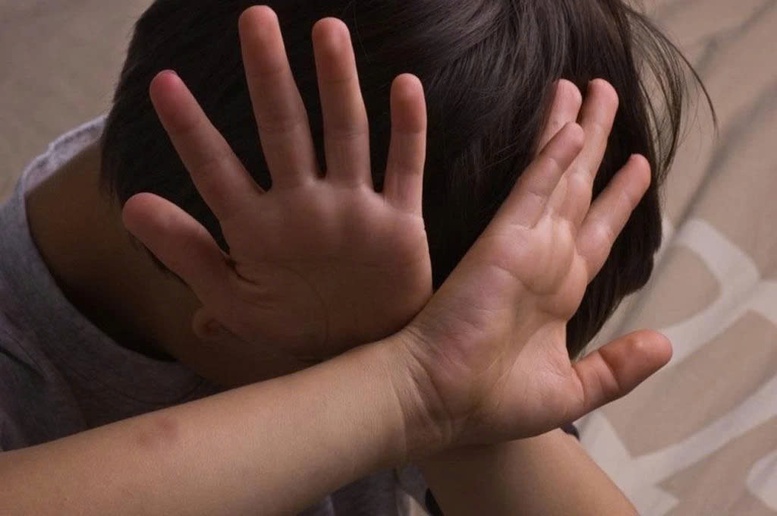
In many cases, the child is completely isolated from grandparents, relatives, school, and the community - Illustration.
When a child becomes a "relic of the past"
From the perspective of criminological psychology and family sociology, Associate Professor Dr. Do Canh Thin argues that the increasing tendency for those directly abusing children to be biological parents, stepfathers, stepmothers, or the parents' partners is not a random phenomenon but reflects many specific psychological mechanisms and social circumstances.
According to him, after divorce, separation, or being a single parent, many people fall into a state of loneliness and emotional dependence. When entering a new relationship, they easily see the new person as a "lifeline" and gradually prioritize that relationship over protecting their children.
"Many people fear that if they speak up to protect their child, the other parent will leave them. The fear of abandonment gradually overshadows the instinct to protect their own child," he analyzed.
Initially, many parents simply turn a blind eye when their children are abused under the guise of "discipline." However, over time, they gradually become psychologically affected, shifting from passive to complicit, or even directly participating in the abuse or concealing the criminal act.
Another factor mentioned by experts is the "blood relation" mentality. In many cases, stepfathers, stepmothers, or partners who are not related by blood may easily view their stepchildren as "obstacles," "burdens," or "relics of the past."
"The child sometimes becomes a reminder of the ex, leading to feelings of resentment, hatred, or a desire to get rid of them," he said.
The silence of the community
According to Associate Professor Dr. Do Canh Thin, the increase in "patchwork" marriages and short-lived cohabitation relationships is also a worrying factor. Many perpetrators of domestic violence are unemployed, addicted to drugs or gambling, or were victims of domestic violence as children.
Notably, cohabitation without marriage registration creates a closed living space, lacking the constraints and supervision of both families, allowing violence to be concealed for extended periods.
In many cases, the child is completely isolated from grandparents, relatives, school, and the community. Many families constantly change residences, renting secluded accommodations, preventing children from attending school or having social contact.
"This isolation leads children into a state of despair and creates conditions for abusive behavior to occur over a long period of time without being detected," said Associate Professor Dr. Do Canh Thin.
Sharing the same view, Ms. Nguyen Thi Nga, Deputy Director of the Department of Mothers and Children (Ministry of Health), affirmed that child abuse is a form of hidden crime. Without information or reporting, no one would know to intervene.
"When we receive information through the 111 hotline, most cases involve children who have already been abused," Ms. Nga said.
Currently, the law clearly stipulates the separation of children from unsafe environments in emergency situations in Decree 56/2017/ND-CP. If a parent or relative is the abuser, the child must be taken to another relative or social welfare facility to ensure safety.
However, in reality, many families still consider hitting or scolding children as a "private matter." Those around them may know about it but don't report it because of the mentality that "it's someone else's family business." This is precisely why local authorities are unaware of the situation.
"As we know, the police force nowadays, upon receiving a report, acts very quickly, verifying and handling the situation promptly. But the problem is they don't receive the information," a representative from the Department of Maternal and Child Health said.
>> Article 2: Is the law sufficient to protect children?
Anh Tho - Thuy Ha
Source: https://baochinhphu.vn/nhung-khoang-trong-trong-bao-ve-tre-em-102260528135026108.htm
![[Image] Pleasant weather helps students enter the 10th grade entrance exam with confidence.](https://vphoto.vietnam.vn/thumb/1200x675/vietnam/resource/IMAGE/2026/05/29/1780034401612_ngay-1-thi-lop-10-minh-duy-8-5009-jpg.webp)
![[Photo] Ba Lang An Lighthouse - the "eye of the sea" amidst the "rock museum" of Quang Ngai province.](https://vphoto.vietnam.vn/thumb/1200x675/vietnam/resource/IMAGE/2026/05/29/1780038698840_anh-man-hinh-2026-05-29-luc-14-10-42.png)


































































Comment (0)