

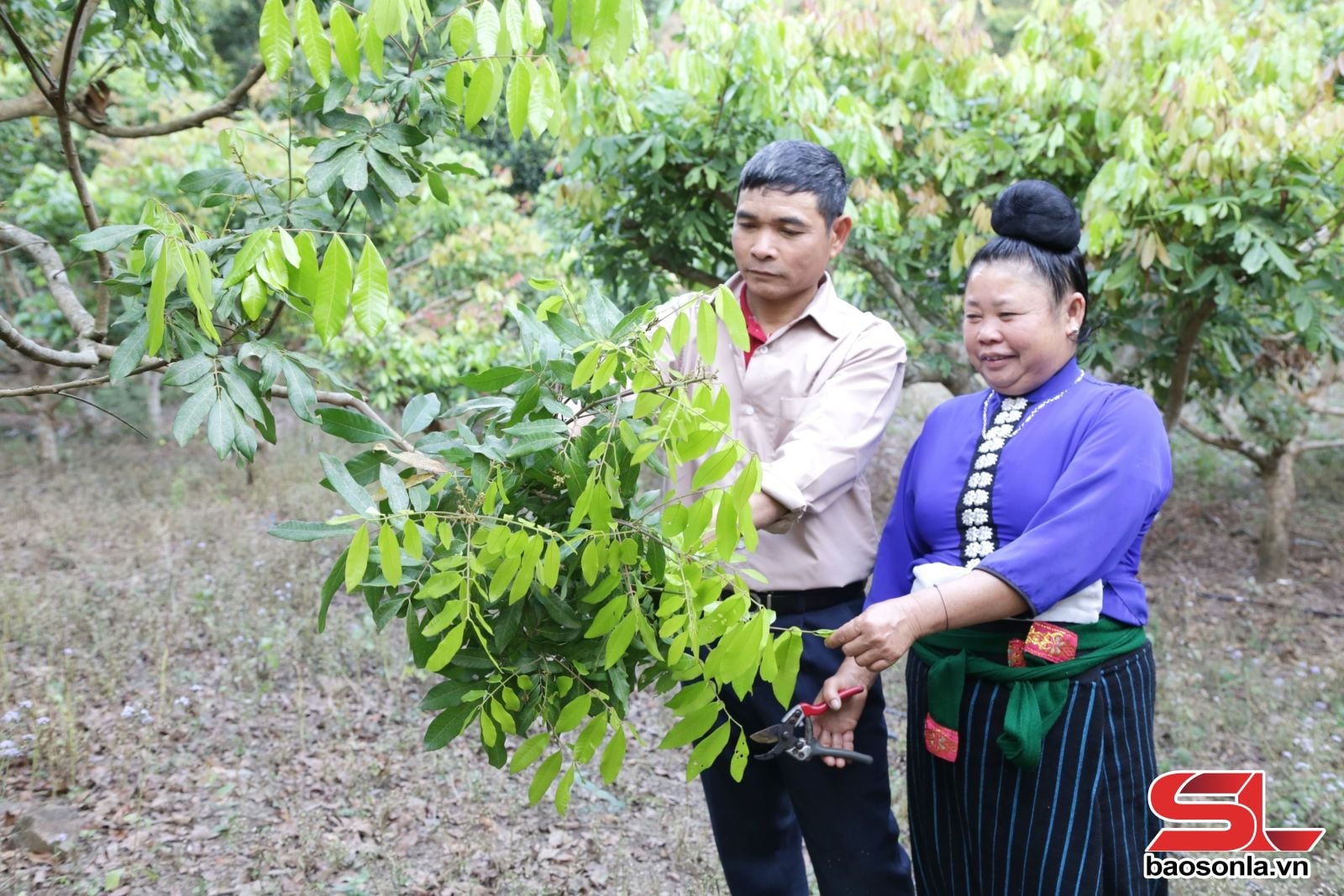
Previously, Mr. Ha Van Thang's family and more than 30 other households in Pot village mainly cultivated corn and cassava on sloping land, resulting in low economic efficiency, unstable income, and rapid soil degradation. In 2020, implementing the policy of restructuring crop patterns on sloping land, the villagers boldly switched to planting longan, mango, plum, and coffee, gradually increasing their income. Mr. Thang said: Six years ago, after receiving guidance and training on planting and caring techniques from the commune, his family renovated 2 hectares of sloping land to invest in planting mango and longan, investing in a drip irrigation system and applying scientific care procedures. In addition, the family raises 10 breeding cows, proactively growing grass and storing feed during the dry season. The combination of farming and livestock helps the family "use short-term gains to fund long-term investments," providing capital for reinvestment. To date, his family has a stable income of over 300 million VND per year.
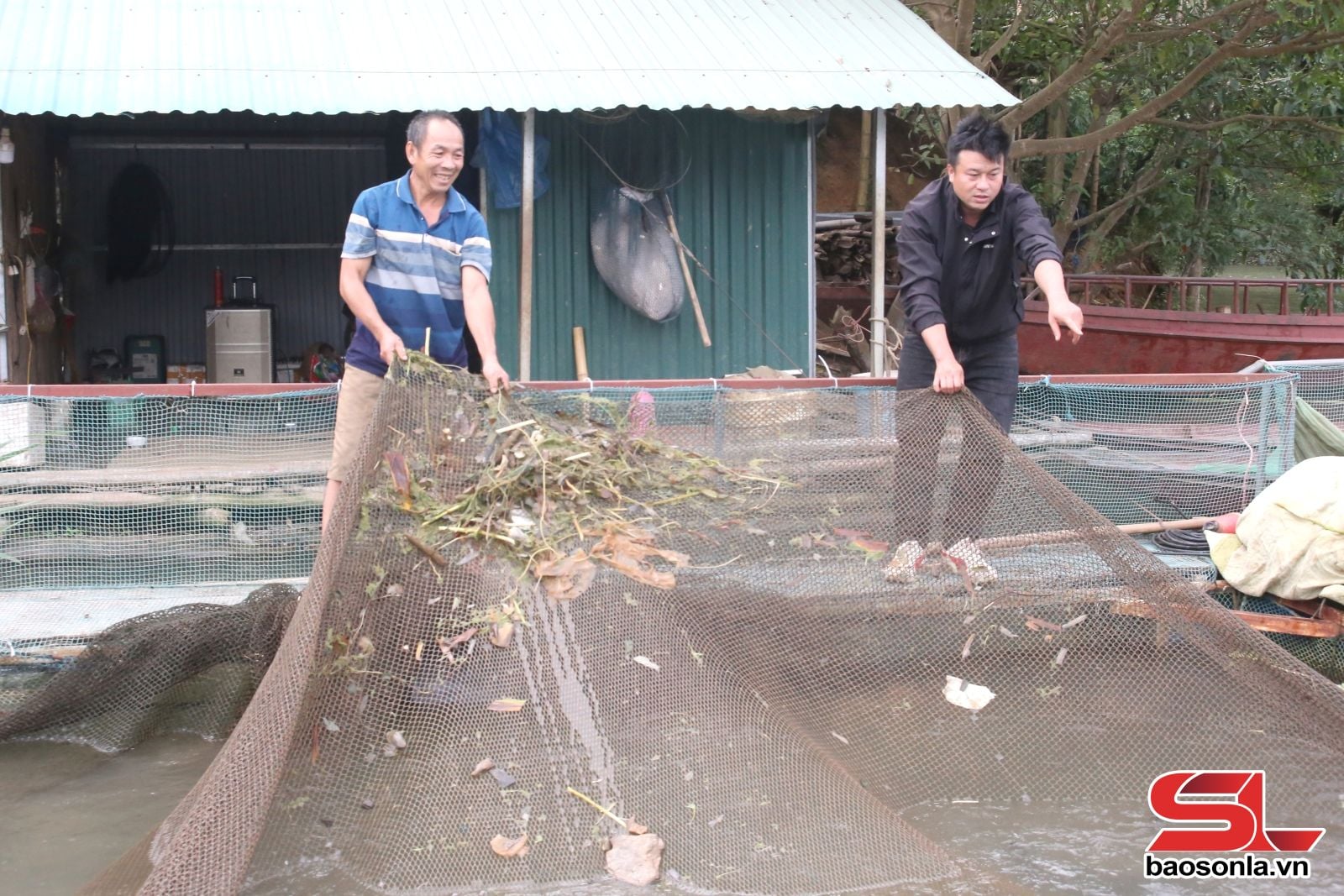
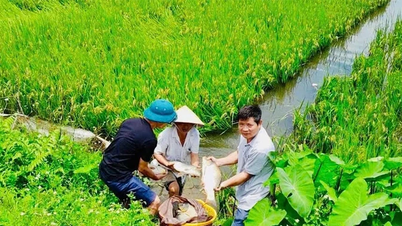
In Ta Do village, with 178 households and over 810 inhabitants, mainly of the Thai, Muong, and Mong ethnic groups, located along the banks of the Da River reservoir, households have invested in cage fish farming, utilizing the water surface for fishing. Starting with just a few cages, some households have expanded to 8-10 cages, primarily raising grass carp, common carp, tilapia, and snakehead fish. They supply the market with tens of tons of commercial fish annually, providing a stable source of income. Leading us to visit his family's cage fish farming model, Mr. Dinh Van Tru, from Ta Do village, recounted: "In 2015, I started cage fish farming, initially with only 2 cages. Now, I have expanded to 8 cages, mainly raising grass carp, common carp, and snakehead fish; the yield reaches 10 quintals per year. In addition, my family has also invested in building a barn to raise over 50 black pigs and sows." As a result, the family's total income exceeds 200 million VND per year, and their living standards are becoming increasingly stable and gradually improving.
In supporting local farmers in production, the Ta Khoa Commune Farmers' Association has strengthened coordination in opening training courses and transferring production techniques, actively promoting and guiding members to develop new economic models. The Association has also proactively coordinated with the Social Policy Bank, acting as an intermediary to help 448 member households borrow capital for production development through 11 savings and loan groups, with a total outstanding loan balance exceeding 27 billion VND. Thanks to the proper use of capital, many households have been able to develop their businesses effectively, bringing in stable income.
Mr. Ha Van Thuan, Chairman of the Farmers' Association of the commune, said: The entire commune has more than 2,000 farmer members, operating in 23 branches. The association has encouraged members to actively participate in the "Farmers competing in excellent production and business" movement. In 2025, 50 households were recognized as achieving the title of excellent producers and business owners at various levels. From the beginning of the year until now, more than 1,220 households in the commune have registered to participate in the movement. Through the movement, many effective models have been replicated, bringing in income of 200-300 million VND per year, contributing to improving living standards and promoting sustainable local economic development.
With the support of the Farmers' Association, the attention and encouragement of the local government, and the diligence, hard work, and continuous efforts to learn and innovate, farmers in Ta Khoa commune have been gradually changing their mindset, way of thinking, and methods, developing effective production models, increasing income, and improving their lives to thrive on their homeland.
Source: https://baosonla.vn/kinh-te/nhung-mo-hinh-kinh-te-hieu-qua-cua-nong-dan-ta-khoa-HIIXlOKDg.html


![[Photo] General Secretary and President To Lam presides over a meeting on preparations for the review of one year of operation of the three-tiered government system.](https://vphoto.vietnam.vn/thumb/1200x675/vietnam/resource/IMAGE/2026/06/02/1780391821195_a1-bnd-4595-9717-jpg.webp)























































Comment (0)