

 |
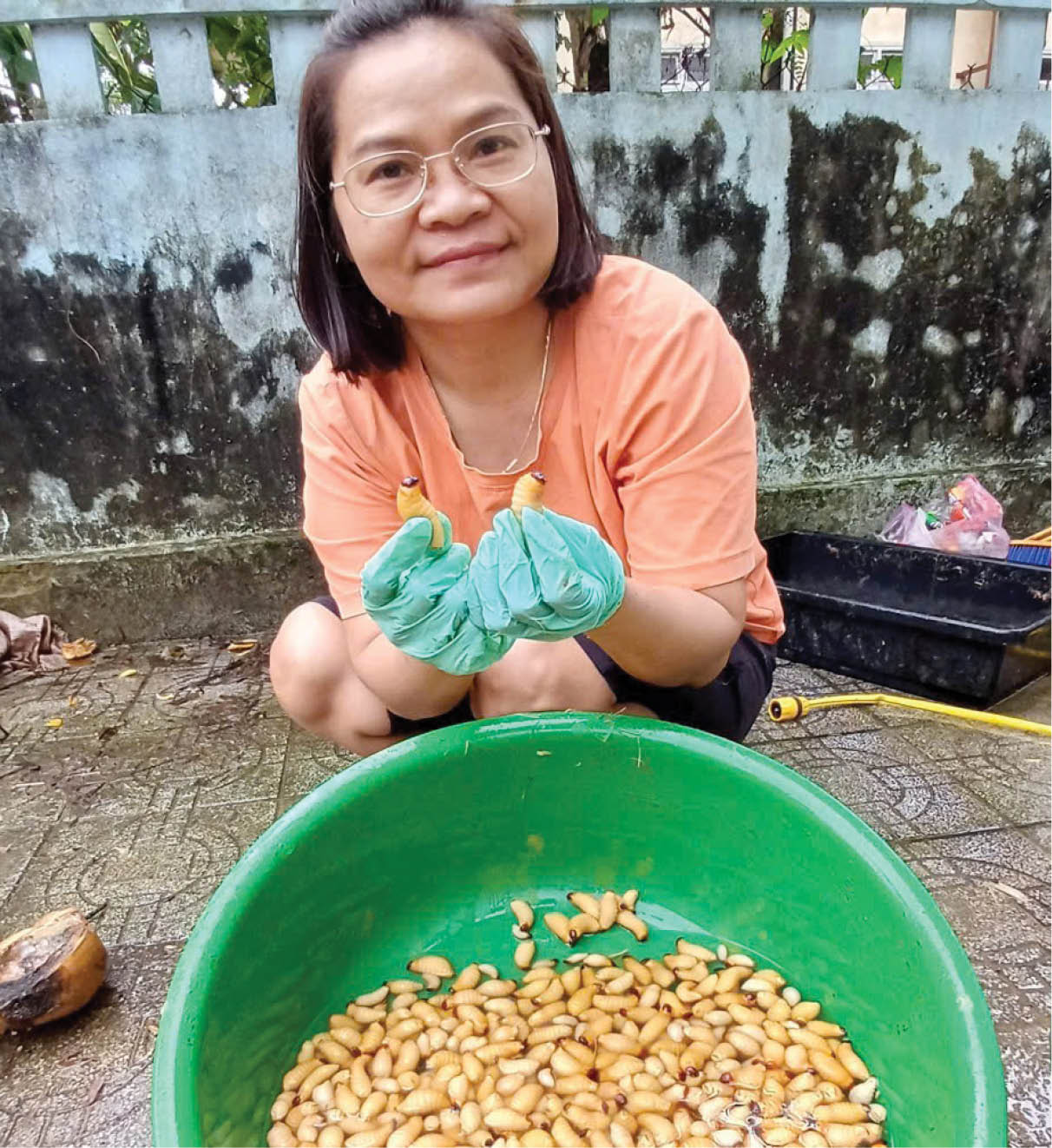
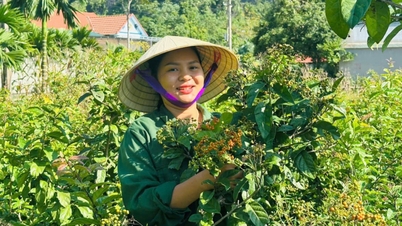
| Ms. Hoang Thi Chanh harvests and sells coconut beetle larvae as a commercial product. |
Coconut beetle larvae in Hue
Ms. Hoang Thi Chanh and her husband, residing in Hamlet 2, Binh Dien Commune, are civil servants. Although they wanted to improve their family's economic situation , they had little free time, so many of their previous ideas and plans for a side hustle were not realized.
After noticing that dishes made from coconut beetle larvae were popular at some festivals and food markets in A Lưới, and that people in their neighborhood also loved them, in 2024, Chanh and her husband went online to learn how to raise them, then contacted suppliers to buy breeding stock to try raising them.
Determined to "not expect too much" the first time, mainly to gain experience, Chanh and her husband only ordered 10 pairs to try raising them. Unexpectedly, they succeeded on their very first attempt.
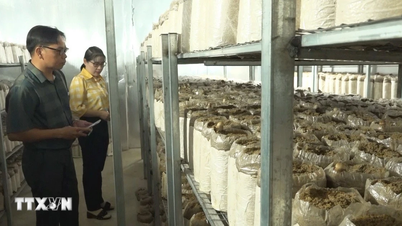
“Raising coconut beetle larvae is very simple and doesn't require much effort; you can take care of them whenever you have free time. The larvae are placed in plastic containers with lids and holes for ventilation. Then, coconut fiber and various fruits are added as food, and occasionally rice bran and corn bran can be supplemented in appropriate proportions. After 10 days, the mother beetles are separated to reproduce a new generation. The cycle from when the coconut beetles start reproducing until the young are harvested for commercial sale is about 40-45 days. After 3 reproduction cycles, a new batch of larvae is introduced, and at that time, the healthiest ones can be selected as breeding stock for the next generation,” Ms. Chanh explained.
After their first successful trial breeding, Chanh and her husband have now expanded their operation to over 100 breeding pairs of coconut beetle larvae. Selling them to traders at 250,000 VND/kg (in winter, production decreases by about 40%, so the price is around 300,000 - 350,000 VND/kg), Chanh and her husband sell 10-15 kg each month, enough to add a dish to their daily meals and cover some living expenses.
The product is mainly sold to some restaurants in A Lưới and Bình Điền as a specialty dish, and some people in the surrounding area occasionally use it as a meat substitute to change up their meals. It can be prepared in many ways, such as eating it raw with fish sauce, deep-frying it in salt and pepper, deep-frying it in batter, grilling it with chili, making salads, or cooking it in porridge… Although it is easy to raise, the investment cost is not high, the breeding stock is renewable, and the feed is mainly coconut fiber, which is readily available and inexpensive, currently only two households near Ms. Chanh's house have implemented this model.
The model of raising coconut beetles doesn't require much space or time, and doesn't pollute the environment. However, when the beetles mature, they grow wings and become weevils, which harm some crops, especially fruit trees. Therefore, these households have used nets and screens to cover the breeding area, and the breeding containers are always kept tightly closed. "We're being careful, but in reality, the beetles are sold before they grow wings, so it's unlikely they'll develop into weevils and spread into the environment," Ms. Chanh said.
The new model has high economic value.
Besides raising coconut beetles, raising wasps for their larvae is also a new model in Binh Dien commune. Thanks to its sustainable exploitation and high economic value, wasp farming for larvae is showing potential in developing household economies.
Mr. Le Hung Son (Binh Son village) used to work in harvesting wild honey. From his experience trekking through the forest following water trails to reach beehives and collect honey and larvae, and knowing that wasps are easy to raise and reproduce quickly with a huge number of larvae, in 2024, instead of harvesting using the traditional method which only yields one harvest, he switched to searching for young beehives in nature and hanging them under trees about 1-2 meters high in his garden to monitor and care for them.
Initially, Mr. Son brought home 10 hives, but now the number has increased to 65. During the care process, Mr. Son occasionally feeds the wasps a little fish, meat, and various insects; the rest the bees find themselves in nature. With this method, the hives develop and can be harvested for larvae after only about 2 months. On average, a small hive weighs 2-3 kg, while larger hives reach 6-7 kg.
Unlike catching wild wasps, which only yield larvae once a year, farmed wasps can be harvested 2-3 times per colony, from around May to the end of August or beginning of September. The time between harvesting larvae is about 30-40 days. "Although the farming method is quite simple, wasps are very aggressive, so the farming area must be far from houses and residential areas. When caring for and harvesting larvae, specialized protective clothing must be worn to ensure safety. After harvesting the larvae, the wasp colony will rebuild a new nest in about 3-4 days. The important thing is that each time you harvest the larvae, you must leave a portion of the nest with young wasps and keep the queen bee in the nest," Mr. Son shared.
Considered a delicacy, rich in nutrients, and versatile enough to be used in many delicious dishes such as porridge, stir-fried bamboo shoots, and deep-fried wasp pupae, Mr. Son currently sells them to traders for 500,000 - 600,000 VND/kg. This is a relatively high price, providing a stable income, and as Mr. Son says, during the season, there are "too many" pupae to sell.
"Based on these initial successes, I plan to expand the scale, research new techniques to increase production, and improve methods for breeding and raising queen bees in order to meet the growing market demand," Sơn added.
“The model of raising coconut beetles and wasps for their larvae is opening up a new and promising direction for economic development, contributing to diversifying livelihoods and improving the lives of people in the area. However, the breeding and harvesting process must ensure safety measures for people and the environment. The authorities will regularly inspect these factors,” said Mr. Tran Xuan Anh, Chairman of the People's Committee of Binh Dien commune.
Source: https://huengaynay.vn/kinh-te/nhung-mo-hinh-sinh-ke-doc-la-o-binh-dien-160278.html













































































Comment (0)