

The Vietnam-European Union Free Trade Agreement (EVFTA) has been helping to further expand business opportunities between Vietnamese enterprises and the European market in general and the Nordic market in particular by improving market access and addressing trade barriers that businesses may encounter.
Transparent rules and practices provide stability and improve predictability, allowing businesses to confidently implement long-term plans.
However, consumers in these countries are particularly concerned about environmental protection and food safety. Therefore, many new regulations will be introduced in the near future, focusing on these two concerns, so Vietnamese businesses need to pay attention to ensure successful exports.
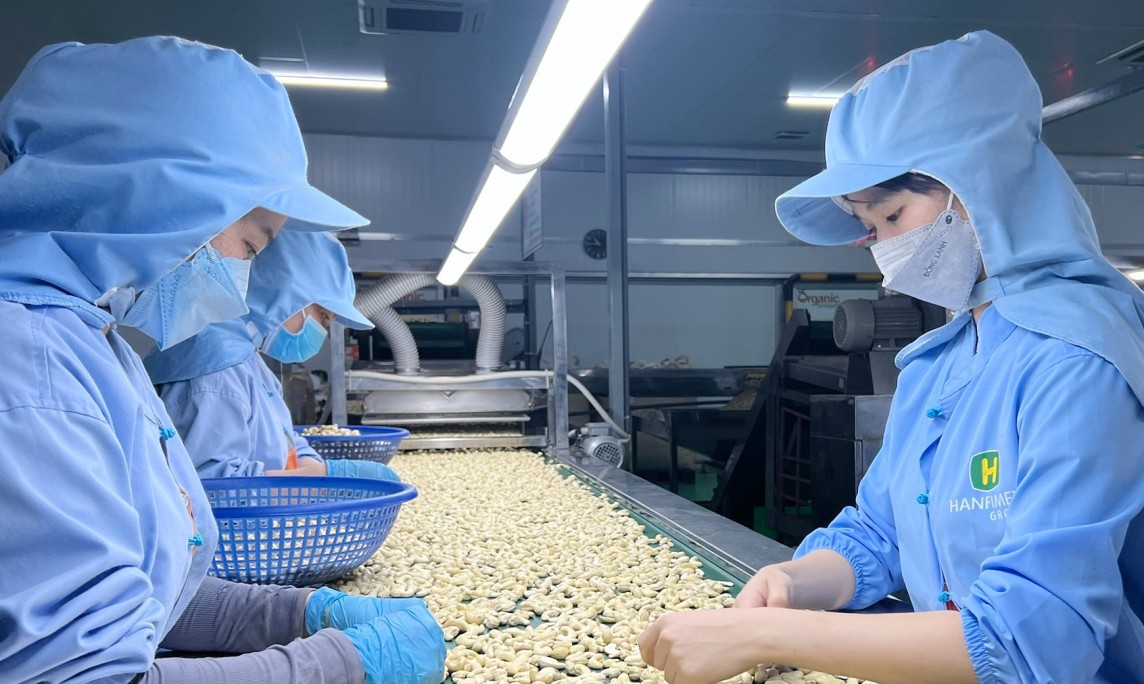 |
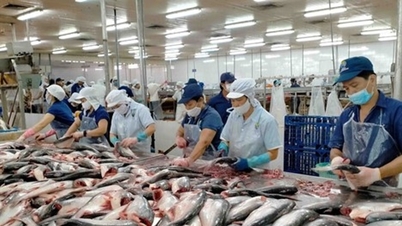
| Food safety is a key issue for goods exported to the Nordic market. Photo: Binh Phuoc Newspaper |
The Vietnamese Trade Office in Sweden stated that Sweden and Denmark are members of the European Union, but Norway is not. However, Norway is a member of the European Economic Area (EEA). In practice, this means that Norwegian food laws and regulations largely reflect those of the European Union (EU). Therefore, EU law can be used as a basis for all three countries.
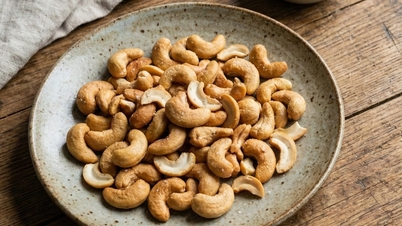
For Vietnamese cashew products to be exported smoothly to Nordic countries, the Trade Office believes that cashew products need to comply with the European Food Law (EC) 178/2022 and the EU General Regulations on Food Hygiene 2017/625.
Firstly , regarding food safety, the Trade Office emphasizes that this is a crucial issue. All food products, including cashews, sold in EU countries, the European Free Trade Association (EFTA), and the United Kingdom must be safe. This also applies to imported products. Only approved additives are permitted. Food products must comply with maximum levels for harmful contaminants such as bacteria, viruses, pesticide residues, and heavy metals.
The business noted that labeling must clearly state whether the food contains allergens, because research shows that cashews contain potent allergens, causing severe and prolonged allergic reactions compared to other food allergies. According to recent studies, clinical reactions to cashews can be serious, including anaphylactic shock.
On the other hand, some plants and plant products entering the EU require a phytosanitary certificate. A phytosanitary certificate is mandatory for the importation of certain cashew nuts into the EU from third countries other than Switzerland. This applies specifically to whole, fresh, shelled cashew nuts, according to Regulation (EU) 2019/2072.
“ In the event that additives are present, these additives must be approved by the European safety authority,” the Special Trade Office recommended and stated. The additives must meet the specifications set out in Regulation (EU) No. 231/2012. A list of approved food additives can be found in Annex II of Regulation (EC) No. 1333/2008. Labels must clearly indicate to consumers whether the product contains cashews, as they can cause serious allergic reactions.
Furthermore, a key measure in controlling food safety hazards involves identifying critical control points (HACCPs) by implementing food management principles. Placing food products under official control is another important measure. Products deemed unsafe will be rejected from entering Europe.
Secondly , regarding food contaminants, the EU sets strict controls on contaminants in food, particularly aflatoxin. If a product contains more contaminants than permitted, it will be withdrawn from the market. These cases are reported by the European Rapid Alert System for Food and Feed (RASFF).
Thirdly , regarding mycotoxin regulations, shipments of cashew nuts contaminated with mycotoxins have led to some shipments to Europe being rejected at the border. In 2022, the RASFF system recorded one serious risk report for cashew nut shipments due to aflatoxin contamination, when a shipment of cashew nuts from Vietnam was stopped in Italy due to high aflatoxin levels.
The presence of mycotoxins (especially aflatoxin) is a common reason why some shipments of nuts may be prevented from entering the European market. The aflatoxin B1 content in nuts (including cashews) must not exceed 5 µg/kg and the total aflatoxin content (total of aflatoxins B1, B2, G1, G2) must not exceed 10 µg/kg. However, the rate of aflatoxin contamination in cashews is much lower than in peanuts.
Cashew nuts are susceptible to mold infestation before and/or after harvest due to their high nutritional content, and this can be accelerated by improper storage conditions.
Fourth , regarding pesticide residue regulations, the European Union has established maximum residue limits (MRLs) for pesticides in and on food products. The EU regularly publishes lists of approved pesticides permitted for use within the EU. This list is updated frequently.
Fifth , regarding heavy metals, Regulation (EU) 2023/915 sets a maximum cadmium level for cashews (and all other tree nuts except pine nuts) at 0.20 mg/kg wet weight. This maximum level does not apply to nuts used for milling and oil refining, provided that the remaining pressed nuts are not marketed as food.
Sixth , regarding microbiological contamination regulations, the presence of salmonella and E. coli bacteria at very low levels in ready-to-eat or processed foods, including cashews, is a significant cause of foodborne illness. Nut processors should consider salmonella and E. coli as major public health risks in their Hazard Analysis and Critical Control Points (HACCP) plans.
According to the Vietnamese Trade Counselor in Sweden, in order to export smoothly and successfully to European countries in general and Nordic countries in particular, businesses need to regularly update themselves on the latest developments in the European Green Deal and any new regulations, policies, strategies or plans to implement this Agreement as well as new EU regulations.
At the same time, proactively research and assess the potential impact of new policies on the company's operations and exports, and identify which areas and processes need improvement to meet the new sustainability and safety standards of this regional market.
In addition, businesses should consider adopting more sustainable and environmentally friendly measures, such as reducing greenhouse gas emissions, increasing energy efficiency, and using recycled materials.
Furthermore, businesses can consider changing their production model, shifting from a production and export model focused solely on output to a modern production model that prioritizes environmental factors and sustainable development, while simultaneously embracing digital transformation and adopting new technologies in their production operations.
Source
![[Photo] Ba Lang An Lighthouse - the "eye of the sea" amidst the "rock museum" of Quang Ngai province.](https://vphoto.vietnam.vn/thumb/1200x675/vietnam/resource/IMAGE/2026/05/29/1780038698840_anh-man-hinh-2026-05-29-luc-14-10-42.png)

![[Image] Pleasant weather helps students enter the 10th grade entrance exam with confidence.](https://vphoto.vietnam.vn/thumb/1200x675/vietnam/resource/IMAGE/2026/05/29/1780034401612_ngay-1-thi-lop-10-minh-duy-8-5009-jpg.webp)









































































Comment (0)