

Located on the "Ring of Fire," a series of volcanoes and ocean trenches surrounding part of the Pacific Ocean basin, Japan accounts for approximately 20% of the world's earthquakes with a magnitude of 6 or higher, and experiences up to 2,000 perceptible earthquakes each year.
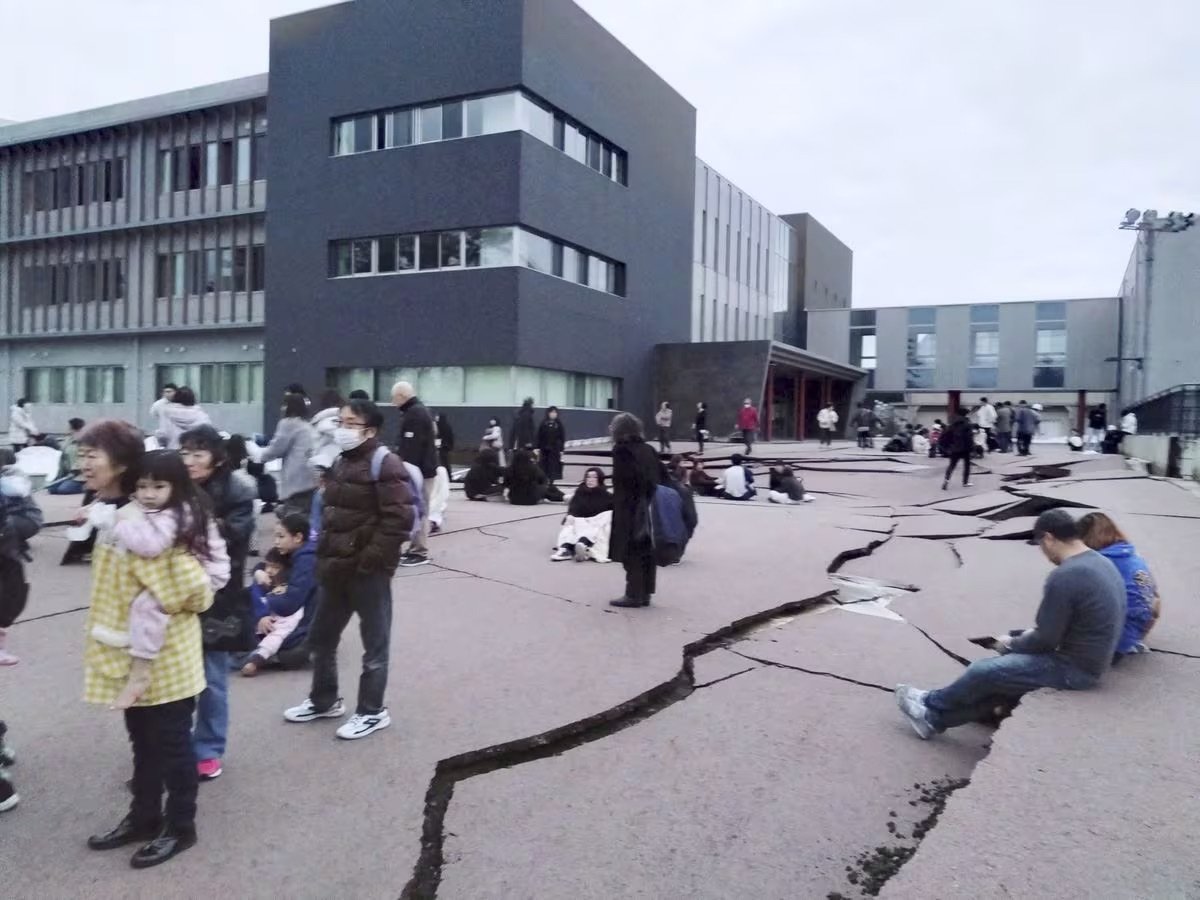
Cracks in the road caused by an earthquake in Wajima, Ishikawa Prefecture, Japan, on January 1, 2024. Photo: Kyodo
Here are some of the major earthquakes in Japan over the past 30 years.
January 16, 1995 : A 7.3 magnitude earthquake struck central Japan, devastating the port city of Kobe. The worst earthquake to hit the country in 50 years, it killed over 6,400 people and caused an estimated $100 billion in damage.
October 23, 2004 : A 6.8 magnitude earthquake struck Niigata Prefecture, about 250 km north of Tokyo, killing 65 people and injuring 3,000.
March 11, 2011 : A powerful 9.0 magnitude earthquake and tsunami struck northeastern Japan, killing nearly 20,000 people and causing the Fukushima disaster – the world's worst nuclear disaster since Chernobyl.
April 16, 2016 : A powerful 7.3 magnitude earthquake struck Kumamoto on Japan's southern island, killing more than 220 people.
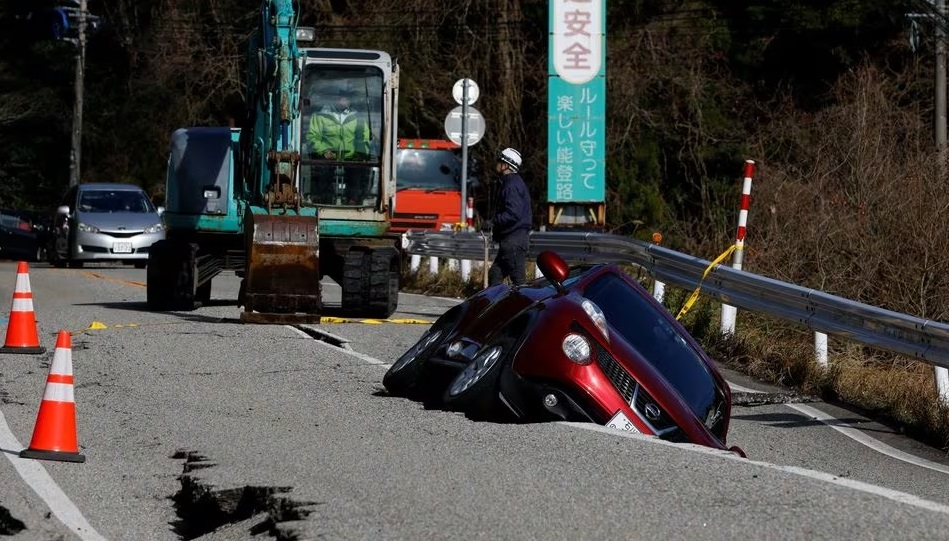
A car is stuck in a crack in the road after the earthquake in Ishikawa Prefecture, Japan, last Monday. Photo: Reuters
June 18, 2018 : A 6.1 magnitude earthquake struck Osaka, Japan's second-largest city, killing four people, injuring hundreds, and halting production at an industrial park.
September 6, 2018: A powerful 6.7 magnitude earthquake paralyzed the northern Japanese island of Hokkaido, killing at least seven people, causing landslides, and leaving 5.3 million residents without power.
February 13, 2021 : A powerful 7.3 magnitude earthquake struck off the coast of Fukushima in eastern Japan, injuring dozens of people and causing widespread power outages.
On March 16, 2022 : A powerful 7.3 magnitude earthquake struck off the coast of Fukushima, killing two people and injuring 94, reviving memories of the earthquake and tsunami that had devastated the region just over a decade earlier.
Mai Anh (according to Kyodo, Reuters)
Source

![[Photo] Prime Minister Pham Minh Chinh attends the Conference on the Implementation of Tasks for 2026 of the Industry and Trade Sector](/_next/image?url=https%3A%2F%2Fvphoto.vietnam.vn%2Fthumb%2F1200x675%2Fvietnam%2Fresource%2FIMAGE%2F2025%2F12%2F19%2F1766159500458_ndo_br_shared31-jpg.webp&w=3840&q=75)

















































































Comment (0)