

During the campaign implementation, in addition to propaganda work, Luc Yen commune closely coordinated with the police force in matching and verifying land plot information with the national population database.
Through three rounds of review, over 37,000 land parcels have been verified, reaching approximately 95%; simultaneously, information for over 5,700 land users has been confirmed. In addition to working on computer systems, the task forces also went to each village and household. Old files and faded land ownership certificates were checked, digitized, and updated into the system. For cases without digital data, commune officials collected, scanned, and entered information from land use right certificates and citizen identification cards. As a result, 2,462 sets of information were collected, updated, and transferred to specialized agencies for compilation and processing according to regulations.

However, the process of "cleaning" the data has not always been smooth. Many land use right certificates are mortgaged at banks, many landowners work far away, and in some cases, records have been lost for many years. Nevertheless, overcoming these difficulties, the results achieved have created an important foundation for land management, while also helping to streamline and improve the transparency of administrative procedures.
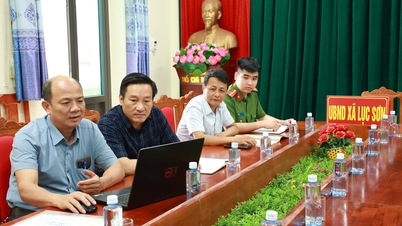
Comrade Hoang Trung Hai - Chairman of the People's Committee of Luc Yen commune shared: "Cleaning up land data is an important task to complete the database system, connect land information with the population database, better serve state management and provide public services. We are determined to put the people at the center of service, ensuring that people do not have to travel multiple times or encounter difficulties when carrying out procedures."

Not only in Luc Yen, but also in Trung Tam ward, the land data digitization campaign is being implemented with high determination and flexible, creative approaches. The ward government identifies each citizen as an important "link" in building a land data system that is "accurate - complete - clean - and relevant".
Immediately after the campaign was launched, the People's Committee of the ward established a Steering Committee, issued a plan and related decisions, and mobilized the entire political system. Propaganda work was implemented synchronously through articles on the ward's fanpage, the public address system, community Zalo groups, and neighborhood meetings. The campaign's Steering Committee established four review teams, deploying across 46 neighborhoods with the motto "implement and complete as you go." Each team was responsible for 9 to 14 neighborhoods, developing a schedule for receiving land registration documents to facilitate residents' participation.
In residential areas, neighborhood committees become an "extension" of the government. They announce work schedules, locations for collecting documents, and urge residents to prepare all necessary paperwork.
Ms. Dao Thi Thuy, head of residential group 16, said: "Immediately after receiving the plan from the Steering Committee, the residential group announced the work schedule on the Zalo group and broadcast it on the public address system so that households could clearly understand the purpose and significance of the campaign. Thanks to this, people proactively provided information, and the group completed data collection on schedule."
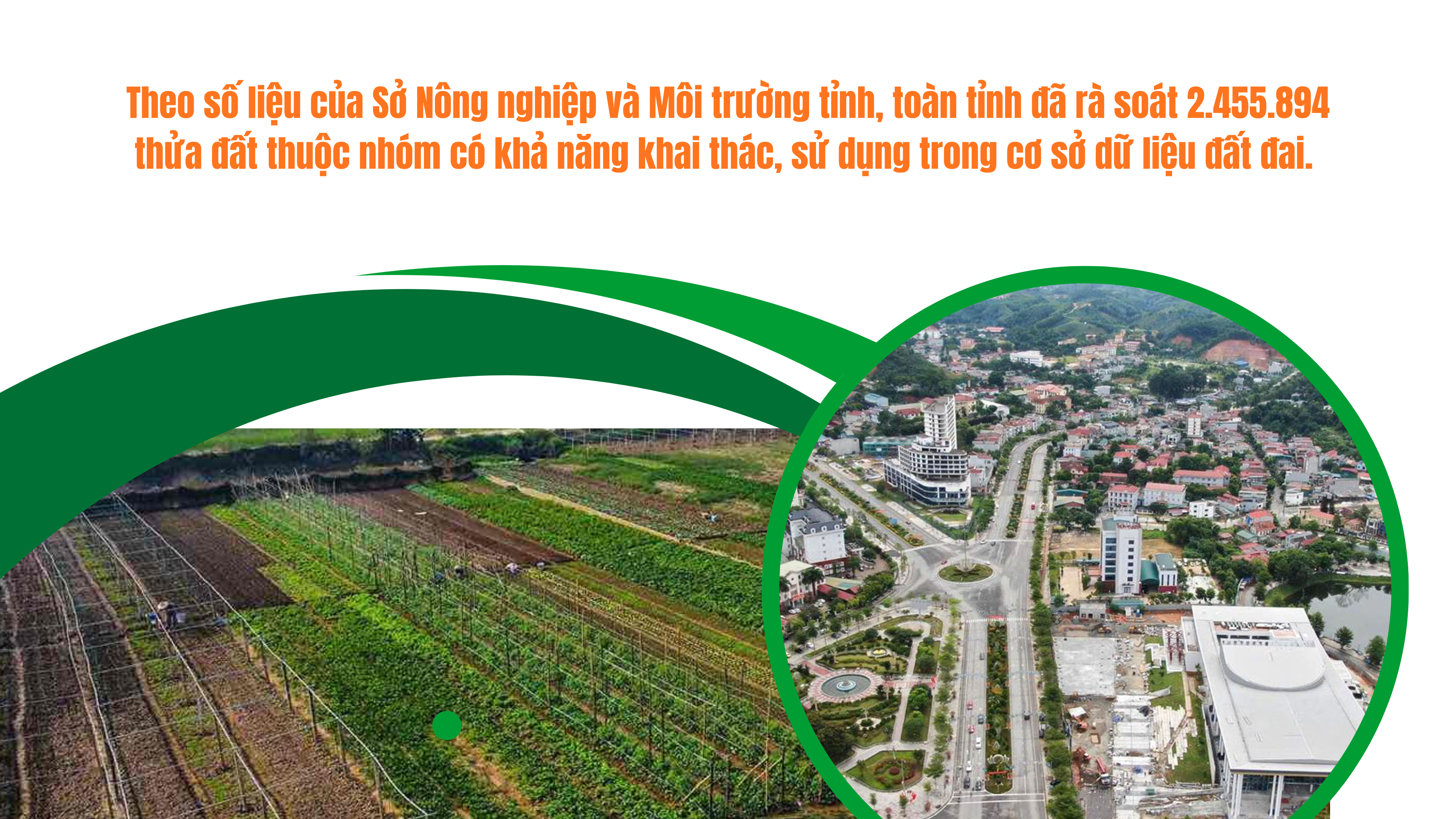
According to data from the Provincial Department of Agriculture and Environment, the entire province has 1,911,525 land parcels meeting the criteria of "correct - complete - clean - habitable," accounting for 77.8%; 221,211 land parcels require further information supplementation and verification, accounting for 9%; and 323,158 land parcels have unusable data and require new data creation, accounting for 13.2%. Compared to the period before the campaign, the number of standardized data has increased 13 times, reflecting the tremendous efforts of all levels, sectors, and local authorities.
Alongside data "cleaning," the province also completed the extraction and transfer of a list of 2,455,894 land parcels to cross-check information on land users with the national population database. Of these, 1,911,525 land parcels had completely matching information; 221,211 land parcels were verified but still contained discrepancies and required further correction.
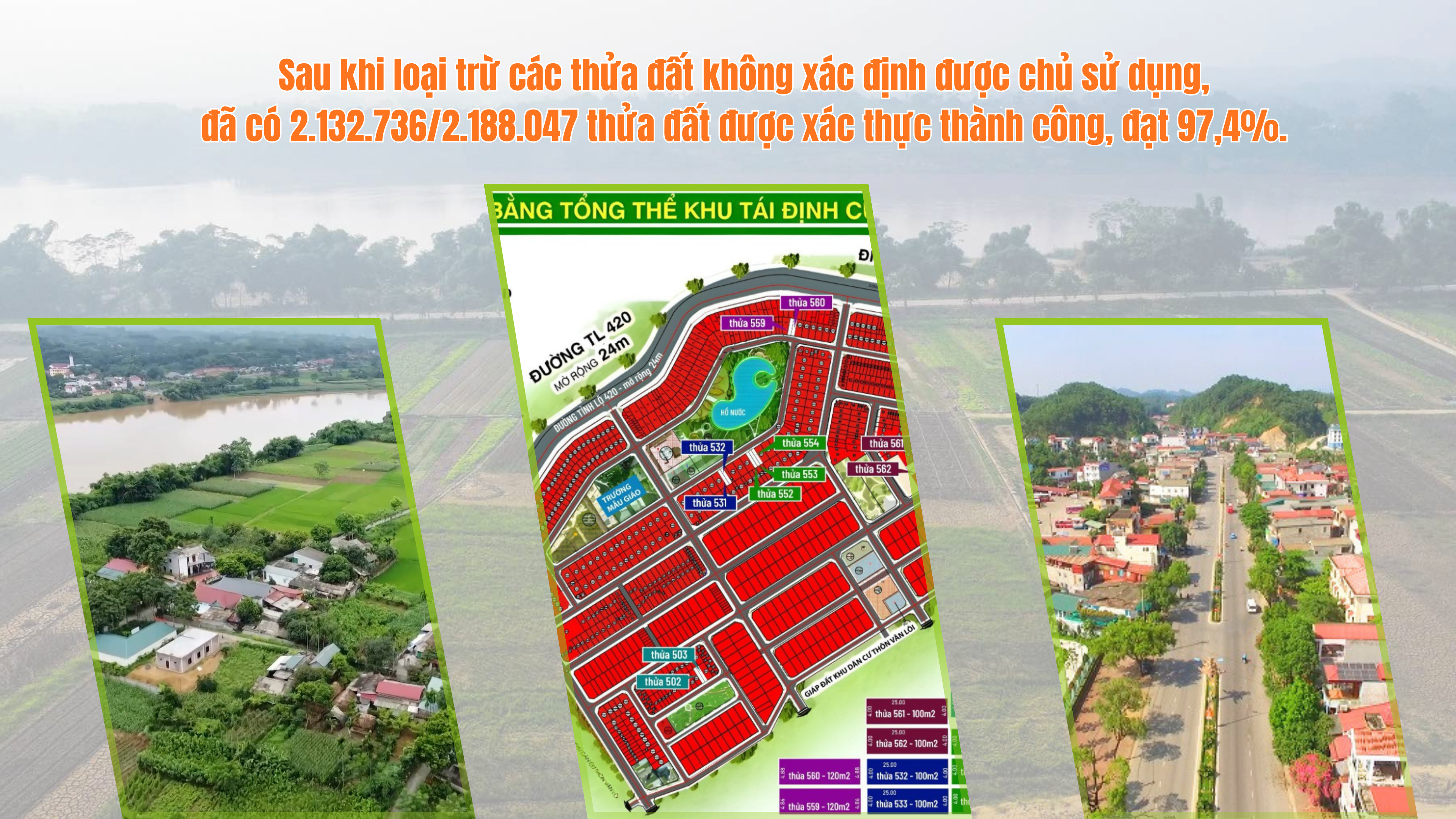
By the end of the campaign, Lao Cai had completed and put into operation its land database, with 94.3% of all land parcels meeting the criteria of "correct - complete - clean - viable," and successfully synchronized more than 2,180,000 land parcels to the national land database.

The 90-day campaign not only "cleaned" land data but also opened a new chapter in state management – where information is connected, transparent, and serves the people more quickly and conveniently than ever before.
Presented by: Thuy Thanh
Source: https://baolaocai.vn/no-luc-chuan-hoa-du-lieu-dat-dai-post896275.html
























































































Comment (0)