

Last week, Nikkei Asia reported that Japanese automaker Nissan announced it will focus on producing PHEV vehicles and is also considering a partnership with Mitsubishi to provide a PHEV platform for Honda.
Is it too soon to rush things?
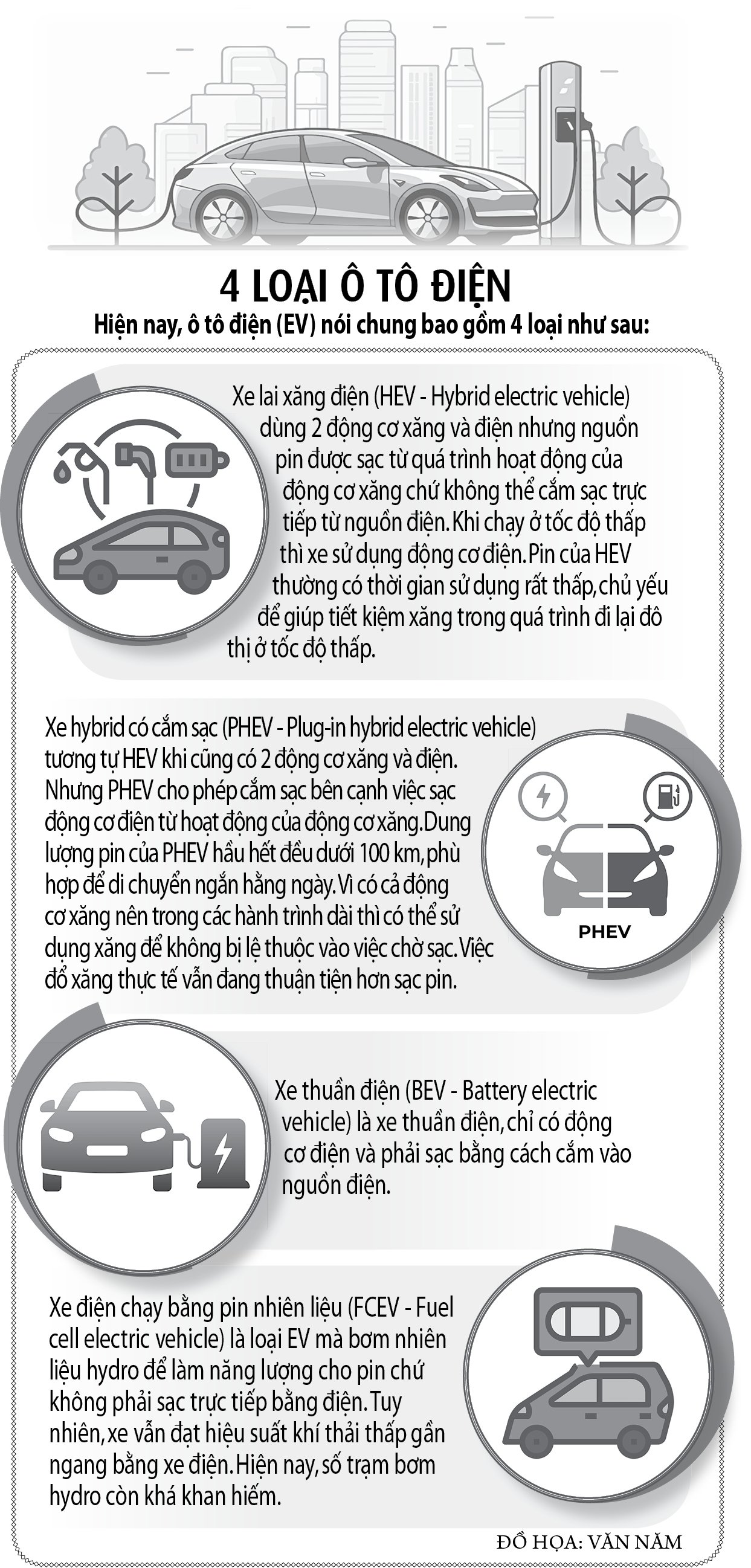
Explaining the decision, Nissan assessed that BEV sales were showing signs of stagnation due to high prices and limitations such as battery charging. Meanwhile, PHEVs offer high profit margins and many factors that are suitable for the transition to BEVs, which is expected to be quite lengthy. The combination of a gasoline engine and an electric motor gives PHEVs an advantage, allowing them to travel long distances without worrying about charging infrastructure.
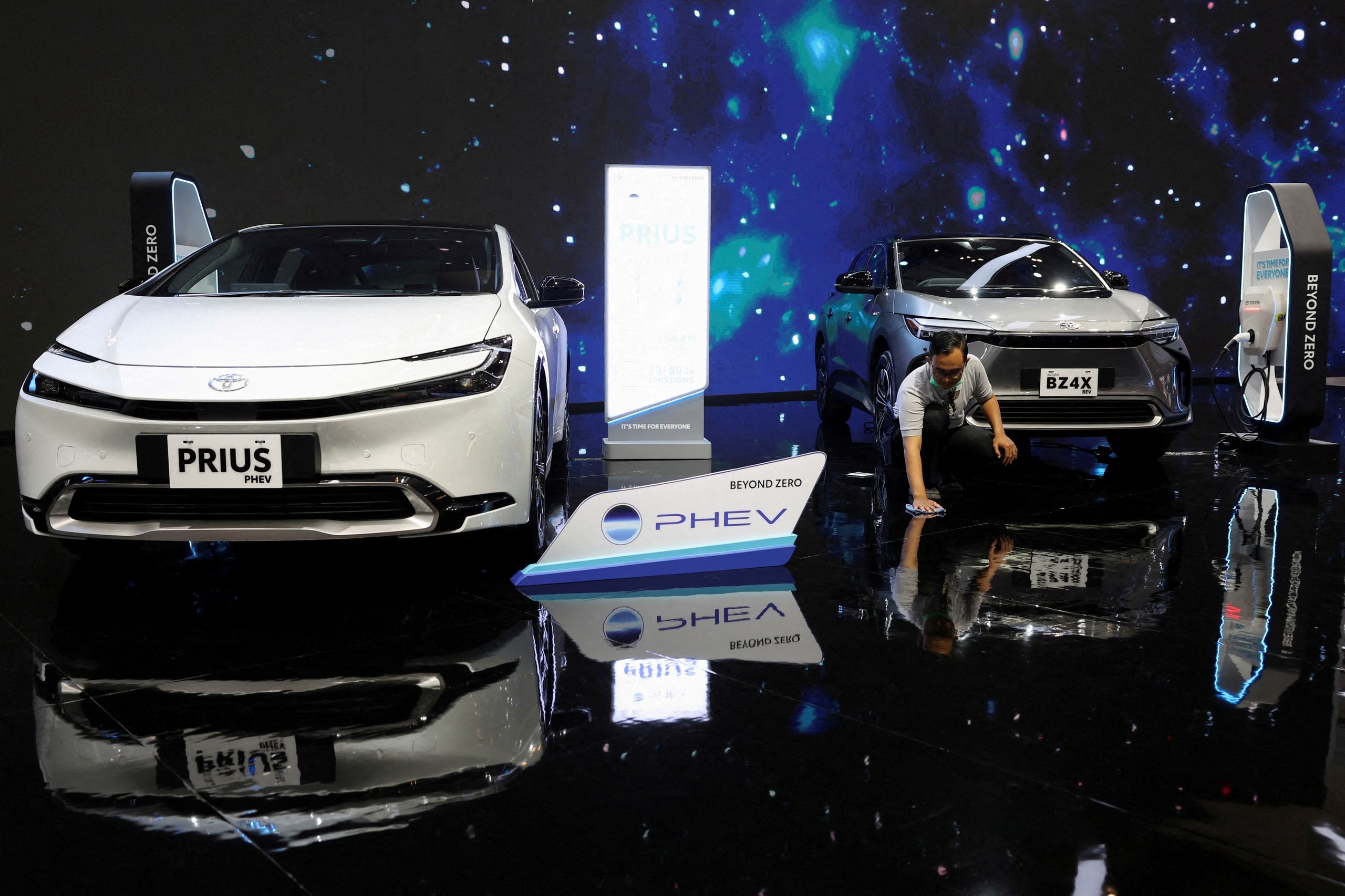
Toyota's Prius PHEV and BZ4X BEV models were displayed at an Indonesian auto show in July.
Moreover, manufacturers are gradually producing PHEVs with longer electric-only driving ranges, such as the Toyota Prius PHEV, which has a battery range of up to 105 km and is expected to be increased to 200 km. Toyota is also rapidly developing new PHEV models. BYD (China) recently introduced a PHEV that can achieve a continuous driving range of up to 2,100 km on a single full charge and a full tank of gasoline.
It is estimated that if a PHEV battery allows for a range of 140 km in Japan or 200 km in the US, it would be sufficient to meet daily commuting needs. Therefore, some argue that focusing on developing BEVs now is premature given the current infrastructure conditions.
Thailand approves massive budget for electric vehicle subsidies.
Sales figures show that PHEVs are experiencing significant growth. According to statistics, in July, China – currently the world's largest electric vehicle market – sold 991,000 electric vehicles (EVs in general, including PHEVs, BEVs, and other types), a 5.5% decrease compared to June but a 27% increase compared to July 2023. Of these, BEV sales reached 551,000 units, a 10% decrease from June but a 2.6% increase compared to July 2023. However, PHEV sales reached 438,000 units, a 0.5% increase from June and a staggering 86% increase compared to July 2023. In August, also in the Chinese market, PHEV sales saw a growth rate of 96.9% compared to the same period in 2023.
The "U-turn" by many companies
This reality is prompting many automakers worldwide to shift their electric vehicle strategies. Several European automakers are once again pivoting to focus more on PHEVs. Specifically, Jaguar Land Rover is increasing PHEV production, Volvo is devoting more "love and attention" to PHEV models like the XC60, and BMW has indicated it may further boost PHEV sales.
Last July, media reported that Audi was adjusting its electrification strategy by expanding its PHEV product line while anticipating a delay in the transition to BEVs. This is also a general strategy of Volkswagen, the group that owns Audi. Similarly, General Motors (GM) was recently reported to be focusing more on developing PHEVs than BEVs.
The aforementioned developments suggest that Akio Toyoda, President of Toyota Group, was not wrong in his previous analysis. Toyoda had previously resigned as CEO of Toyota under pressure from criticism that the company was not investing enough in BEVs.
After stepping down as CEO and retaining only the chairmanship, Mr. Toyoda maintained that there are many ways to achieve emissions reduction targets for automobiles without necessarily focusing solely on BEV development. He noted that BEVs would ultimately not exceed 30% of global vehicle sales. He argued that PHEVs are a suitable path forward.
In fact, PHEVs and hybrid vehicles (HEVs, which cannot be plugged in) are playing an increasingly important role and contributing significantly to Toyota's business results, helping the company maintain its position as the world's largest automaker. According to The New York Times , in 2023, Toyota sold 11.8 million vehicles, nearly six times the sales of Tesla (which only produces BEVs).
Source: https://thanhnien.vn/noi-chien-o-to-dien-185240928214104568.htm




![[Photo] General Secretary and President To Lam presides over a meeting on preparations for the review of one year of operation of the three-tiered government system.](https://vphoto.vietnam.vn/thumb/1200x675/vietnam/resource/IMAGE/2026/06/02/1780391821195_a1-bnd-4595-9717-jpg.webp)


















































































Comment (0)