


 |
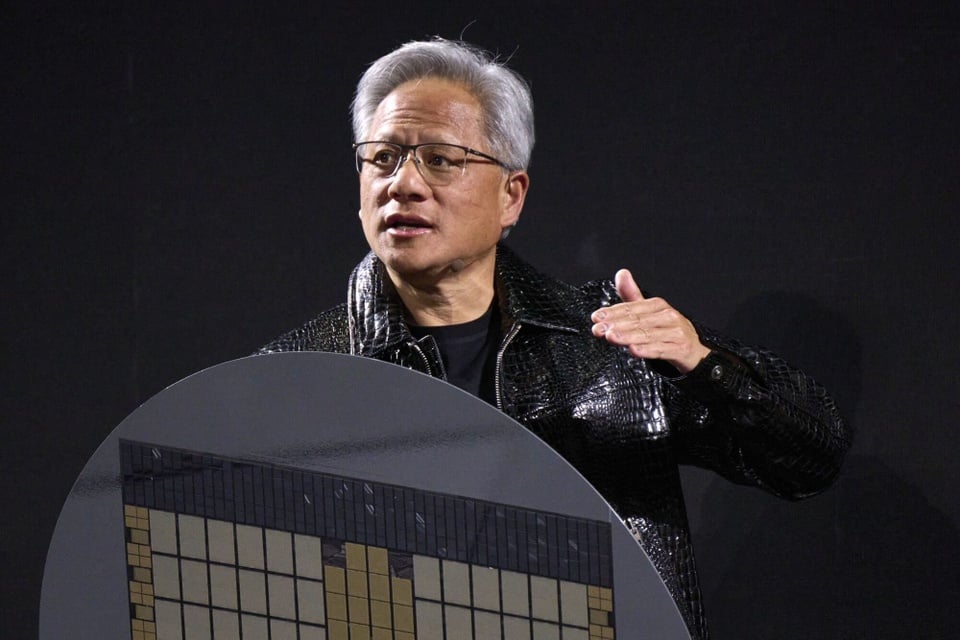
Jensen Huang, CEO of Nvidia. Photo: Bloomberg . |
The Trump administration has once again shaken the market by intensifying restrictions on chip exports. Analysts believe these are the latest actions from the White House to curb China's AI ambitions.
In fact, the Trump administration had been hinting at the possibility of tightening chip exports for months. The latest move aims to prevent billions of dollars worth of Nvidia and AMD chips from being imported into China.
A harsh business environment.
According to the WSJ , part of the reason the US is tightening restrictions stems from the success of the startup DeepSeek, which launched a powerful AI model with less computing power.
For Nvidia, this move only affects a small part of its operations, but it still "crushes" any efforts the company has made to do business smoothly in China.
Nvidia and AMD shares fell by about 7% on April 15th. The stock market plummeted after news that the tariff exemption for the chip industry would not last.
Nvidia CEO Jensen Huang remains committed to the Chinese market. On April 17, Chinese media reported that Huang had traveled to Beijing to meet with Chinese officials, affirming that it is a crucial market for Nvidia.
The new US restrictions target Nvidia's H20 chip and AMD's MI308 series. According to the WSJ , the battle for dominance in the AI field between the US and China is somewhat similar to the current trade war, with both the US's assertiveness and unpredictability.
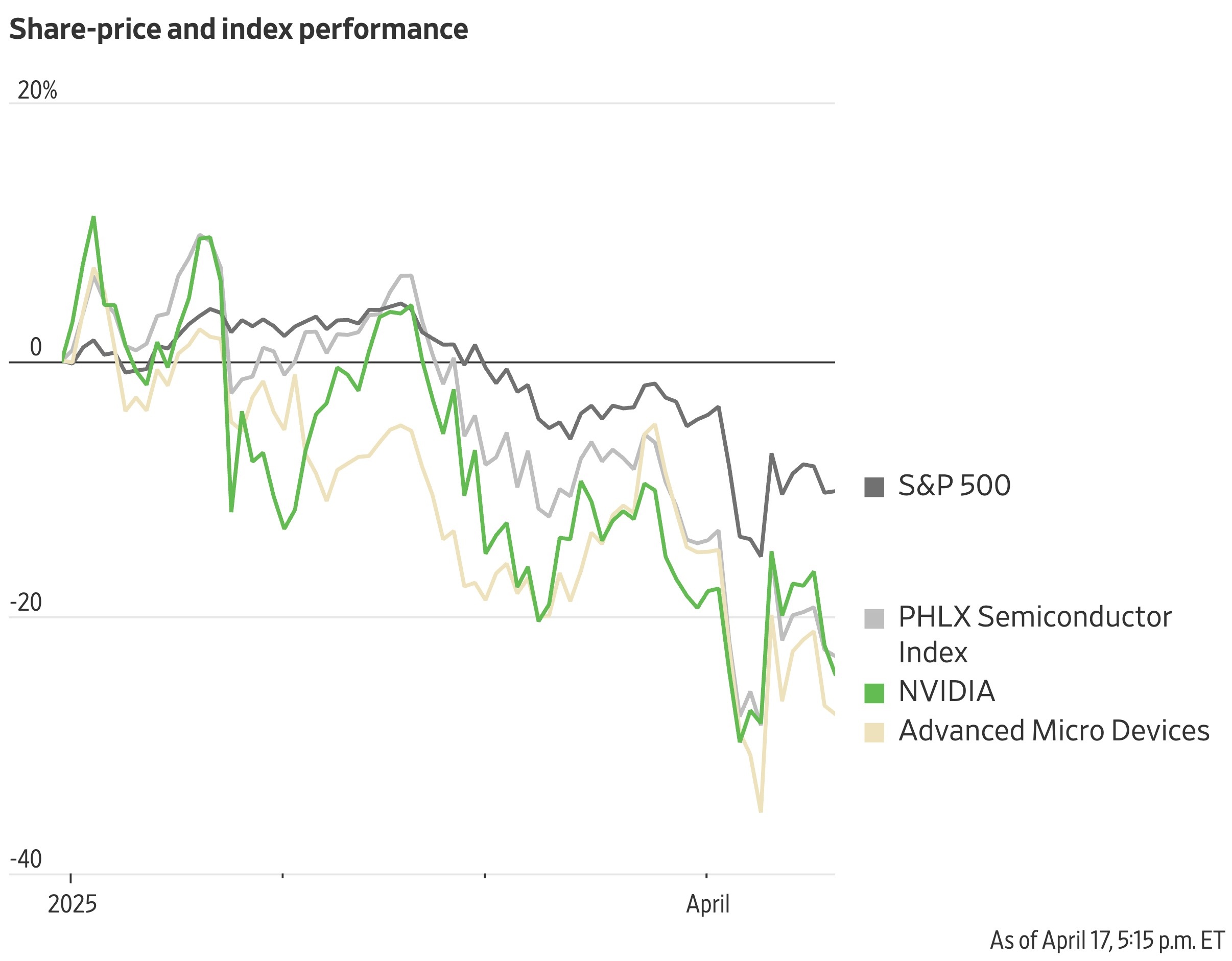 |
The decline in stock prices of several semiconductor companies since the beginning of 2025. Photo: WSJ . |
Specifically, President Trump announced a 145% retaliatory tariff on Chinese goods last week. Subsequently, many items were exempted from the tariff, such as processor chips, smartphones, and electronic products. On April 9th, the US government announced that Nvidia would have to comply with the new restrictive policy.
On April 14, Nvidia announced plans to build an AI supercomputer in Texas. The very next day, the company stated it would record a maximum cost loss of $5.5 billion due to the impact of new restrictions.
"Even if you think you're complying with the law and can sacrifice a little benefit, the law can change tomorrow and you'll become a victim..."
“This is a tough environment for businesses looking to spend billions of dollars on 30-year projects,” said Scott Lincicome, vice president of economics and trade policy at the Cato Institute.
The Trump administration argued that current AI trends involve inference, allowing AI models to be applied to real-world situations. The Nvidia H20 is a chip that is effective in this area.
Recently, several U.S. officials, including the National Security Council, have met with Huang to discuss H2O and Nvidia's global supply chain.
"Stop using American tools."
Nvidia has publicly stated that its chip sales in China generate revenue that helps the company maintain its leading position in the AI field. The company has also quietly opposed the new restrictions, arguing that China can produce some of its own chips equivalent to the H2O.
In the fiscal year ending in January, analysts estimate that Nvidia sold approximately $12 billion worth of H20 chips, accounting for 70% of the company's revenue in China.
China's access to the H2O chip has been on the radar of previous administrations. Discussions continued under Trump, and became more urgent from the beginning of the year after startup DeepSeek surprised everyone with its highly efficient, low-cost AI model.
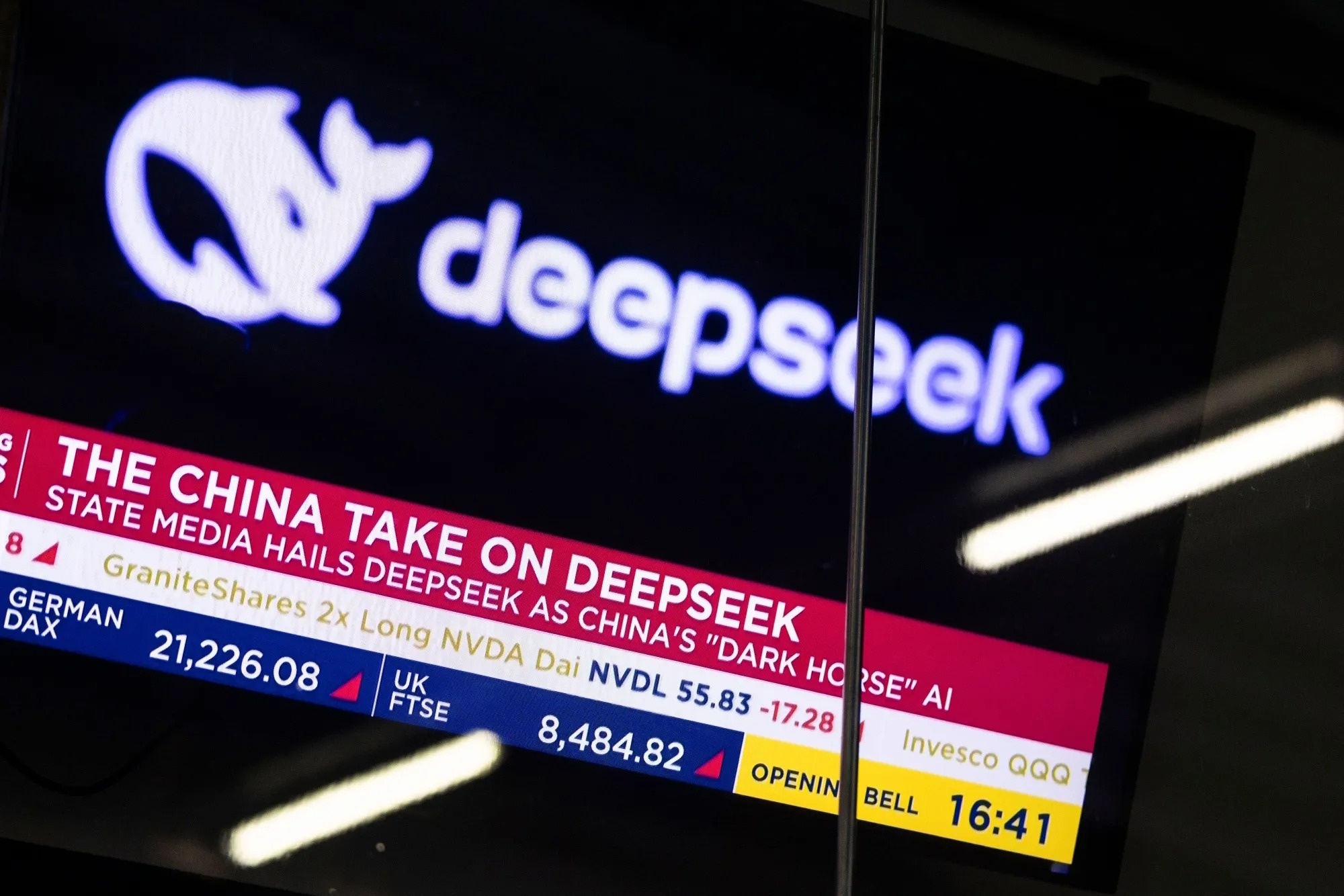 |
The startup DeepSeek caused a stir in the tech world in January. Photo: Bloomberg . |
The emergence of DeepSeek has spurred the development and application of AI models in China, increasing demand for Nvidia H20 and other chips.
At the nominee hearing in January, US Commerce Secretary Howard Lutnick asserted that Nvidia chips contributed to the development of DeepSeek, and that such actions from the US needed to stop.
"If they want to compete with us, let them compete, but stop using our tools to compete. I'm going to be very firm on this," Lutnick emphasized.
Increased instability
According to the WSJ , Chinese customers bought chips in the first three months of the year in anticipation of a new US ban.
Specifically, Nvidia received a total of $18 billion in orders for servers and modules equipped with H20. This figure is higher than the company's total revenue in China in the previous fiscal year. Nvidia's major customers are primarily cloud computing businesses such as Alibaba, Tencent, and ByteDance.
If the U.S. does not grant an exemption, this move would cut off a crucial resource for Chinese companies and researchers, and increase the need for domestically sourced replacement equipment.
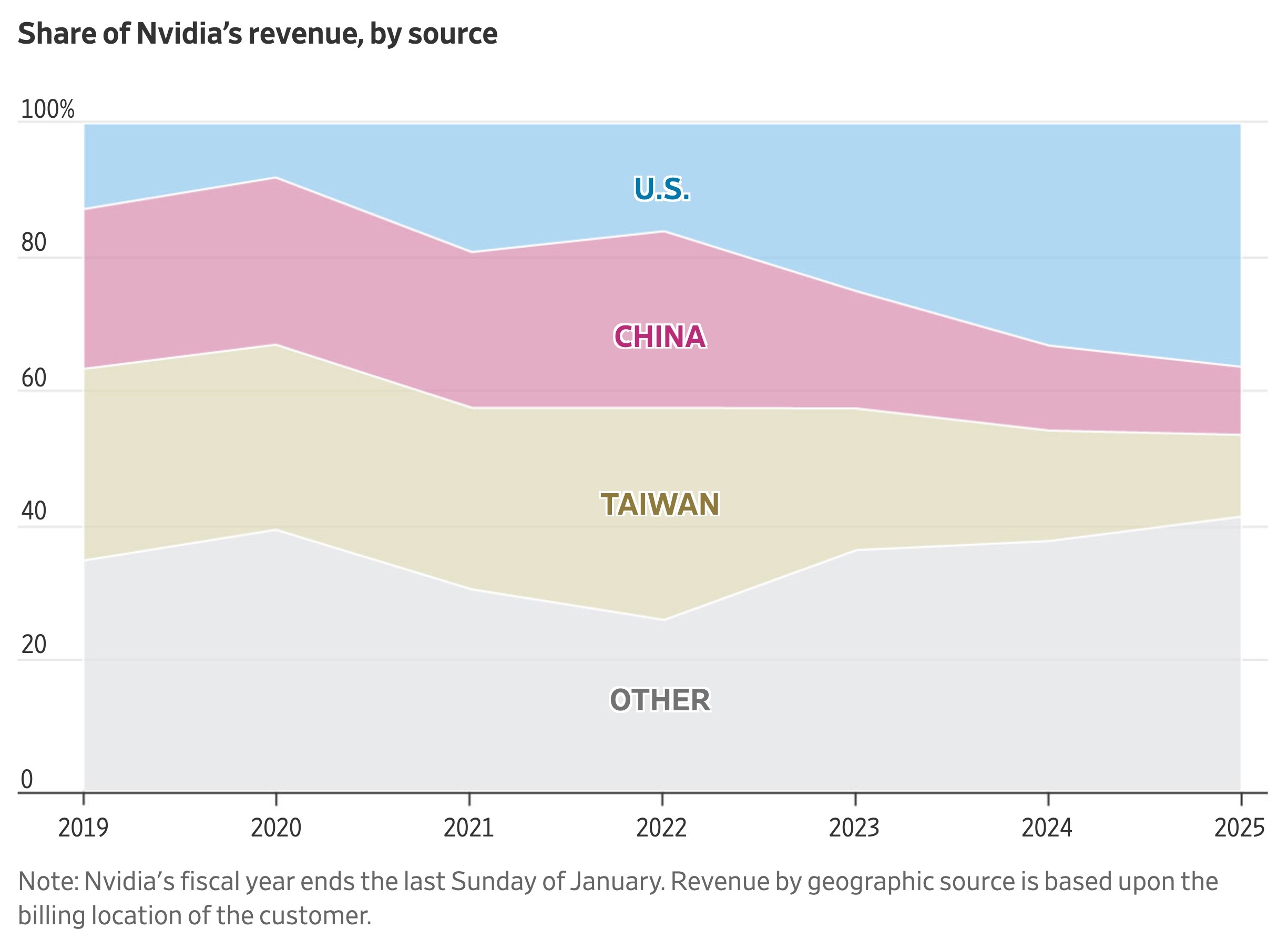 |
Nvidia's revenue contribution by region. Photo: WSJ . |
Initially, Chinese cloud companies planned to use the H20 chip for 50% of their AI accelerator needs. However, analysts from Citigroup say they are more likely to switch to Huawei and Cambricon chips.
According to the WSJ , China has promoted the development of its domestic semiconductor industry, making it independent of US technology and encouraging the use of domestically produced products.
Nvidia could report cost losses of around $5.5 billion in the first fiscal quarter of 2025 (ending in April), while AMD could incur losses of up to $800 million .
ASML, the company that creates the world's most advanced chip manufacturing machines, also saw its shares fall after reporting lower orders for the quarter. The Dutch company warned that tariffs would increase uncertainty.
Source: https://znews.vn/nvidia-va-lay-tu-tham-vong-cua-my-post1546815.html


![[Photo] Walking amidst the coffee blossoms in the Central Highlands](https://vphoto.vietnam.vn/thumb/1200x675/vietnam/resource/IMAGE/2026/02/22/1771736214034_ndo_bl_img-3460-8365-jpg.webp)














































































Comment (0)