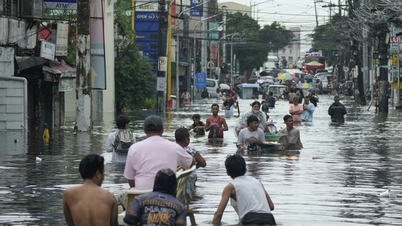
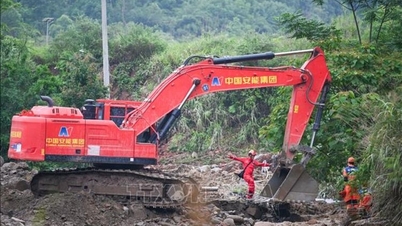
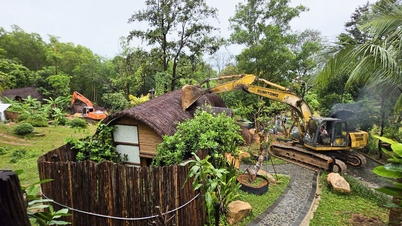
This pressure is exacerbated by the complex nature of natural disasters and floods. Many production areas have been damaged, crops have failed, and roads have been destroyed, disrupting transportation. When transportation costs increase, the prices of food and essential goods are immediately pushed up.
At the same time, capital flows in the market tend to shift towards non-production sectors. When there is more money in the economy but goods prices do not increase proportionally, the price level is easily pushed up silently. This mismatch, combined with supply shocks caused by natural disasters, pushes the price level up even further.
Furthermore, recent exchange rate fluctuations have added to cost pressure. As the Vietnamese Dong depreciates against the USD and EUR, the prices of imported machinery and equipment for production, raw materials, fuel, and animal feed are all pushed up. Businesses heavily reliant on imports are forced to bear higher costs, and these increased costs will eventually be passed on to the final selling price.
In this context, the most important task of economic management is not only to control the general price index but also to maintain price stability for essential goods essential to people's lives. This is the foundation of social stability and public trust.
To achieve this, it is first necessary to build a proactive price stabilization mechanism with an early forecasting system, strategic commodity reserves, and flexible intervention capabilities. When prices show signs of fluctuation, early forecasting and early adjustment are crucial, instead of waiting for prices to rise before taking action. This will help avoid chain reactions of price shocks.
Furthermore, the national and regional reserve systems for food and other seasonal commodities must be invested in and operated more professionally. Recent natural disasters have clearly shown that without proactive stockpiling, many localities could face localized shortages, causing prices to skyrocket within days. A regional reserve system based on a public-private partnership model will help mitigate price shocks and ensure a stable supply.
Another key solution is to reduce input costs for essential goods, especially logistics and energy. For many food items, transportation costs account for a large proportion of the price. Therefore, quickly repairing disruptions, investing heavily in transportation infrastructure, and optimizing the agricultural logistics network are the most effective measures to stabilize prices.
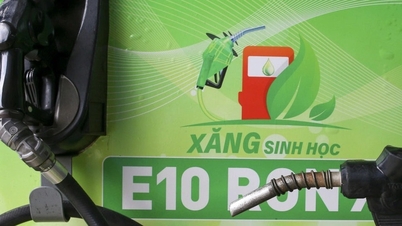
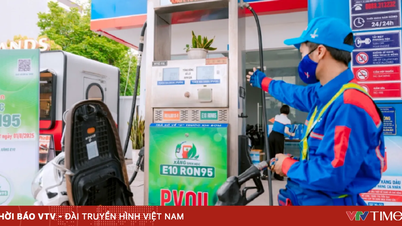
Simultaneously, it is necessary to make the price components of goods such as electricity, water, and gasoline transparent. When people know the factors that make up the price and the adjustment schedule, anxiety will decrease, and inflation expectations will be controlled. Price transparency is the most effective way to reassure the public.
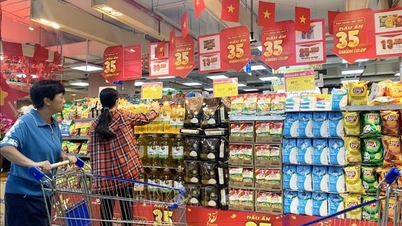
The role of the distribution system also needs to be emphasized. Developing a modern distribution system, standardizing wholesale markets, and promoting e-commerce for agricultural products are necessary to help reduce intermediary costs. When the supply chain is shortened, producers benefit more, and consumers can purchase goods at prices closer to the original cost.
During difficult times, the government also needs to provide direct support to vulnerable groups such as low-income workers and informal workers. For example, subsidies for utility bills, food assistance, or transportation subsidies. These measures not only protect the minimum standard of living but also strengthen social stability.
All of the above solutions must be interconnected and harmoniously coordinated between monetary and fiscal policies. Credit must be directed towards production and essential infrastructure; the budget must prioritize investment in strategic reserves, logistics, and reducing input costs for essential goods. When the six components—data, reserves, distribution, transparency, infrastructure, and policy coordination—operate in sync, macroeconomic stability will truly permeate every meal, every bill, and every aspect of daily life.
Maintaining price stability means maintaining a stable standard of living, and maintaining a stable standard of living means ensuring the well-being of the people. This is the truest measure of economic management capacity and social sustainability.
Dr. Huynh Thanh Dien
Source: https://www.sggp.org.vn/on-dinh-gia-an-dan-post824593.html






![[Photo] First session of the 14th Congress of the Vietnam Trade Union](https://vphoto.vietnam.vn/thumb/1200x675/vietnam/resource/IMAGE/2026/06/03/1780465947883_ndo_br_img-3852-jpg.webp)






































![[Video] Sunset at Lap An Lagoon – Where the sun sets over the fishing nets](https://vphoto.vietnam.vn/thumb/1200x675/vietnam/resource/IMAGE/2026/05/31/1780192137701_beach-landscape-sea-water-nature-grass-745871-pxhere-com.jpeg)


























Comment (0)