

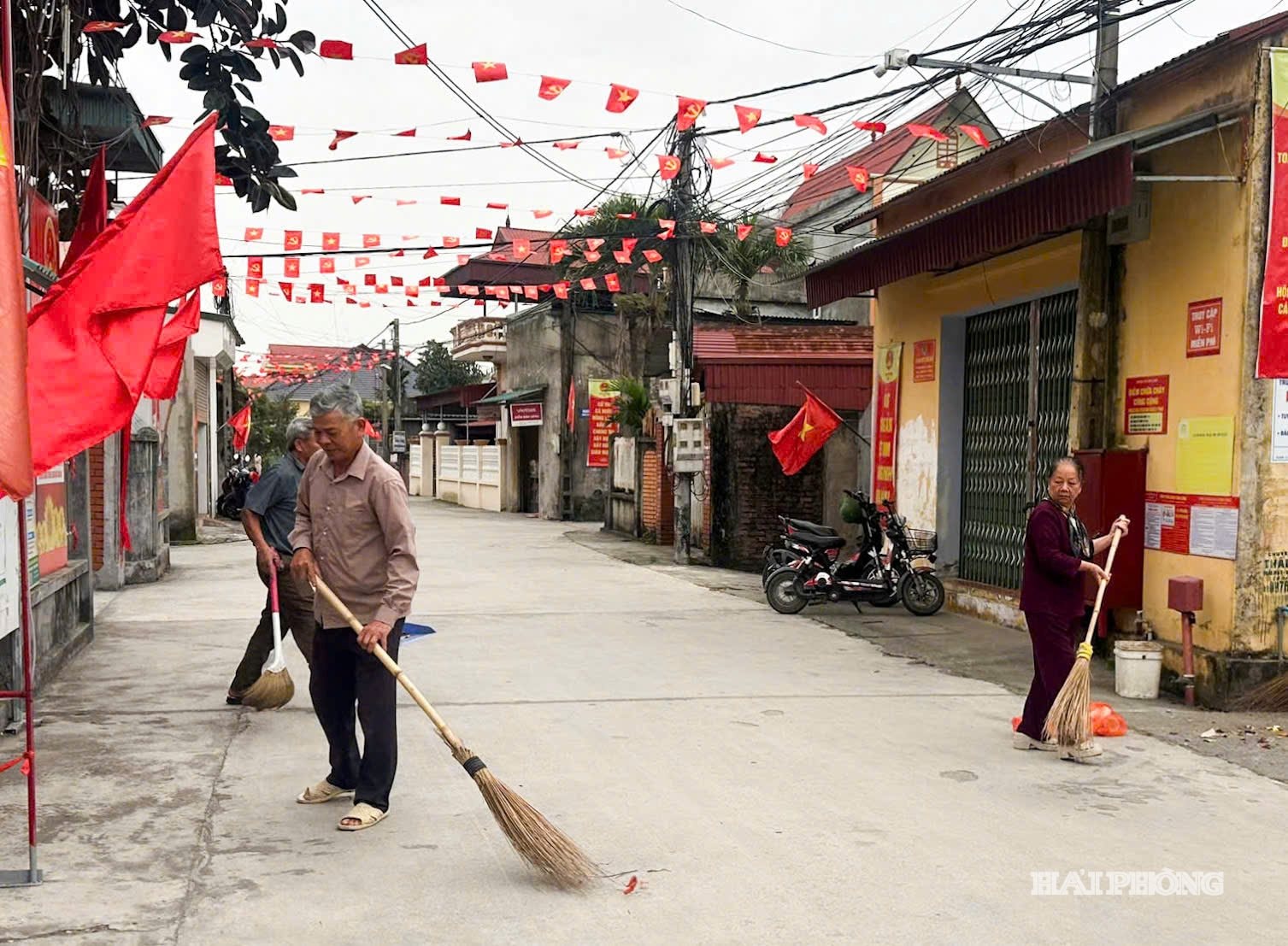
An Phu is "clean from house to street".
An Phu commune ( Hai Phong ) is quite large, with 20 villages and nearly 34,500 inhabitants. The area also includes the An Phat 1 industrial park, numerous production and business establishments, a local market, and schools, resulting in significant environmental pressure.
Beyond mere propaganda or short-term campaigns, An Phu commune has chosen a solution to environmental protection that involves changing perceptions, tightening accountability, and reorganizing the entire process of sorting, collecting, and processing household waste right from the grassroots level.
“Previously, many of us residents thought that garbage collection was the responsibility of the collection team. Now, that perception has changed. We understand that if we don't sort garbage at the source, processing costs increase, the environment becomes more polluted, and ultimately, we are the ones who suffer,” shared Ms. Nguyen Thi Hien from Co Phap village.
Initially, many households were hesitant to sort their waste because they considered it time-consuming. But after receiving information and guidance, people developed the habit of sorting waste. "Now every household separates organic and inorganic waste. The village roads are cleaner, but more importantly, people are more conscious and no longer throw waste wherever they please like before," said Ms. Do Thi Tuoi from Lam Xuyen village.
The sorting, collection, and treatment of household solid waste in An Phu commune has been implemented comprehensively since 2022, in accordance with Resolution No. 13-NQ/HU dated March 22, 2022, of the Standing Committee of the former Nam Sach District Party Committee. After four years of implementation, the sorting, collection, and treatment of household waste have gradually become more organized and have received the support and approval of the local people.
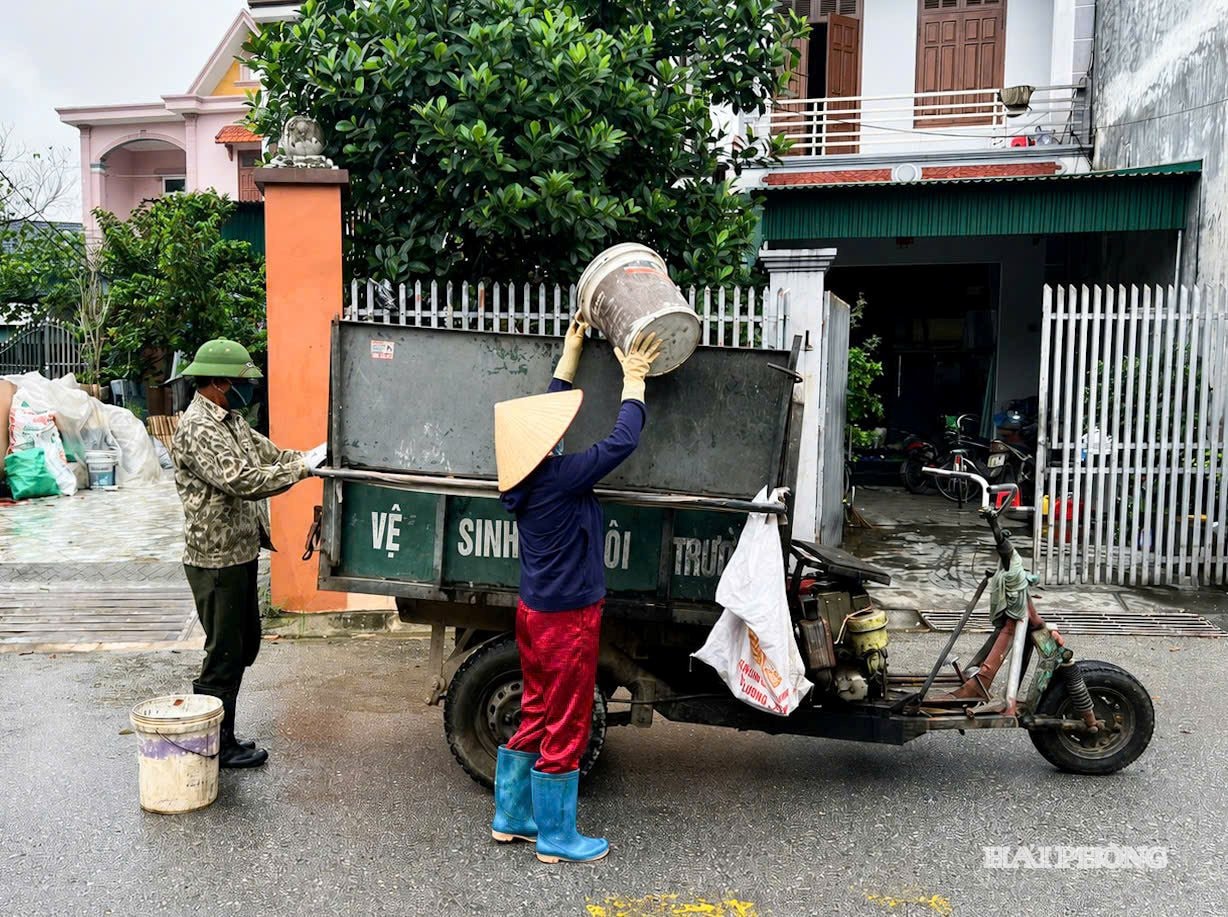
Currently, on average, the waste collection teams in the villages conduct about 3 waste collection sessions per week, including 2 sessions for organic waste and 1 session for inorganic waste.
Waste is collected from households, transported to a transfer point before being sent for centralized processing at the waste treatment plant of APT-Seraphin Hai Duong Environmental Joint Stock Company (Lai Khe commune, Hai Phong city).
In the villages, sorting waste has become a familiar task for many families. Organic waste is separated to be composted or used as fertilizer. Inorganic waste is collected regularly for centralized processing. Bulky items such as old beds, wardrobes, tables, and chairs are also received at designated times instead of being dumped haphazardly as before.
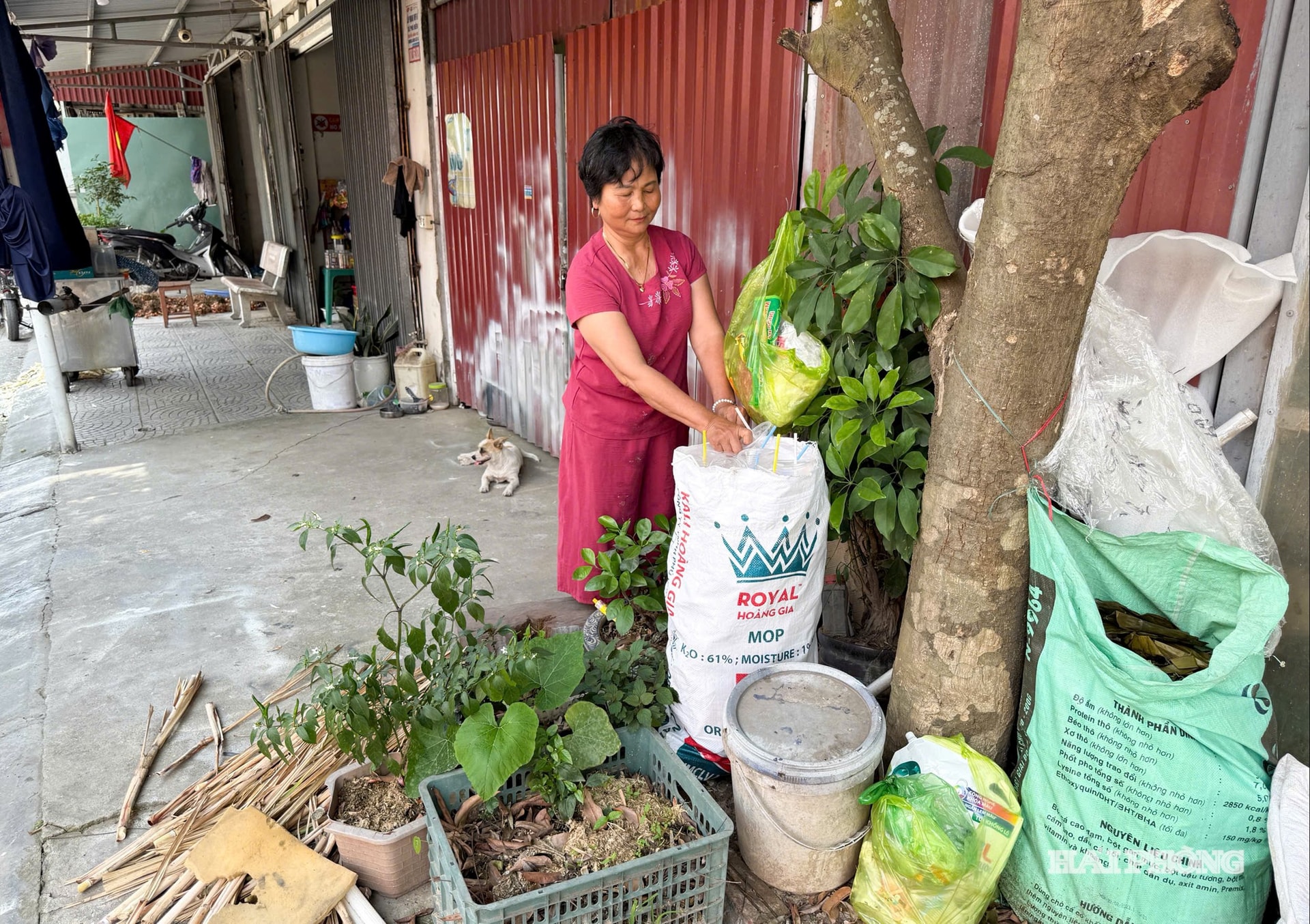
The atmosphere of "the whole nation protecting the environment" is clearly demonstrated through the participation of the Vietnam Fatherland Front, the Women's Union, the Youth Union, the Veterans' Association, etc., in mobilizing people to maintain environmental hygiene. Movements such as "Green Sunday," "5 No's and 3 Cleanliness," and "skillful mass mobilization" are directly linked to waste sorting at source.
An Phu commune has also made environmental protection one of the criteria for evaluating the emulation of Party branches and villages, and for considering the title of "Cultural Family" annually. Cadres and Party members must set an example in sorting waste at source and participate in mobilizing people to do the same.
The systematic approach in An Phu
An Phu commune also demonstrates a mindset that doesn't shy away from reality. The local authorities frankly acknowledge the continued problem of illegal dumping, inadequate waste sorting, and the mixing of organic and inorganic waste, which increases processing costs. Some collection points still experience congestion, especially in areas with a high concentration of migrant workers.
"If we only stop at the movement stage, it will be difficult to create sustainable change. What An Phu is aiming for is to build a comprehensive environmental management system with specific goals, a roadmap, and monitoring," said Mr. Nguyen Dinh Dung, Deputy Secretary of the Party Committee and Chairman of the People's Committee of An Phu commune.
According to the commune's plan, by 2027, the locality aims to ensure that 100% of household waste is thoroughly sorted at source, reducing the amount of inorganic waste requiring transportation for treatment by approximately 30% compared to the current level. By 2030, about 70% of the processed organic compost will be used for agricultural production.
This is not an easy goal to achieve in an area with a large population, industrial zones, and a high volume of waste generated daily like An Phu. Just between July and October 2025, the amount of waste sent to the treatment plant was nearly 600 tons, averaging about 150 tons per month.
To proactively protect the environment, An Phu aims to install canopies at waste transfer points, install surveillance cameras, pave roads leading to waste collection areas with concrete, and attract investors to produce organic fertilizer from sorted waste.
The commune is strengthening inspections and monitoring of waste sorting at source, requiring collection teams to only accept waste that has been properly sorted. The commune police are coordinating patrols and handling cases of illegal dumping or burning of waste at collection sites.
According to Mr. Nguyen Dinh Dung, simply collecting and transporting waste for processing is not a fundamental solution. What the commune aims for is to reduce waste at its source, maximize the utilization of organic waste, and change people's living habits.
"To achieve a sustainable green environment, we need a fundamental approach. The most important thing is the awareness of the people and the coordinated involvement of the entire political system. The government will only succeed when the people truly cooperate," Mr. Dung emphasized.
An Phu commune focuses on raising awareness and encouraging residents to invest in their own waste containers and build organic composting pits at home. They utilize processed organic waste to reduce transportation costs and lessen the burden on the centralized treatment system.
Through systematic and coordinated approaches, along with the participation of the people, An Phu is gradually preserving the greenery of its village roads and alleys, contributing to the long-term development of the locality.
HA KIENSource: https://baohaiphong.vn/phan-loai-rac-tai-nguon-giu-xanh-lang-que-an-phu-542779.html

![[Image] Close-up view of the interchange connecting the two expressways and Long Thanh Airport.](https://vphoto.vietnam.vn/thumb/1200x675/vietnam/resource/IMAGE/2026/05/25/1779703378210_ndo_br_z7863716673926-224453a31600126cce10622af6290afd-4549-jpg.webp)

![[Image] Hanoi's urban life under the challenge of a "scorching hot" environment](https://vphoto.vietnam.vn/thumb/1200x675/vietnam/resource/IMAGE/2026/05/25/1779706979265_nang-nong-t5-2026-minh-duy-7-4636-jpg.webp)



























































Comment (0)