

On July 20, French President Macron reshuffled his government cabinet, re-appointing Elisabeth Borne as Prime Minister but changing 11 ministerial positions.
French President Emmanuel Macron has replaced 11 ministers and secretaries of state from the previous government with eight new faces and transferred three former ministers to new positions.
The two most notable changes in this reshuffle were the departure of Health Minister Francois Braun, who failed to address hospital overcrowding and shortages of pharmaceuticals and medicines, and Education Minister Pap Ndiaye, who made no impact during his more than 14 months in office.
 |
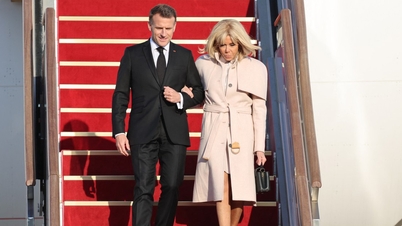
French President Emmanuel Macron and Elisabeth Borne. Photo: News In France |
Replacing them in these two positions are Aurélien Rousseau, former Chief of Staff to Prime Minister Elisabeth Borne, and Gabriel Attal, former Treasury Minister and close confidant of President Macron.
Key ministerial positions such as Foreign Affairs, the Military, the Economy, and the Home Office remain unchanged in the new government, which comprises a total of 41 members and continues to be headed by Prime Minister Elisabeth Borne.
Elisabeth Borne overcame rumors of an early departure and secured her position as Prime Minister thanks to her determination to implement the pension reform law, one of the priorities set by President Emmanuel Macron during his term.
Local analysts believe this reshuffle is more politically motivated than technocratic, as most of the new faces come from President Macron's Renaissance Party to ensure unity in implementing the priorities set by the French leader, especially on ecological issues, immigration, and measures to combat violence.
Meanwhile, opposition parties criticized the government reshuffle as being overly technical and lacking in politically diverse figures.
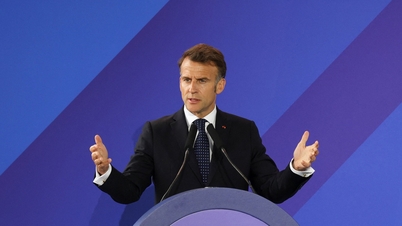
According to expectations, French President Emmanuel Macron will deliver a concluding speech on July 23rd outlining his 100-day plan to "reconcile" France following the upheavals from protests against pension reforms that began earlier this year and the recent unrest.
According to VOV.vn
Source
![[Photo] Ba Lang An Lighthouse - the "eye of the sea" amidst the "rock museum" of Quang Ngai province.](https://vphoto.vietnam.vn/thumb/1200x675/vietnam/resource/IMAGE/2026/05/29/1780038698840_anh-man-hinh-2026-05-29-luc-14-10-42.png)
![[Image] Pleasant weather helps students enter the 10th grade entrance exam with confidence.](https://vphoto.vietnam.vn/thumb/1200x675/vietnam/resource/IMAGE/2026/05/29/1780034401612_ngay-1-thi-lop-10-minh-duy-8-5009-jpg.webp)








































































Comment (0)