

 |
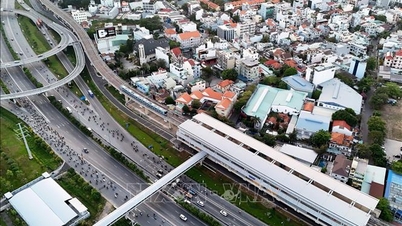
| A view of Tran Bien ward, the central urban area of Dong Nai province. Photo: Pham Tung |
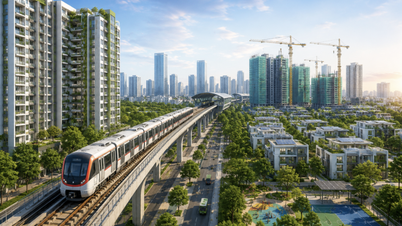
In urban development, Dong Nai aims to effectively exploit and utilize underground space, elevated space, digital resources, and digital space. At the same time, it focuses on developing certain areas according to the Transport-Oriented Development (TOD) model.
Developing a modern urban system rich in cultural identity.
Prior to the provincial merger, the former Dong Nai province had 11 urban areas, and the former Binh Phuoc province also had 11 urban areas.
According to Resolution No. 05/NQ-HĐND on the approval of the adjustment of the Dong Nai Provincial Planning for the period 2021-2030, with a vision to 2050, which was approved by the Provincial People's Council, Dong Nai province aims to basically meet the standards of a centrally-governed city by 2030. Specifically, regarding urban development plans, the province aims to have 22 urban areas by that time, including: 3 Type II urban areas (Bien Hoa, Long Khanh, and Dong Xoai); and 19 Type III urban areas. During this process, the major urban areas in the province will expand their scope to cover the entire administrative boundaries of the wards after reorganization. Some urban areas, formerly towns within communes after reorganization, will expand their scope to cover the entire commune or the former towns.
According to Ms. Truong Thi Huong Binh, Member of the Provincial Party Standing Committee and Director of the Department of Finance, in the urban system planning scheme for the province, Dong Nai province has determined that the development of the urban system needs to take into account regional linkages, towards sustainable, smart, green cities that are adaptable to climate change, in line with the trend of modern urban development, high quality of life, and the long-term development requirements of the province.
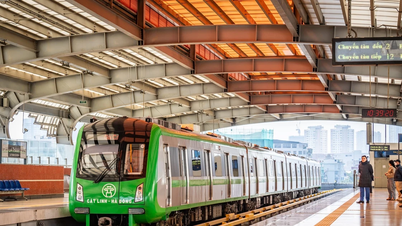
Simultaneously, in line with new development trends, urban development in the province will also be linked to the TOD (Transit-Oriented Development) model, compact and mixed-use development, and the establishment of distinctive spaces around public transport stations. For urban areas with high population density, consideration should be given to developing underground spaces for infrastructure or construction projects to optimize land resources.
In particular, in the development orientation of the urban system in the province in the coming time, the Long Thanh International Airport urban area will not only play a role as one of the two new development driving areas of the province but also as an important urban area, contributing to the formation of the identity of the urban system in the province.
 |
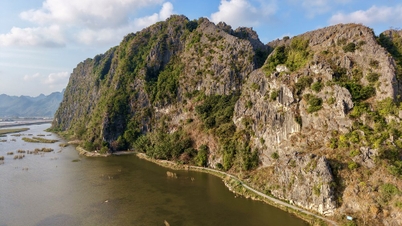
| A picturesque corner of Binh Phuoc ward, Dong Nai province. Photo: Contributor. |
Harnessing the potential of mountains, rivers, and lakes.
According to Dr. Ngo Viet Nam Son, Chairman of NgoViet Architects & Planners (based in Ho Chi Minh City), Dong Nai currently possesses a diverse system of rivers and lakes, especially the Dong Nai River and Tri An Lake, giving the province many advantages for urban development, particularly ecological and resort cities.
Provincial Party Committee member and Vice Chairman of the Provincial People's Committee Ho Van Ha assessed: The Dong Nai River and the system of lakes in the province are valuable resources to promote the province's development in the coming time, including urban development.
To capitalize on these advantages, in its urban development plan for the coming period, Dong Nai province also outlines the direction for implementing high-class urban, tourism , and resort projects along rivers, mountains, and lakes. Specifically, Dong Nai will focus on developing urban-tourism-service areas adjacent to Long Thanh Airport; the Chua Chan Mountain and Nui Le Lake urban-tourism area; the Suoi Giai Lake urban-tourism area; the Ba Ra Mountain - Thac Mo Waterfall urban-tourism area; and a chain of urban areas along the Dong Nai River (concentrated in the urban areas of Bien Hoa, Long Thanh, and Nhon Trach).
According to Nguyen Van Ut, Deputy Secretary of the Provincial Party Committee and Chairman of the Provincial People's Committee: During the process of adjusting the Dong Nai Provincial Planning, the Provincial People's Committee directed the updating of the planning for the Dong Nai River area and existing ecological lakes to develop amusement parks, tourist areas, and urban areas. "The provincial planning only provides general guidance; the implementation process will be carried out by local authorities. However, all aspects have already been guided by the planning," said Chairman Nguyen Van Ut.
According to the set targets, by 2030, Dong Nai province aims to achieve an urbanization rate of 55-57%.
Pham Tung
Source: https://baodongnai.com.vn/kinh-te/202603/phat-develop-urban-in-new-context-7a91ecc/































































Comment (0)