

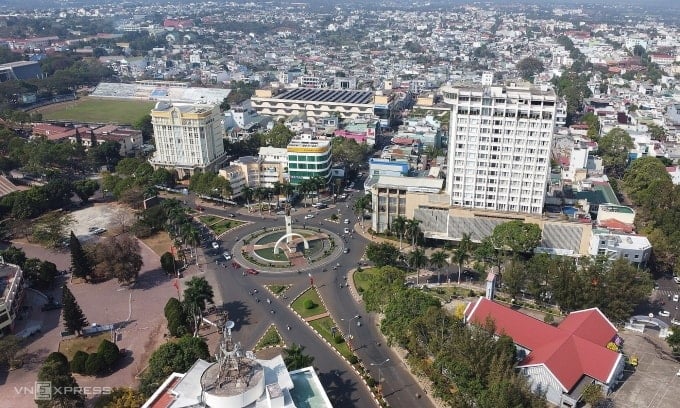
The Standing Committees of the Dak Lak and Phu Yen Provincial Party Committees are scheduled to meet in Buon Ma Thuot City (Dak Lak) on April 18th to discuss and agree on a plan to merge the two localities.
The meeting will cover topics such as establishing an inter-provincial task force to coordinate the development of a plan for reorganizing provincial-level administrative units and its implementation roadmap; organizational structure and personnel; arrangement of office premises, allocation of official housing, support schemes for officials, and investment plans for upgrading National Highway 29 connecting the two provinces...
On April 13, the People's Committee of Dak Lak province projected that if the merger takes place, approximately 1,000 officials, civil servants, and public employees (including over 120 officials under the management of the Provincial Party Standing Committee, excluding the armed forces) will need to travel from Tuy Hoa City (Phu Yen) to Buon Ma Thuot City (Dak Lak) for work and vice versa (a distance of nearly 200 km).
For officials at the departmental level and above, the province will arrange private official vehicles for transportation, allowing them to manage their travel time effectively and ensure their work requirements are met.
The remaining officials and employees will use shared transportation according to a specific schedule. The bus departs from Tuy Hoa City at 4:00 AM every Monday (from the Phu Yen Provincial People's Committee headquarters); and departs from Buon Ma Thuot City at 5:30 PM every Friday (picking up at the Dak Lak Provincial People's Committee headquarters). During the journey, the bus may pick up additional passengers at several locations to ensure convenience for officials and employees.
In addition to official vehicles, the province also has transport vehicles provided by fixed-route transport businesses to serve the merger. The total estimated cost for this plan (excluding the cost of official vehicles) is approximately 1 billion VND per month, from the provincial budget in 2025 and support from the central government.
From April to May, Dak Lak will survey the actual travel needs of officials in the two localities. In July and August, the province will implement a plan to select contractors to provide vehicles (contracted commercial vehicles). The plan is expected to be implemented in September, and a preliminary assessment of travel conditions will be conducted in January 2026 to make adjustments as needed.
Dak Lak province covers an area of over 13,000 km2 (the 4th largest in the country) and has a population of over 1.9 million people. The province borders Gia Lai and Phu Yen to the north, Khanh Hoa to the east, Lam Dong and Dak Nong to the south; and Cambodia to the west with a border stretching over 190 km. Basalt soil accounts for over 40% of the province's natural area, favorable for the development of industrial crops such as coffee, rubber, pepper, fruit trees, vegetables, and medicinal plants. The province has 15 administrative units at the district level, including 1 city, 1 town, and 13 districts, with 149 communes, 18 wards, and 13 townships.
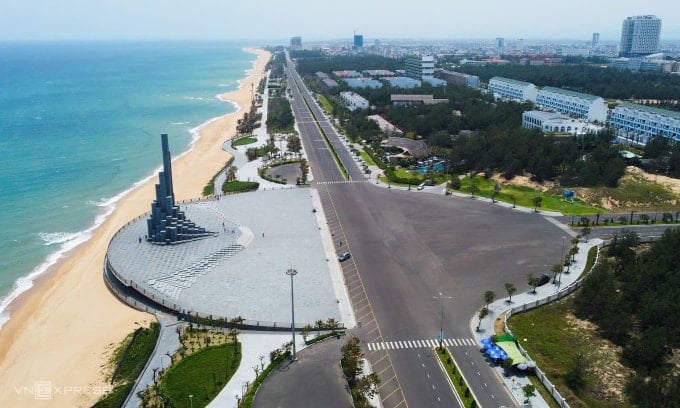
Phu Yen is a coastal province in the South Central region of Vietnam, covering an area of over 5,000 km2 and with a population of over 876,000 people (2022). The province has 9 district-level administrative units and 110 commune-level administrative units (including 21 wards, 6 towns, and 83 communes). The local economy is developed based on its coastal advantages, with key pillars being industry, tourism, high-tech agriculture, maritime transport, and logistics.
The two localities are connected and trade goods via National Highway 29. Recently, Dak Lak proposed to the Prime Minister to consider and approve the investment plan to upgrade and renovate National Highway 29 connecting the two provinces, with a scale of 4 lanes and a total investment of 10,000 billion VND.
The People's Committee of Bac Kan province is currently gathering feedback from voters in 108 communes regarding the proposed plan. The merger of Bac Kan and Thai Nguyen has been proposed. One suggested name for the new province is Thai Nguyen. The public can agree or disagree and may express other opinions.
The province will post the voter list from April 11th to 19th, and organize the collection of opinions from April 17th to 19th. The commune-level People's Committees will compile and report the results to the district level before April 20th, and the district level to the province before April 21st.
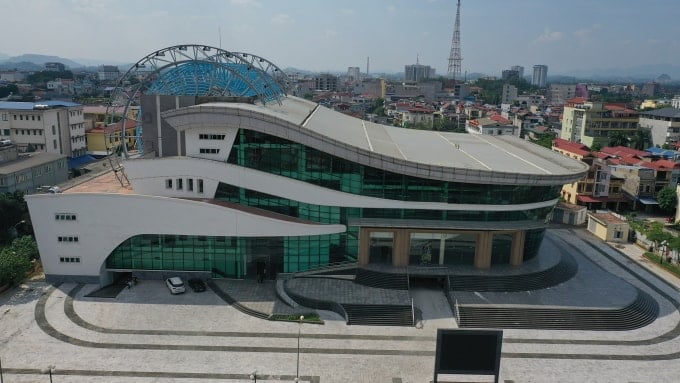
Bac Kan province has a natural area of 4,859 km2 and a population of over 326,000 people. The province comprises 8 district-level administrative units, with 108 communes, wards, and towns. It borders Cao Bang to the north; Lang Son to the east; Thai Nguyen to the south; and Tuyen Quang to the west. Bac Kan's total budget revenue in 2024 reached approximately 930 billion VND.
Meanwhile, Thai Nguyen, located in the heart of the Northern Midlands and Mountains region, covers an area of over 3,560 km2 and has a population of over 1.3 million people from 8 ethnic groups. The province borders Bac Kan to the north; Vinh Phuc and Tuyen Quang to the west; Lang Son and Bac Giang to the east; and Hanoi to the south. Thai Nguyen has 3 cities, 6 districts with 178 communes, wards, and towns; its total budget revenue in 2024 exceeded 20,000 billion VND.
The merger of provinces and cities is being carried out at the request of the Central Government. At the 11th Central Committee meeting of the 13th Party Congress, which concluded on April 12th, the Central Committee unanimously agreed to reduce the number of provincial-level administrative units nationwide from 63 to 34, including 28 provinces and 6 centrally-administered cities.
Several merger options are being studied, such as Da Nang and Quang Nam; Bac Giang and Bac Ninh; Hai Phong and Hai Duong; Lao Cai and Yen Bai; Quang Ngai and Kon Tum; Ho Chi Minh City and Binh Duong; Ba Ria - Vung Tau...
TB (according to VnExpress)Source: https://baohaiduong.vn/phuong-an-sap-nhap-dak-lak-voi-phu-yen-bac-kan-va-thai-nguyen-409327.html


![[Photo] Prime Minister Pham Minh Chinh attends the Conference on the Implementation of Tasks for 2026 of the Industry and Trade Sector](/_next/image?url=https%3A%2F%2Fvphoto.vietnam.vn%2Fthumb%2F1200x675%2Fvietnam%2Fresource%2FIMAGE%2F2025%2F12%2F19%2F1766159500458_ndo_br_shared31-jpg.webp&w=3840&q=75)
































































Comment (0)