

Previously, the carambola tree grew wild along ditches and canals, and children could freely climb and pick the fruit if they liked to eat it; no one sold it. But today, carambola is a popular specialty of the Mekong Delta, sold everywhere from street vendors to tourist areas in An Giang, Can Tho, and other places.
Canarium fruit is also processed into many dishes to be sold in the North, serving the needs of diners.
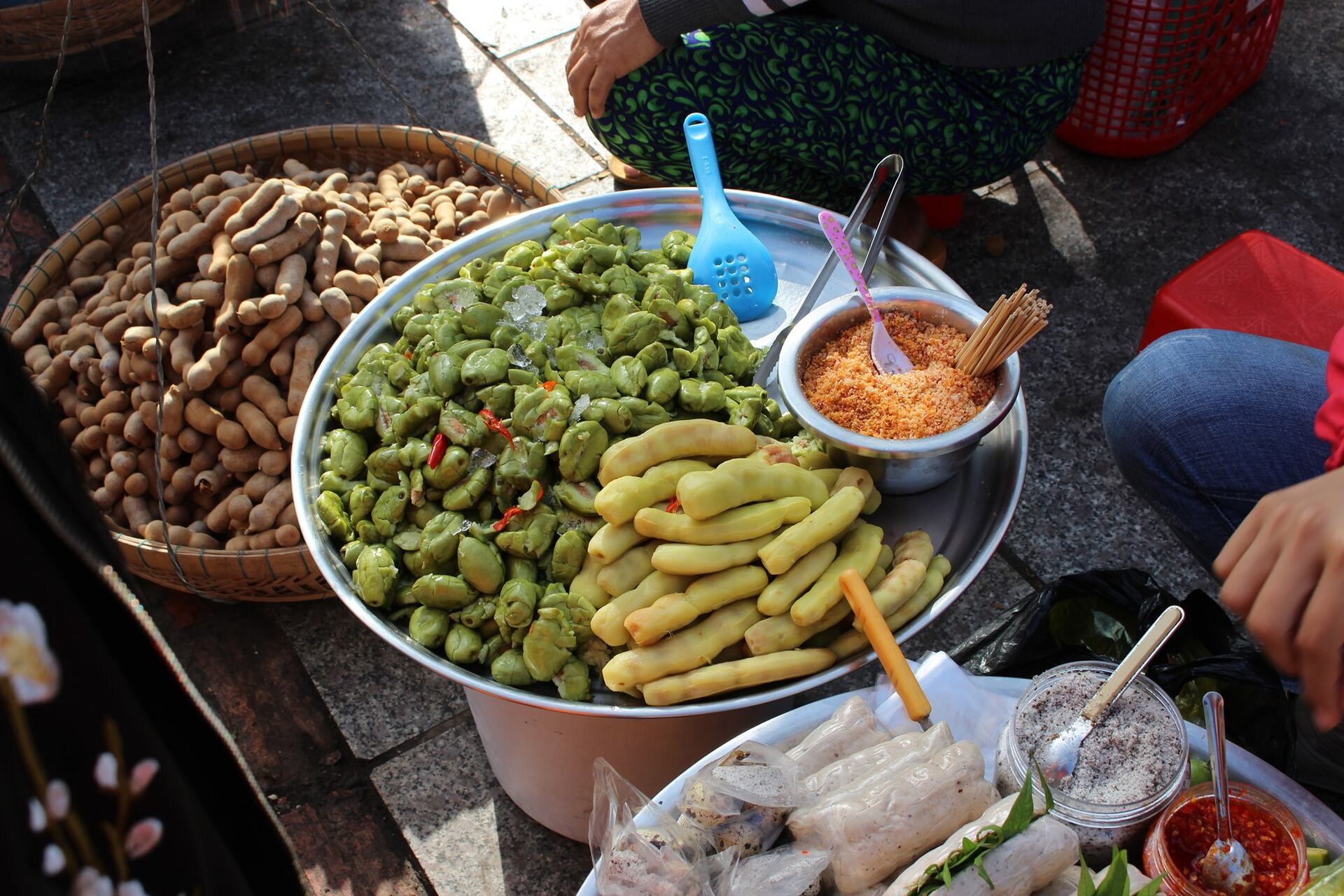
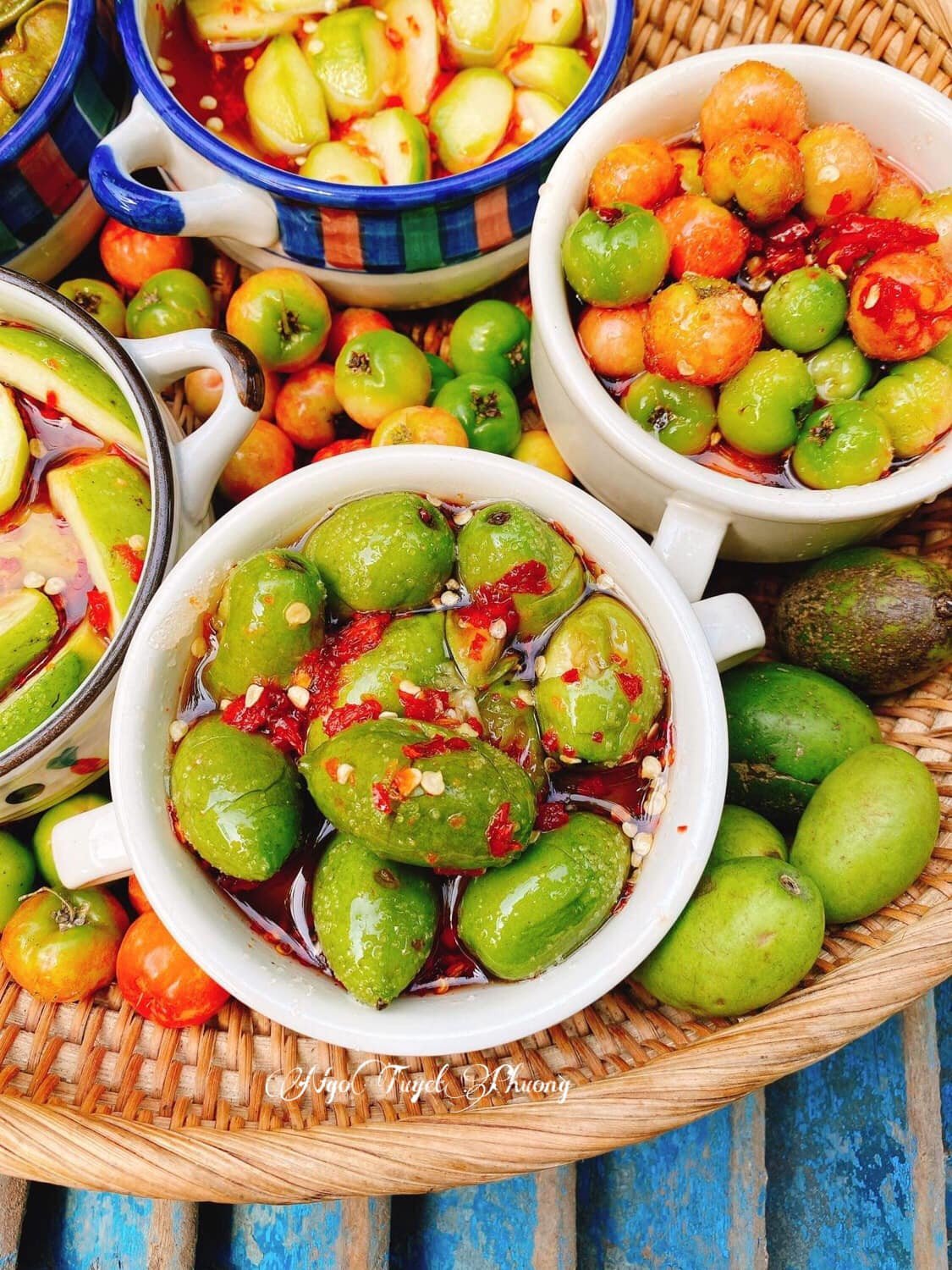
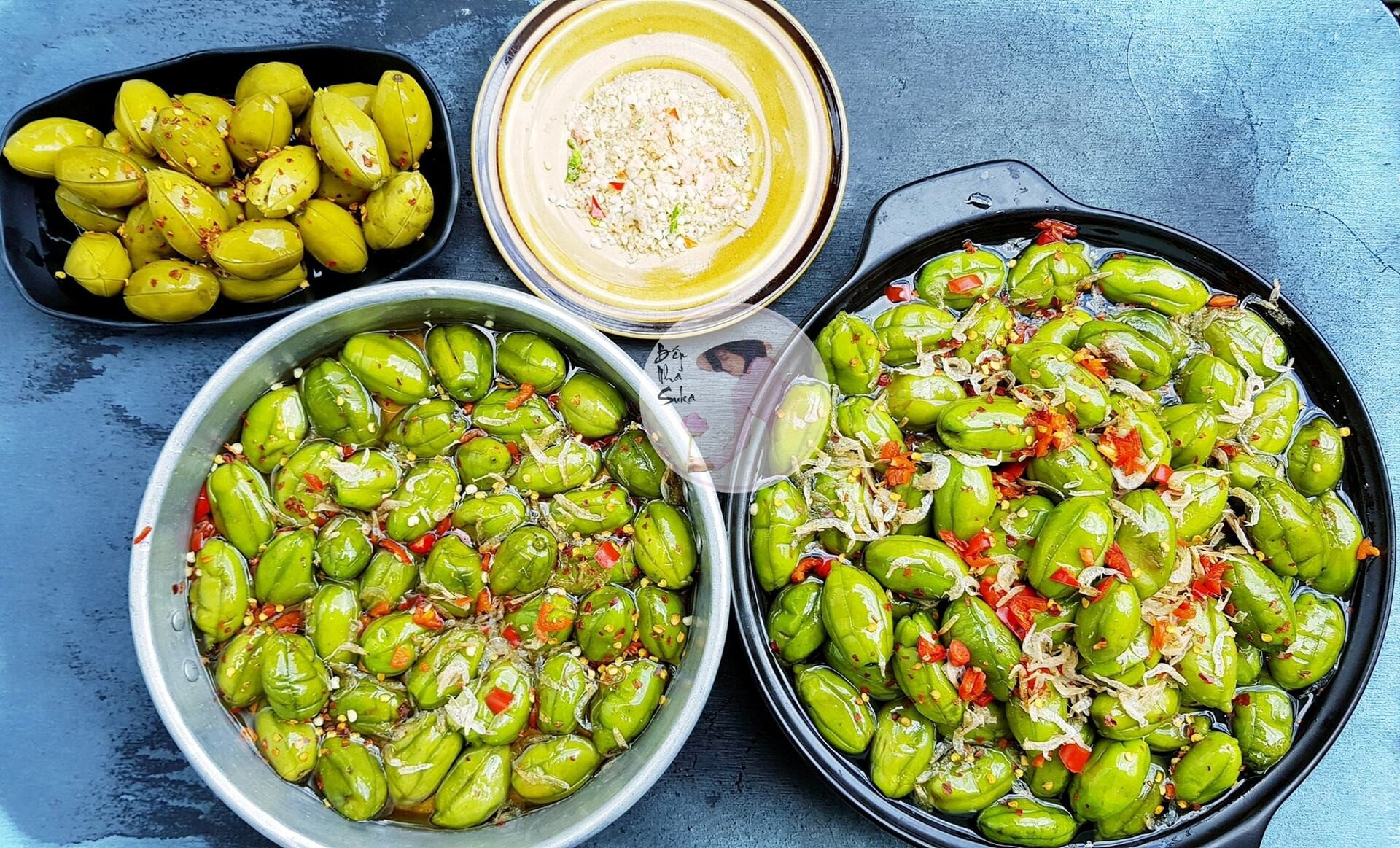
Canarium fruit is processed into delicious snacks. Photo: Quang Thien/Ngo Tuyet Phuong/Nu Tran
In the Mekong Delta region, there are currently two common varieties of carambola: the native carambola and the Thai carambola.
The carambola tree was originally planted to reinforce embankments and prevent flooding, before becoming a fruit tree that provided additional income. The carambola tree is drought-tolerant, rarely suffers from pests or diseases, requires little fertilizer, and is inexpensive to cultivate. Sometimes, people simply plant a branch in the ground and the tree grows on its own.
The native Canarium tree of the Western region of Vietnam is a woody plant that grows 10-25m tall, with densely branched stems, and blooms with white flowers around March-April. The peak season for Canarium is during the flood season, which is from July to September according to the lunar calendar.
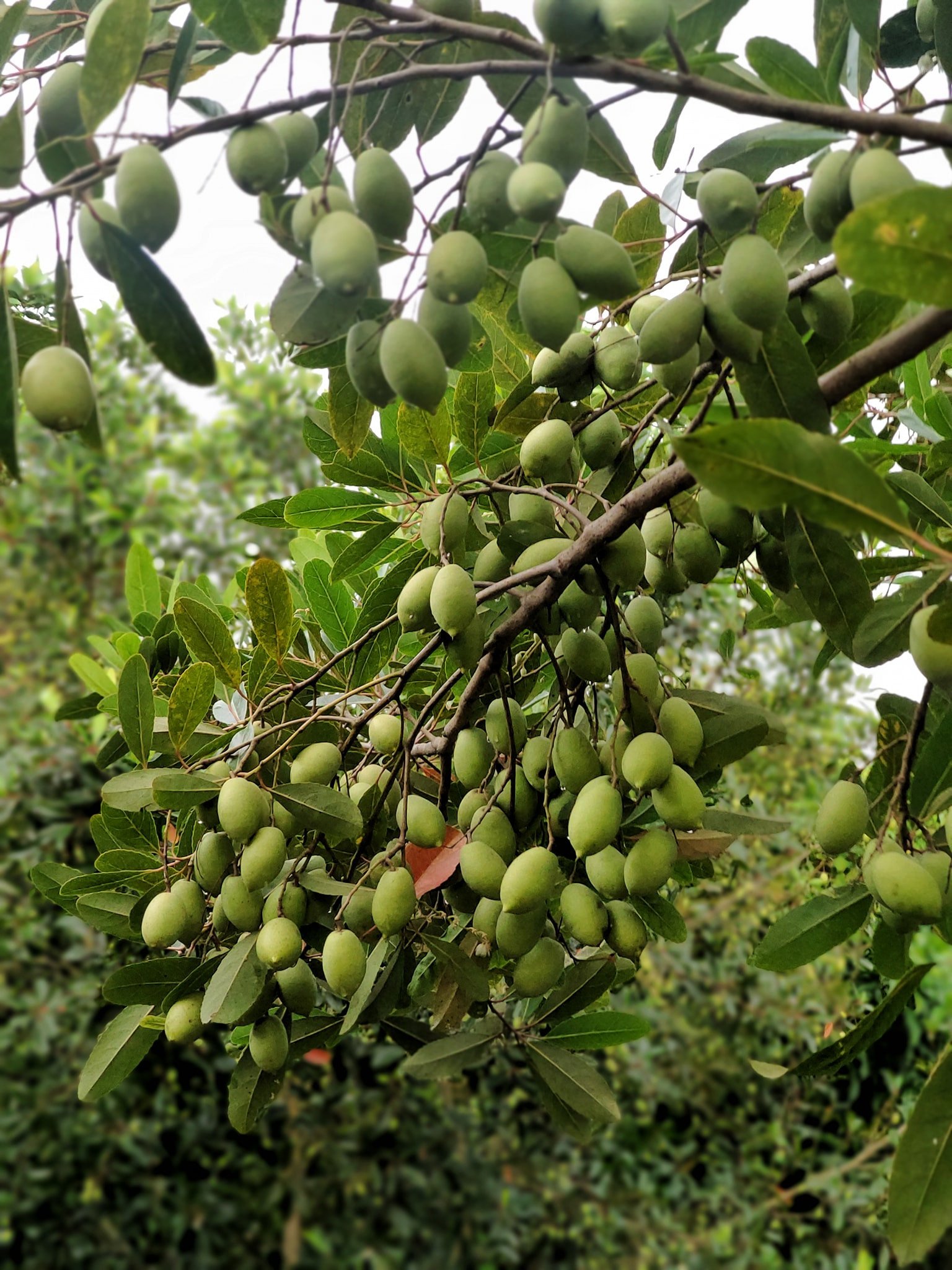
The carambola branch is laden with fruit. Photo: Nguyen Tan Dat
The carambola fruit is oval-shaped, with a smooth, glossy skin, about 3-4cm long. When mature, it turns dark green and has a sour and astringent taste; when ripe, it is light yellow, sour, and has a mild aroma.
According to Mr. Nguyen Minh Nhan (Chau Doc, An Giang ), who specializes in selling fresh carambola and products made from this fruit, Thai carambola is now more commonly grown because the fruit is larger, yields better, is less sour and astringent, ripens earlier, and produces fruit year-round.
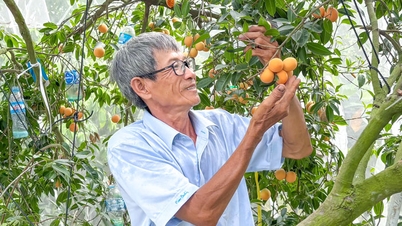
To harvest carambola, people use various methods such as rowing boats to pick the fruit, using cages, climbing ladders, using sticks to hook and pull the fruit, and for large, old trees, they climb up to pick the fruit.
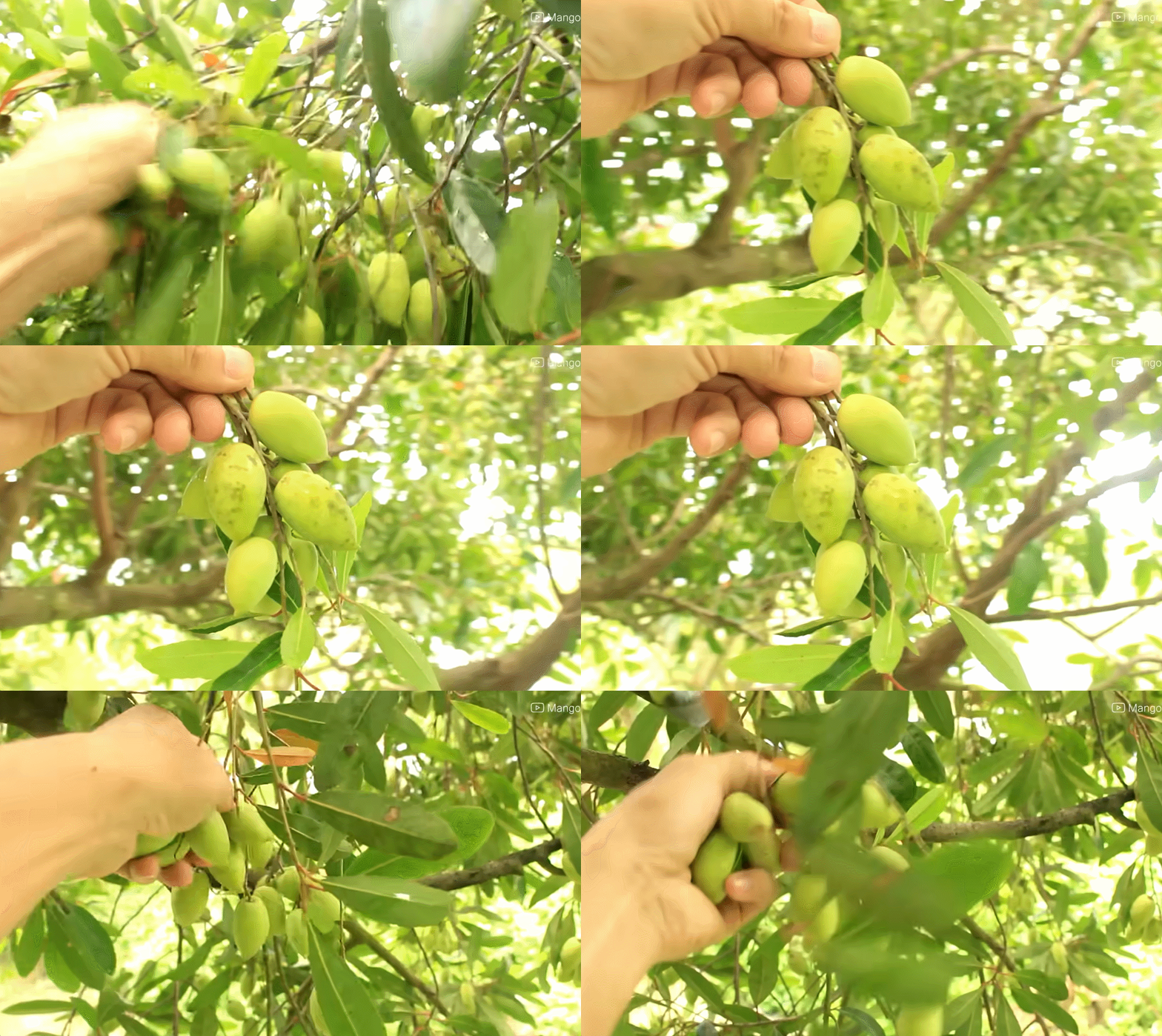
Photo: MangoVid
"The price of Thai carambola fluctuates seasonally. During peak season, it's 15,000-20,000 VND/kg, while when it's scarcer, it can reach 30,000-35,000 VND/kg. In recent years, carambola has become very popular."
Besides fresh carambola, I also sell pickled carambola, carambola candied in sugar, etc. Recently, to serve customer demand, I've added pre-crushed or pre-sliced carambola, which are then packaged to be pickled according to customer preferences," Mr. Nhan said.
The crushed carambola dish must be prepared skillfully; the carambola shouldn't be crushed too finely to preserve its characteristic green color, and when drained, it retains its flavor and crisp texture.
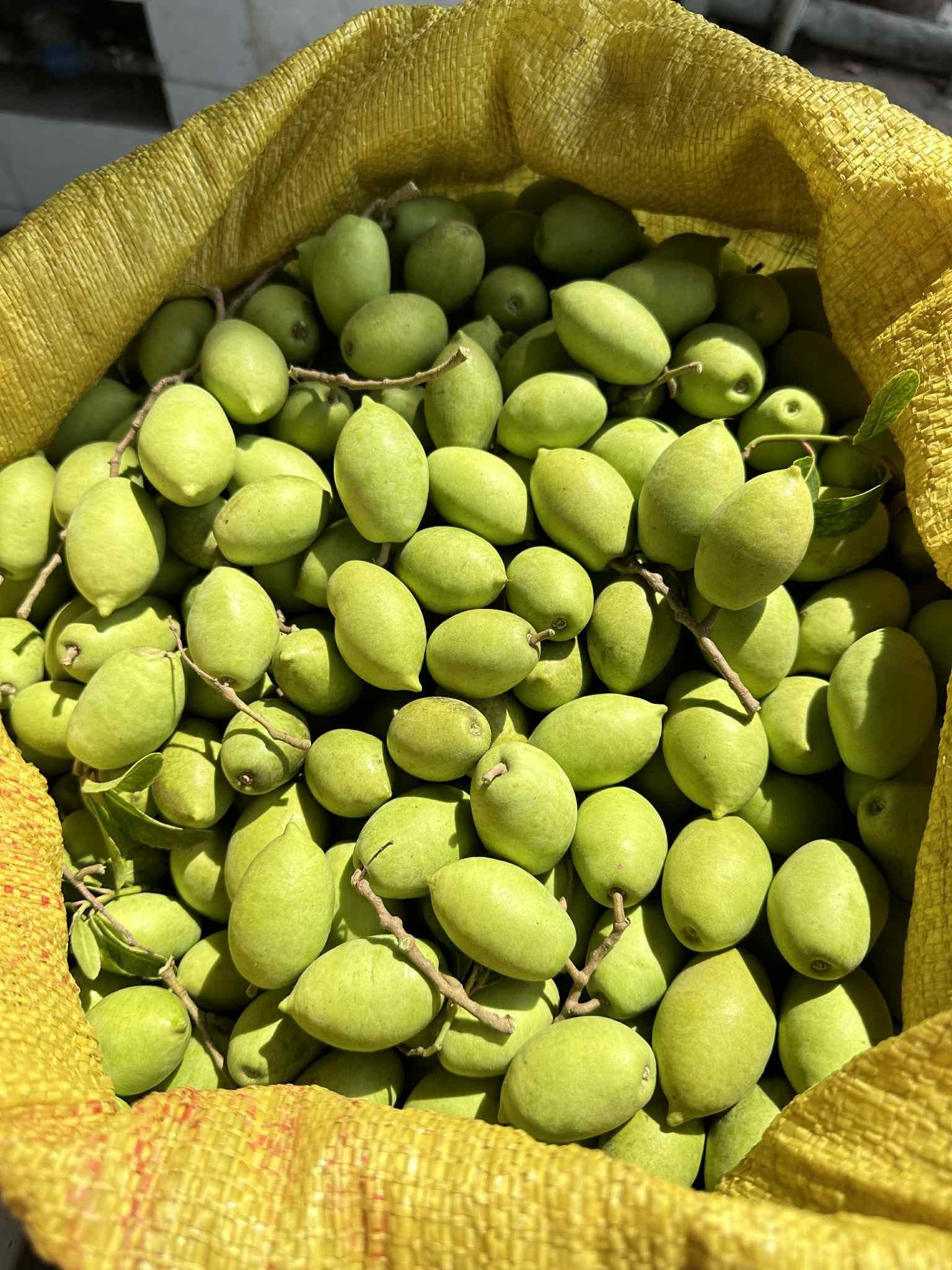
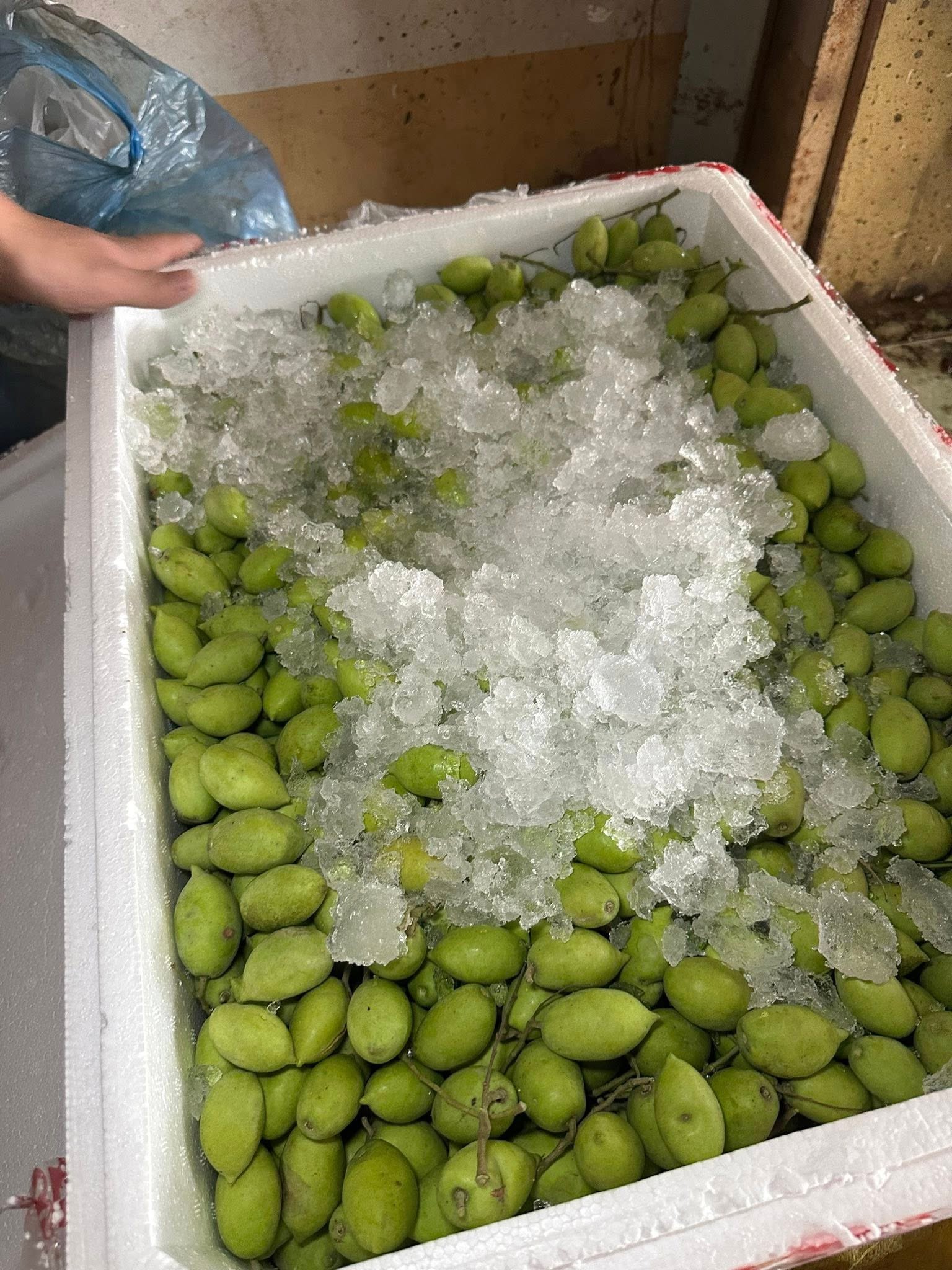
Currently, Mr. Nhân mainly sells Thai carambola. The carambola is kept refrigerated during long-distance transport to prevent fermentation. Photo: Nguyễn Minh Nhân
According to Mr. Nhan, removing the sour and astringent taste of carambola requires several steps. The carambola must be washed thoroughly, crushed, soaked in salt water for 15-20 minutes, then squeezed and rinsed 2-3 times. When bitten into and found to be no longer astringent, it should be squeezed to remove excess water.
For those who like sour flavors, crushed carambola mixed with salt, chili, sugar, and a little fish sauce is absolutely delicious.
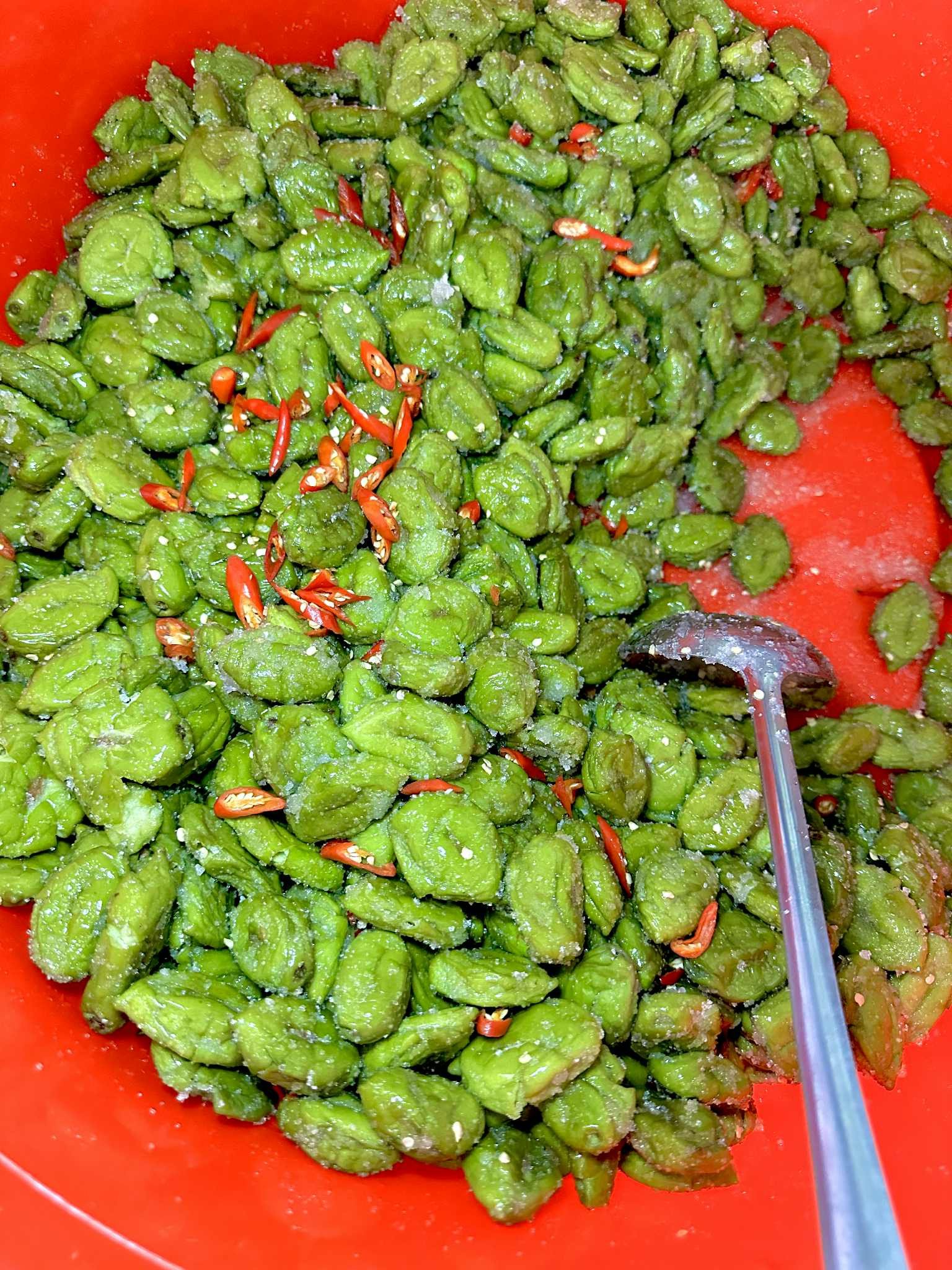
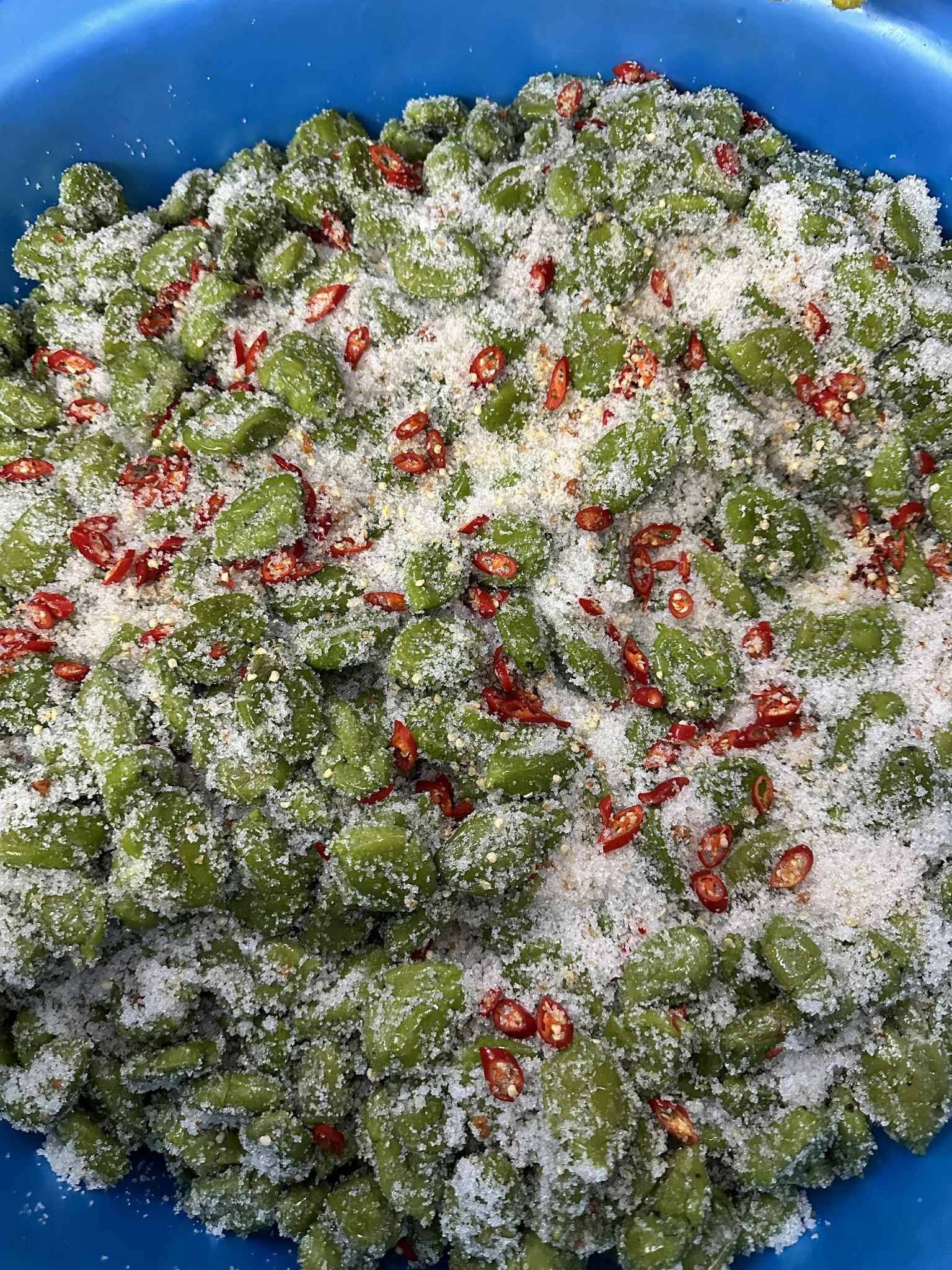
Canarium fruit mixed with salt and chili has a unique sweet and sour flavor, different from mango or hog plum. Photo: Nguyen Minh Nhan
"For pickled and candied carambola, it takes more time. We choose large carambola fruits, make incisions around them, then soak them in diluted salt water for 6-8 hours, gently squeezing them to soften the fruit and reduce the sourness and bitterness without breaking the flesh."
"This type sells for 55,000-60,000 VND/kg," Mr. Nhan shared.
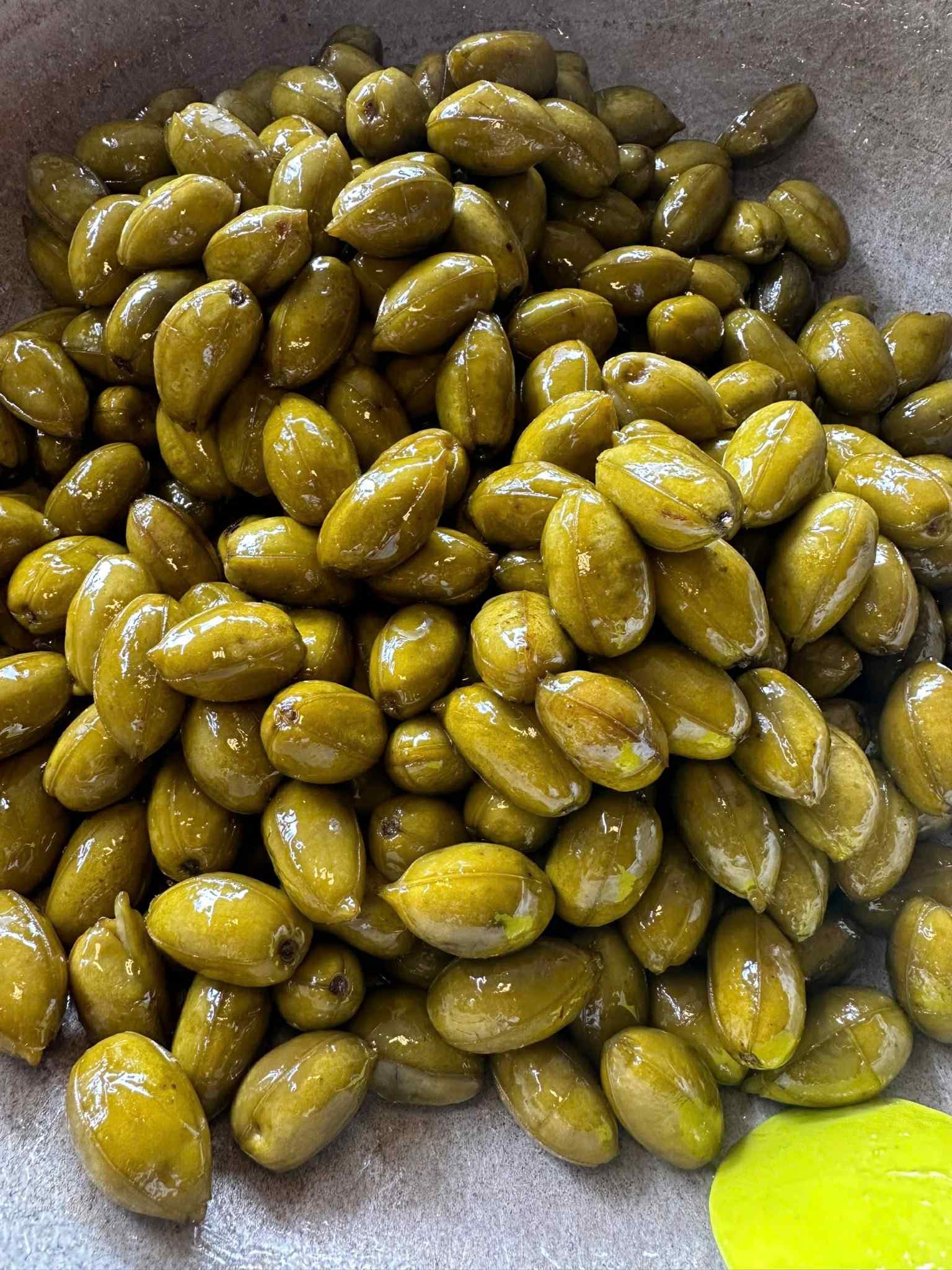
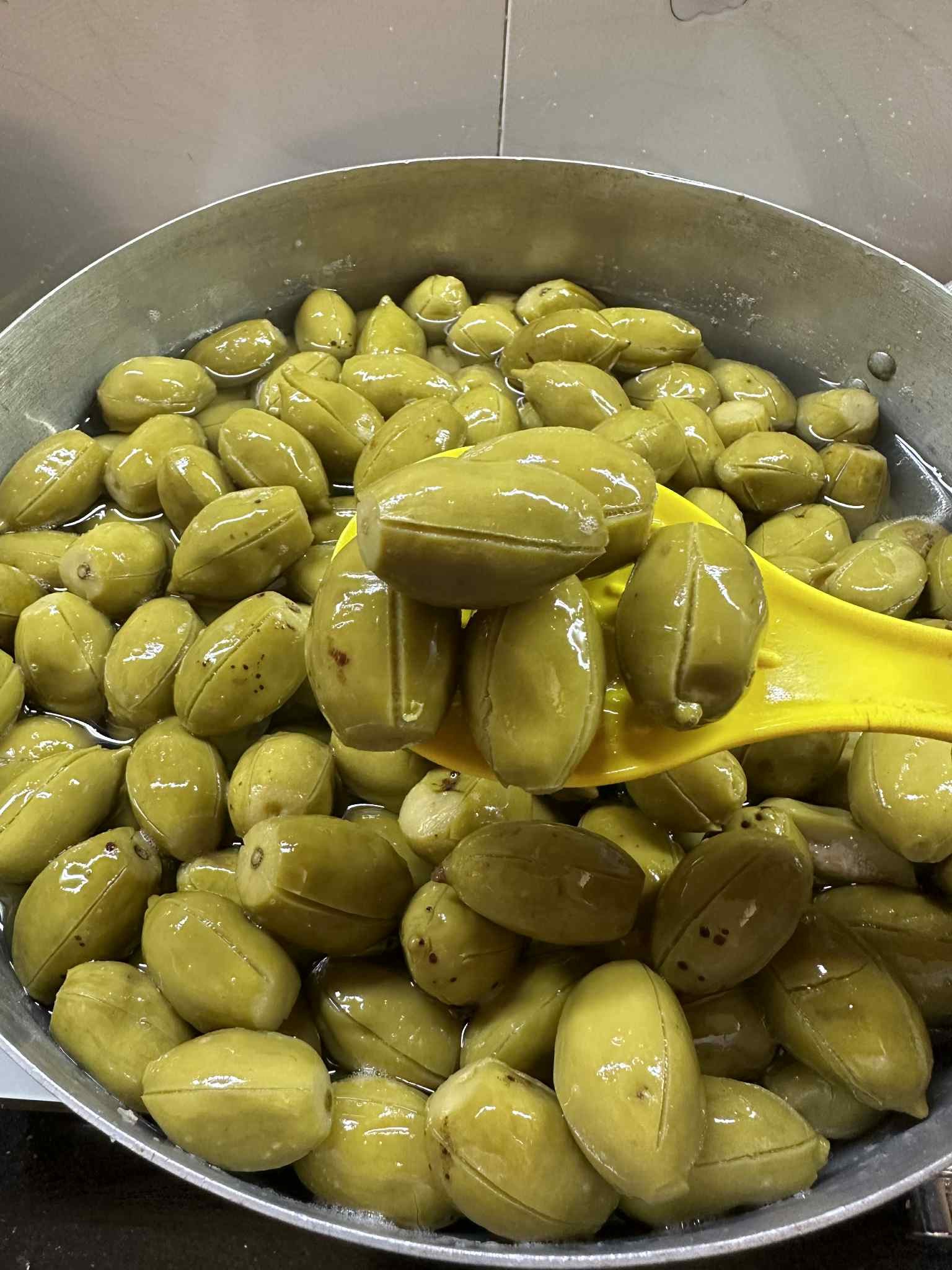
Candied and preserved carambola requires quite a few steps in the preparation process. Photo: Nguyen Minh Nhan
Canarium fruit is also processed by businesses into many specialties such as canarium jam, canarium wine, etc., raising the price to tens or hundreds of thousands of dong, depending on the type.
In the Mekong Delta provinces, many specialties made from carambola have been recognized as OCOP (One Commune One Product) products at the provincial level, such as Hoa Kieu carambola wine, Nguyen Trung candied carambola, and Thien Loc crushed carambola. Unlike candied carambola, candied carambola has a sour, salty, and sweet taste, and a chewy, fragrant texture.
From a common wild fruit, the carambola tree is processed into delicious products that attract tourists and bring economic benefits to the people of the Mekong Delta.
Source: https://baoangiang.com.vn/qua-mien-tay-moc-hoang-vi-chua-chat-nay-thanh-dac-san-hut-khach-a425399.html























































































Comment (0)