

Street food - the soul of Hanoi?
If there is one thing powerful enough to hold back the soul of Hanoi amidst the whirlwind of urbanization, it is undoubtedly the aroma emanating from the moss-covered sidewalks, where eating has never been merely a solution to hunger. For Hanoians, eating is a cultural dialogue, and each dish is essentially a "gift," a dignified concept that writer Thach Lam once cherished: "A gift is a part of the soul of Hanoi."
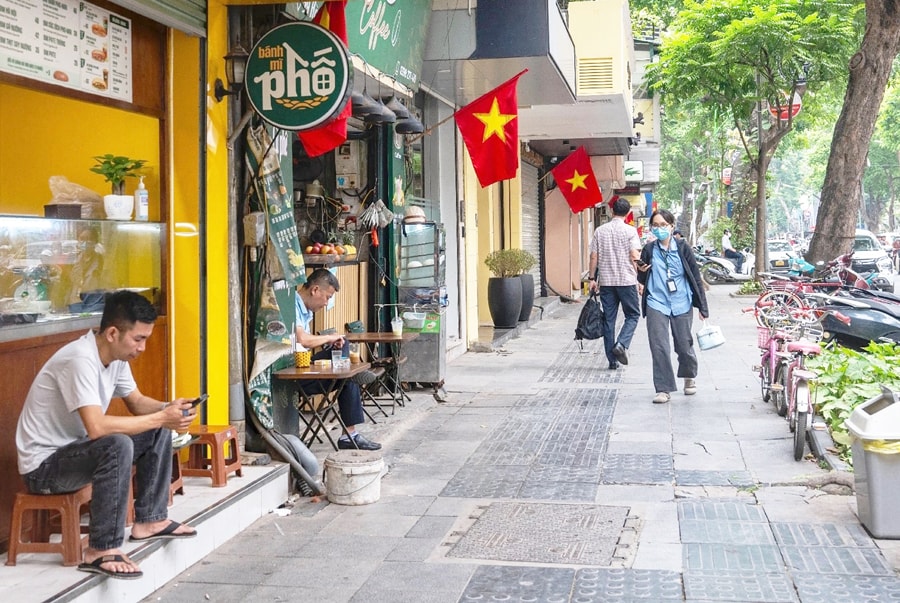
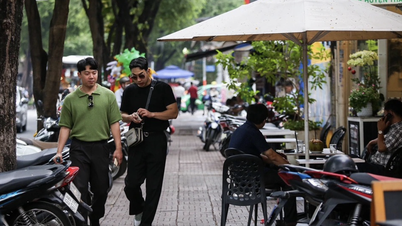
That soul begins to awaken around 6 a.m., when the first rays of sunlight peek through the old mahogany trees in the old quarter. The rich aroma of broth, the pungent scent of scallions, and the crispy fried dough sticks create a unique collective social ritual. In many parts of the world , breakfast is a personal, quick, and sometimes solitary activity. But in Hanoi, breakfast is about sitting close together. People sit on low plastic chairs, so low that they have to awkwardly fold their legs to avoid getting tangled. It is from this posture, sitting close to the ground, that a sidewalk "public forum" is naturally established, like breathing. People discuss all sorts of things, from international news and football to their children's education and the price of gasoline. No air conditioning, no large signs, but the sidewalk has something that global restaurant chains crave: a feeling of belonging to a community, a connection between people that doesn't need any digital filters.
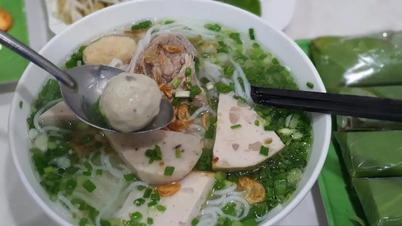
However, looking deeper into this connection, we see a paradox. Let's take a bowl of pho as an example – the entity often referred to as the "gold standard" of Hanoi's culinary delights. An authentic bowl of pho should be clear, deeply sweet from the bone broth, and infused with the aroma of roasted ginger, cardamom, and star anise. Hanoians eat pho with quiet contemplation, examining each noodle as if it were a work of art. Yet, at many famous pho restaurants today, people are willing to spend hundreds of thousands of dong on a bowl of "exquisite" pho but accept sitting next to open sewers, drainage pipes, or under crumbling, mossy walls. This is the "aristocratic squalor" that we proudly call "sidewalk culture." But in the creative economy , squalor is never a surplus value. The meticulousness of Hanoians is being challenged by the chaotic mindset of "hardship makes food taste better" from the subsidy era. We have gold in our hands, but we're weighing it with a "whatever happens, happens" mentality.
The era of "manual digging" is over.
This contradiction becomes even more acute when considering the enormous economic potential of sidewalks. Hanoi currently has over twenty thousand food service businesses, contributing an average of 20-25% of tourism revenue. Sidewalks are not just a memory; they represent an incredibly vibrant micro-economy, supporting tens of thousands of households and hundreds of thousands of workers involved in the supply chain. From early morning vendors selling ingredients to late-night servers, all contribute to a sustainable urban livelihood network. Yet, the added value from Hanoi's street food "brand" remains modest compared to what Bangkok or Seoul have achieved. While our neighbors have transformed street food into a "soft power" with Michelin stars for sidewalk eateries and strict hygiene standards, we are still struggling between preserving or abandoning it, between maintaining order and preserving livelihoods. We possess a "gold mine," but we exploit it using manual digging and panning methods.
The more modern a city becomes, the more vulnerable its sidewalks become. If we drastically remove all the stalls and shops to create a cleaner capital, we will lose a distinctive feature that defines Hanoi's identity: the sidewalks that "refuse to sleep," which hold countless memories for generations.
However, the management problem cannot forever rely on nostalgia. Experience from around the world shows that the issue is not about keeping or removing sidewalks, but about how to manage them. In Bangkok, the authorities chose to reorganize the space, issue permits, and control hygiene so that street food stalls could exist as part of the identity. In Seoul, night markets are well-planned, ensuring hygiene while preserving the cultural essence. In Singapore, they moved street vendors into clean hawker centers with centralized waste disposal systems, while still maintaining traditional flavors. Therefore, managing Hanoi's sidewalks requires an approach illuminated by modern management thinking: not "banning" to eliminate, but "organizing" to develop.
This significant shift is being concretized through strong legal measures. According to a draft resolution of the Hanoi City People's Council proposed by the Department of Construction, the city will allow organizations, individuals, and business households to temporarily lease a portion of the road and sidewalk area for business purposes. This policy aims to increase transparency in street business activities and establish urban order, replacing the current situation of spontaneous encroachment. The fee is calculated to range from 20,000 to 45,000 VND/m2/month. The maximum rate of 45,000 VND/m2/month will apply to the four old inner districts (Hoan Kiem, Ba Dinh, Hai Ba Trung, and Dong Da) and night market and food street areas. To be permitted to operate, the street must meet strict standards: the sidewalk must be at least 3 meters wide, and at least 1.5 meters must always be left as a safe walkway for pedestrians. The pilot program does not apply to historical and cultural heritage areas, which are prone to traffic congestion, and requires the consent of at least 50% of organizations and households in the area.
The emergence of a transparent legal framework paves the way for the application of advanced governance tools such as digitizing taste profiles. Each noodle and pho stall needs to be identified by a digital ID, allowing diners to trace the origin of ingredients, hygiene inspection history, permitted business area, fee payment status, and read the "three-generation heritage story" behind the dish with a tap on their phone. Technology doesn't erase the old flavors; it only cleans the space and guarantees the self-respect of the cook. We also need dedicated "street-in-village" spaces for food, where sidewalks are re-planned with clear routes. Imagine an old town street at night, with neatly arranged plastic chairs in designated spaces, always ensuring ample room for pedestrians. Lighting is designed to highlight each stall, enough for diners to see the food, creating a cozy atmosphere while preserving the nostalgic charm of Hanoi's streets.
Ultimately, the essence of Hanoi's culinary offerings lies in its people. The self-respect of the capital city doesn't allow chefs to sell shoddy products, and kindness in their interactions doesn't permit empty responses or indifferent glances. Hanoi, with its vision for the future, needs a new generation of "urban chefs": technologically savvy, possessing brand management skills, strictly adhering to urban regulations, yet still preserving the traditional culinary secrets of their ancestors. They are not just vendors; they are "cultural ambassadors of gastronomy," preserving and spreading the soul of the city.
To achieve this, support is needed from well-structured training programs on personal branding, professional operation of small business spaces, full compliance with financial obligations, and a commitment to food safety and hygiene. When each eatery becomes a small museum of taste, sidewalks will no longer be a burden on urban order, but will become part of the modern urban economy, a multi-million dollar money-making machine for the city. The keyword "street food Hanoi" consistently sees an average increase of 30-40% annually in searches on tourism platforms. A truly innovative industry needs to be shaped, encompassing experiential design, guided food tours with storytelling, and the development of supporting products such as takeaway packaged condiments or cultural publications centered around cuisine.
Hanoi is growing rapidly with its metro lines and wide boulevards, but the city still needs to preserve those neat little corners on the sidewalks that connect souls. The rich cultural heritage of cuisine truly shines when placed on a platform of kindness, professionalism, and modern vision. It's time to restore Hanoi's street food to its former dignity, so that happiness can sometimes be as simple as a hot bowl of pho amidst a bustling street, a glass of iced tea with friends, a moment of peaceful tranquility in the hurried pace of life in the thousand-year-old capital.
Source: https://hanoimoi.vn/quan-ly-via-he-ha-noi-can-tiep-can-bang-tu-duy-quan-tri-hien-dai-976503.html
![[Photo] First session of the 14th Congress of the Vietnam Trade Union](https://vphoto.vietnam.vn/thumb/1200x675/vietnam/resource/IMAGE/2026/06/03/1780465947883_ndo_br_img-3852-jpg.webp)










































































Comment (0)