

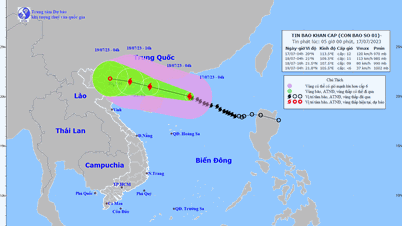
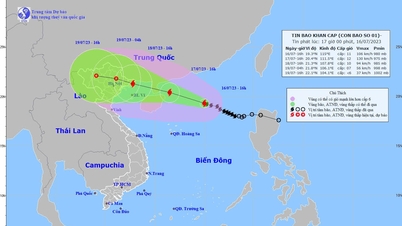
To urgently and proactively respond to Typhoon No. 1, especially during the typhoon's entry into the Gulf of Tonkin and the subsequent heavy rains and floods caused by the typhoon's circulation, the following points need to be urgently focused on: The Chairmen of the People's Committees of districts, towns, and cities must immediately implement typhoon prevention measures according to the "3 before - 4 on-site" principle. Based on the actual situation and the potential impact of the typhoon and floods in their localities, they must proactively provide timely information and guidance to the people and relevant units on responding to the typhoon and floods. They should focus on directing: Urgently reviewing and counting vessels, proactively guiding vessels (fishing boats, transport ships, tourist boats) still operating at sea to seek safe shelter; and implementing measures to ensure the safety of vessels at anchorage areas.
Review and ensure the safety of tourism activities and visitors; aquaculture and fishing activities; resolutely evacuate people on floating cages and watchtowers used for aquaculture to safe locations before the storm directly impacts them; proactively report and implement the ban on sea travel for fishing vessels, transport ships, and tourist boats; assign personnel to be on duty 24/7 at submerged and flooded areas, control traffic, organize traffic diversion and guidance, and restrict people's movement during the storm and heavy rain to ensure safety. Develop plans to mobilize vehicles, equipment, and forces to promptly clear traffic congestion caused by floods and ensure smooth traffic flow.
Urgently require investors of ongoing construction projects to take measures to prevent mud, soil, and water from overflowing onto national highways and residential areas during heavy rains; and to immediately address flooding issues. Review and implement measures to ensure the safety of people in areas at high risk of flooding and landslides; organize plans to relocate people from temporary shelters and houses at the foot of embankments, low-lying areas, and construction sites, ensuring absolute safety for people and property in all situations; and educate and urge people not to go fishing, collecting firewood, or swimming in streams during floods.
Local authorities are proactively reviewing and preparing to address localized flooding in residential areas, downstream of reservoirs and dams, and low-lying areas during heavy rains; preparing to drain floodwaters to protect agricultural production, urban areas, and industrial zones at risk of flooding; proactively relocating and evacuating people in areas with deep flooding, isolation, and risks of flash floods, landslides, and mudslides; and preparing forces, vehicles, equipment, and essential supplies according to the "four on-the-spot" principle to be ready for all situations.
Review and inspect production facilities, mines, and mineral extraction areas to ensure safety and prevent accidents and casualties during heavy rains; prepare forces and equipment for timely rescue operations and rapid recovery from the consequences of storms and floods.
The Provincial People's Committee directed the Department of Agriculture and Rural Development to closely monitor the storm's developments, compile and regularly report the situation to the Office of the National Steering Committee for Disaster Prevention and Control and the Provincial People's Committee. It also directed the Fisheries Sub-Department to coordinate with the People's Committees of coastal localities to regularly keep track of the number of vessels and aquaculture facilities at sea and along the coast; inform facility owners and vessels operating at sea about the storm's location and developments so they can proactively take preventive measures and avoid entering dangerous areas. Furthermore, it directed reservoir management units to proactively monitor reservoir water levels, regulate water levels, and ensure the safety of dikes and irrigation dams, especially vulnerable coastal dikes, river mouth dikes, and dams under construction or repair.
The Department of Tourism keeps a close watch on the number of tourists, especially in coastal and island tourist areas; informs tourism businesses about the storm situation so that they can proactively plan for receiving tourists (especially on weekends); and reports to the Provincial People's Committee (through the Standing Office of the Provincial Steering Committee for Disaster Prevention and Search and Rescue).
In the official dispatch, the Provincial People's Committee also requested the People's Committees of localities, units, and the Steering Committees for Disaster Prevention and Search and Rescue at all levels to urgently organize the implementation of measures to prevent and control Typhoon No. 1 according to the directives and actual conditions of the locality; closely monitor the developments of the typhoon and floods; assign leaders to be on duty 24/7; strictly implement the compilation and timely and regular reporting of the results of implementation and response measures to the typhoon, rain, and floods to the Office of the Provincial Steering Committee for Disaster Prevention, Search and Rescue and Civil Defense and the Office of the Provincial People's Committee.
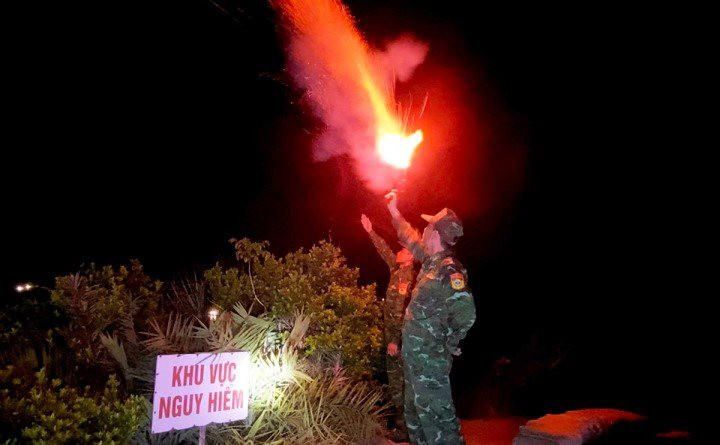
According to information from the People's Committee of Co To district, in order to proactively prevent and respond to Typhoon No. 1, the Co To Border Guard Station in Co To district, Quang Ninh province, fired flares to notify boat owners to seek safe shelter and warned boats not to go out to sea during storms.
Co To district promptly informed the public and tourists about the storm's developments and promptly dispatched 42 boats to bring more than 8,000 passengers back to the mainland.
Reportedly, there are currently about 2,500 tourists staying in the district. On July 17th, the district will continue to encourage and persuade tourists to return to the mainland before the storm arrives.
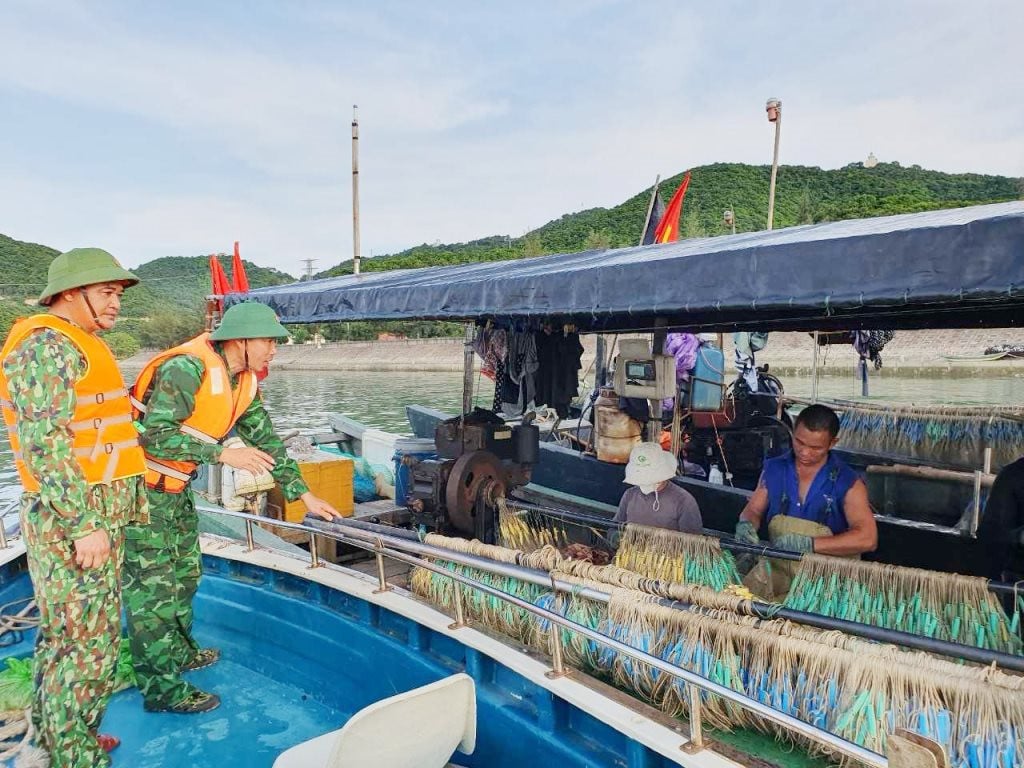
Besides ensuring the safety of tourists, Co To district has called on 425 vessels operating in the district (306 are district-owned vessels and 119 are from outside the district). To date, 216 vessels have returned to safe shelters, while 209 vessels are still in the process of moving to safe shelters.
Source

![[Image] A brilliant symphony and explosive power in the skies of Da Nang.](https://vphoto.vietnam.vn/thumb/1200x675/vietnam/resource/IMAGE/2026/05/31/1780196945787_anh-man-hinh-2026-05-31-luc-10-08-51.png)















![[Video] Sunset at Lap An Lagoon – Where the sun sets over the fishing nets](https://vphoto.vietnam.vn/thumb/340x192/vietnam/resource/IMAGE/2026/05/31/1780192137701_beach-landscape-sea-water-nature-grass-745871-pxhere-com.jpeg)












































































Comment (0)