

At first glance, there's no difference.
Also, curved wings
Pinwheels and fans
They both love spinning things up.
 |
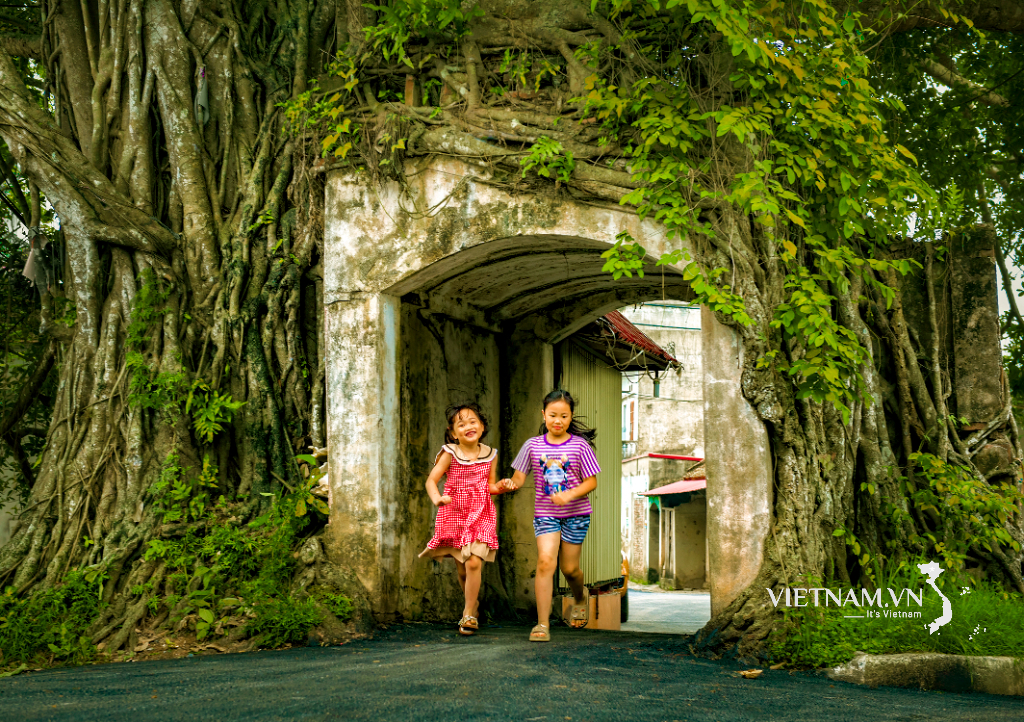
Illustrative image. |
The pinwheel must be small.
Dancing and having fun all day long.
And that fan belongs to Mom.
Always working non-stop?
Hey friend, those two things
The main difference lies here.
A rotating fan creates wind.
The wind makes the windmill spin!
Comment
Poet Dang Han is known for his many beautiful and whimsical poems for children. Being a mathematician by profession, his poetic structure often incorporates unexpected situations that might seem illogical or inductive, yet are perfectly logical within a child's intuitive thinking. The poem "Fan and Pinwheel" is a particularly interesting example of this comparison.
In summer, we are familiar with fans and pinwheels, which are quite lively toys for children. The poet begins with observations: "At first glance, they don't seem different / Both have curved wings / Pinwheels and fans / Both love to spin around." The rhythm of the poem is like a self-narrative in the five-word verse form, with a sense of anticipation, a comparison, and a touch of curious discovery . In a child's thinking, objects are often placed together in terms of height, size, and scale; here, both objects share the commonality of having "curved wings."
The sequential development leading to a sudden, unexpected change is a technique often used by poets writing for children. The beauty of the poem lies not only in its linear development but also in creating a new field of association, new emotions, and new feelings through its comparisons. For example: "The little one is like a pinwheel / Joyfully dancing all day" suggests a harmonious and affectionate connection, but then: "And that fan is the mother / Always working tirelessly?" spreads a feeling of love and sharing. The poet uses the reduplicated word "lam làm" (working tirelessly) as a movement, not just a physical action, but also a stirring of empathetic emotion in the children. A flicker of joy in the child's heart, and the sparkling beauty of the mother's diligence and hard work, bring joy and carefree innocence to the children, allowing them to "dance all day."
In the final stanza, the poetic theme is elevated to a different level, a different climax, a different understanding, quite clever and unexpected. This is the highlight of the poem, transcending even the physics lessons from physical phenomena: "My friend, those two things / Are different precisely here." From the similarity in their curved blades and rotation, here goes beyond a simple arithmetic calculation of similarity and difference—it is the addition of the soul: "The fan spins to make wind / The wind makes the pinwheel spin!" The invisible wind, the cool, loving breeze, conveys so many emotions. The poet doesn't say: "The fan makes the pinwheel spin," but through the wind (as well as the fruits of the mother's labor), it dispels the summer heat and brings the children the game of pinwheels. Everything is multiplied and divided to arrive at a single result: the love for children and gratitude for the mother's labor.
Source: https://baobacgiang.vn/quat-va-chong-chong-postid419082.bbg
![[Photo] Commemorating the unwavering friendship between Vietnam and Laos](/_next/image?url=https%3A%2F%2Fvphoto.vietnam.vn%2Fthumb%2F1200x675%2Fvietnam%2Fresource%2FIMAGE%2F2026%2F01%2F27%2F1769518372051_ndo_br_1-jpg.webp&w=3840&q=75)

![[Photo] Announcement Ceremony of the Art Program “Light Concert – Welcoming the New Year 2026”](/_next/image?url=https%3A%2F%2Fvphoto.vietnam.vn%2Fthumb%2F1200x675%2Fvietnam%2Fresource%2FIMAGE%2F2026%2F01%2F27%2F1769514762857_le-cong-bo-ct-hoa-nhac-anh-sang-1772-9042-jpg.webp&w=3840&q=75)


![[Hightling] Conference on the Implementation of Tasks for 2026](/_next/image?url=https%3A%2F%2Fvphoto.vietnam.vn%2Fthumb%2F402x226%2Fvietnam%2Fresource%2FIMAGE%2F2026%2F01%2F27%2F1769477856197_dsc01637.jpeg&w=3840&q=75)


![OCOP during Tet season: [Part 2] Hoa Thanh incense village glows red.](/_next/image?url=https%3A%2F%2Fvphoto.vietnam.vn%2Fthumb%2F402x226%2Fvietnam%2Fresource%2FIMAGE%2F2026%2F01%2F27%2F1769480573807_505139049_683408031333867_2820052735775418136_n-180643_808-092229.jpeg&w=3840&q=75)
![OCOP during Tet season: [Part 1] Ba Den custard apples in their 'golden season'](/_next/image?url=https%3A%2F%2Fvphoto.vietnam.vn%2Fthumb%2F402x226%2Fvietnam%2Fresource%2FIMAGE%2F2026%2F01%2F26%2F1769417540049_03-174213_554-154843.jpeg&w=3840&q=75)




Comment (0)