

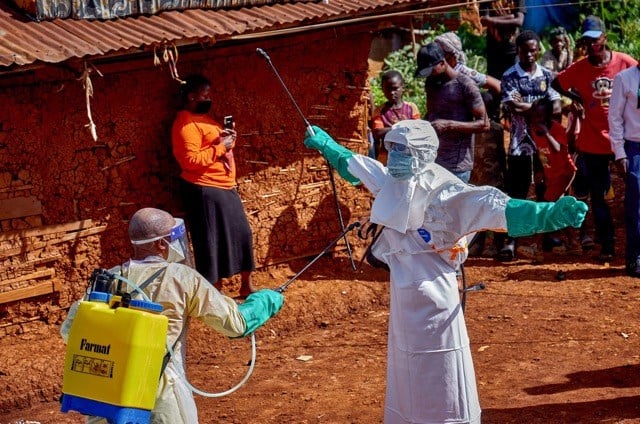
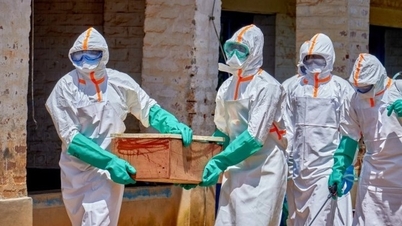
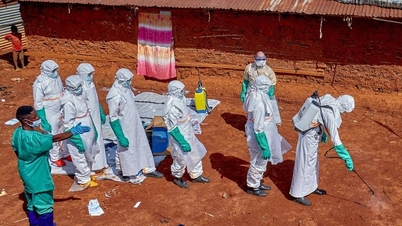
The World Health Organization (WHO) notes that the Ebola outbreak in the Democratic Republic of Congo continues to be complex, with an increasing number of cases and a high risk of cross-border spread. According to the Africa Centres for Disease Control and Prevention (Africa CDC), since the DRC announced the Ebola outbreak on May 15th, more than 1,000 suspected cases and hundreds of deaths have been recorded.
More worryingly, this outbreak is caused by the Bundibugyo strain, for which there is currently no vaccine or specific treatment. Meanwhile, the Democratic Republic of Congo still lacks adequate medical equipment, protective supplies, and resources to effectively respond to the new Ebola outbreak.
Currently, at least 11 African countries are assessed as facing a high risk of being affected by the Ebola outbreak, including Kenya, Rwanda, South Sudan, Tanzania, and Ethiopia. Without timely international aid, the risk of the disease continuing to spread is very high. The WHO has classified this Ebola outbreak, caused by the Bundibugyo strain, in the Democratic Republic of Congo as a "Public health emergency of international concern."
The response to the Ebola outbreak in the Democratic Republic of Congo is also being criticized for being slow, leaving health workers scrambling to trace the extent of the disease's spread. Experts fear a repeat of the worst Ebola outbreak in history, when it swept across West Africa from 2014 to 2016 and caused more than 11,000 deaths.
Following the WHO's emergency declaration regarding the Ebola outbreak, many countries activated preventative measures before the risk of the disease spreading beyond regional borders.
In the Middle East, Jordan and Bahrain have stopped accepting passengers from African countries experiencing outbreaks. Neighboring countries like Kenya have also activated border quarantine facilities and tasked the National Institute of Public Health with increasing screening. From May 25th, the Ugandan government closed its border with the Democratic Republic of Congo for four weeks, requiring all entrants to quarantine for 21 days.
In the United States, the Trump administration announced it would not allow Ebola cases to enter the country. Washington announced a temporary ban on non-US passport holders who had been to Congo, Uganda, or South Sudan within the previous 21 days, and ordered all US citizens from affected areas to designated locations for temperature checks and medical monitoring.
Additionally, Canada has imposed a 90-day entry ban on people arriving from these countries and mandated a 21-day quarantine for its citizens. Mexico has also tightened airport screening procedures, advised citizens to avoid travel to the Democratic Republic of Congo, and required passengers from the affected region to quarantine for 21 days.
In Asia, India quickly deployed surveillance systems at major border crossings and advised citizens to limit travel to affected areas, while Thailand designated passengers from the Democratic Republic of Congo and Uganda entering through Suvarnabhumi Airport, requiring asymptomatic individuals to quarantine for 21 days and placing suspected cases in treatment facilities.
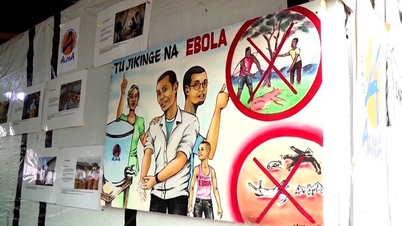
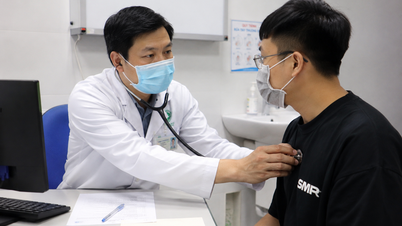
In Vietnam, the Ministry of Health has proactively implemented disease prevention and control activities from an early stage, while advising people not to panic. Those returning from affected areas should proactively self-isolate and monitor their health for 21 days. The Ministry of Health will continue to cooperate closely with the WHO and other international organizations to update the situation, regularly assess risks, and implement disease prevention and control measures appropriate to the actual developments.
Many countries and international organizations have also activated their humanitarian aid systems in response to the complex developments of the pandemic. The United States and the European Union have also coordinated shipments of medical aid to strengthen their capacity to combat the disease.
The United Nations Children's Fund (UNICEF), the WHO, and the European Union have simultaneously accelerated emergency aid in the Democratic Republic of Congo with medical supplies to prevent the widespread spread of the disease. UNICEF Representative in the Democratic Republic of Congo, John Agbor, affirmed that the current situation is a "race against time" and that these new aid shipments are vital in protecting frontline healthcare workers and supporting affected children and families.
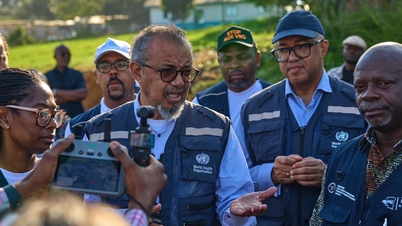
As the central coordinating body in the global response effort, the WHO emphasizes that the spread of the virus will not be confined to borders. Therefore, the immediate priority is to strengthen epidemiological surveillance, rapid testing, contact tracing, isolation and treatment, and infection control within the community. In addition, enhanced international cooperation in the response is also considered a necessary immediate solution to control the epidemic at this time.
Source: https://baovanhoa.vn/the-gioi/quoc-te-no-luc-ngan-chan-dich-ebola-233252.html


![[Photo] General Secretary and President To Lam and the President of the Philippines hold talks.](https://vphoto.vietnam.vn/thumb/1200x675/vietnam/resource/IMAGE/2026/06/01/1780286997787_anh-man-hinh-2026-06-01-luc-11-09-43.png)
![[Photo] Reception to welcome General Secretary and President To Lam and his wife on their State visit to the Philippines](https://vphoto.vietnam.vn/thumb/1200x675/vietnam/resource/IMAGE/2026/06/01/1780295488620_vna-potal-chieu-dai-chao-mung-tong-bi-thu-chu-tich-nuoc-to-lam-va-phu-nhan-tham-cap-nha-nuoc-toi-philippines-8798060-7855-jpg.webp)





















































































Comment (0)