

Chapter III of Decree 53/2024/ND-CP clearly outlines regulations on the establishment and management of water source protection corridors and groundwater exploitation thresholds, as well as the demarcation of areas where groundwater exploitation is prohibited or restricted.

Water sources must have protective corridors with a surface area of 2 hectares or more.
The decree stipulates that water sources requiring protection corridors include those specified in Clause 2, Article 23 of the Law on Water Resources.
Water sources that require the establishment of protection corridors as stipulated in point c, clause 2, Article 23 of the Law on Water Resources include: lakes, ponds, swamps, and lagoons listed in the List of lakes, ponds, swamps, and lagoons that are not allowed to be filled in, with a surface area of 2 hectares or more.
Based on the actual situation of the locality, the Provincial People's Committee decides to include in the List of water sources requiring the establishment of water source protection corridors lakes, ponds, swamps, and lagoons in the List of lakes, ponds, swamps, and lagoons that are not allowed to be filled in, with a water surface area of less than 2 hectares.
Water sources must have protection corridors established as stipulated in point d, clause 2, Article 23 of the Law on Water Resources, including:
a) Sections of rivers, streams, canals, and ditches that serve as water sources for domestic and industrial water supply projects;
b) Sections of rivers and streams that are experiencing landslides or are at risk of landslides;
c) Rivers, streams, canals, ditches, and waterways that run through districts and provinces serve as drainage channels for urban areas, densely populated residential areas, and industrial zones and clusters;
d) Sections of rivers, streams, canals, and ditches that are degraded, polluted, or depleted and require water source restoration and rehabilitation;
d) Rivers, streams, canals, and ditches that are closely linked to the livelihoods of communities living along them.
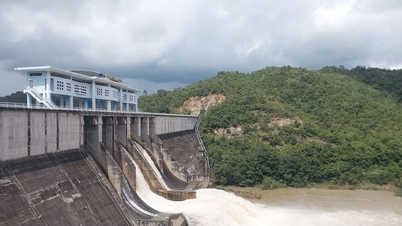
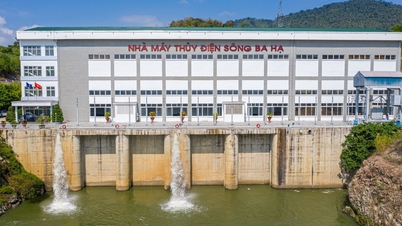
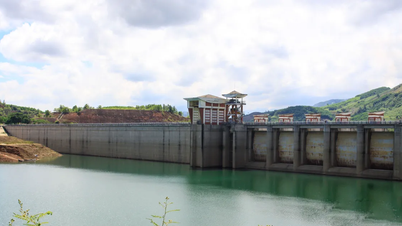
The scope of the water source protection corridor for dams, hydroelectric and irrigation reservoirs, and other reservoirs on rivers and streams.
For hydroelectric reservoirs with a total capacity greater than one billion cubic meters (1,000,000,000 m³ ) or with a total capacity from ten million cubic meters (10,000,000 m³ ) to one billion cubic meters (1,000,000,000 m³ ) but located in densely populated areas or areas with national defense and security facilities, the water source protection corridor is the area from the boundary line with an elevation equal to the highest water level corresponding to the design flood to the boundary line with an elevation equal to the land clearance elevation of the reservoir (*).
For the aforementioned hydroelectric reservoirs (*) and other reservoirs on rivers and streams, the water source protection corridor is the area extending from the boundary line with an elevation equal to the dam crest elevation to the boundary line with an elevation equal to the reservoir bed clearance elevation.
For dams and irrigation reservoirs, the scope and boundaries of the water source protection corridor are determined according to the boundary markers of the protected area of the irrigation works.
Marking the boundaries of the water source protection corridor for hydroelectric and irrigation dams and reservoirs.
The decree states that the demarcation of the water source protection corridor for dams and reservoirs shall be carried out in accordance with the regulations on demarcation of the boundaries of the protected area of irrigation works as stipulated in the law on irrigation.
The demarcation of the water source protection corridor boundary is carried out for hydroelectric reservoirs with a total capacity of one million cubic meters (1,000,000 m³ ) or more. Hydroelectric reservoirs with a total capacity of less than one million cubic meters (1,000,000 m³ ) are encouraged to demarcate the water source protection corridor boundary. The demarcation and handover of the water source protection corridor boundary markers for hydroelectric reservoirs must be completed before the reservoir begins water impoundment (**).
The organization managing and operating the hydroelectric reservoir as stipulated in clause (**) above shall preside over and coordinate with the People's Committee of the district where the reservoir is located to develop a plan for marking the boundaries of the reservoir's water source protection corridor.
Based on the approved boundary demarcation plan, the organization managing and operating the hydropower reservoir shall take the lead and coordinate with the People's Committee of the district where the hydropower reservoir is located to carry out the demarcation of boundaries on the ground; and hand over the boundary markers to the People's Committee of the province where the reservoir is located.
Based on the actual situation in each locality, the provincial People's Committee shall assign boundary markers to the district-level People's Committee or the commune-level People's Committee where the hydroelectric reservoir is located for management and protection.
According to the Government's online newspaper.
Source


![[Photo] Prime Minister Pham Minh Chinh attends the Conference on the Implementation of Tasks for 2026 of the Industry and Trade Sector](/_next/image?url=https%3A%2F%2Fvphoto.vietnam.vn%2Fthumb%2F1200x675%2Fvietnam%2Fresource%2FIMAGE%2F2025%2F12%2F19%2F1766159500458_ndo_br_shared31-jpg.webp&w=3840&q=75)
























































































Comment (0)