

Firstly , goods are considered to be of purely domestic origin or entirely produced from purely domestic materials. This group of goods is those that are born, raised, cultivated, harvested, hunted, caught, extracted, or manufactured entirely within the territory of a CPTPP member country. Additionally, goods entirely produced from purely domestic materials within the territory of one or more CPTPP member countries are also considered to be of purely domestic origin. On certificates of origin, this criterion is usually expressed as WO (Wholly Obtained). This group of criteria mainly applies to agricultural products, seafood, minerals, or certain specific semi-processed products.
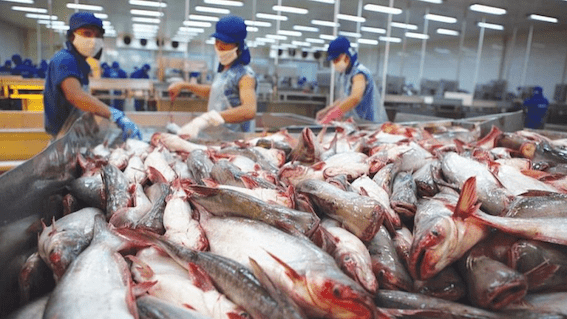
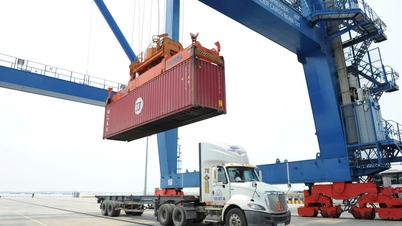
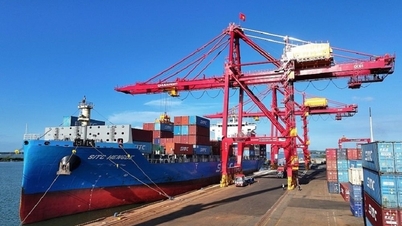
Seafood is a strong export item for Vietnam to the United Kingdom. (Illustrative image)
Secondly , goods are produced entirely from originating materials. According to this criterion, all materials involved in the production of the goods must originate from one or more CPTPP member countries. It should be noted that the originating materials in this case do not necessarily have to be purely originating materials, but may be materials that have already achieved origin status according to other criteria of the Agreement. This criterion is often abbreviated as PE (Produced Exclusively). In other words, once a material has become an originating material under the CPTPP – whether through "entirely produced," substantial transformation, or meeting a specific process – that material can continue to be used to produce originating goods.
Thirdly , goods are produced from non-originating materials but fully comply with the regulations in the Product Specific Rules (PSR) list. This criterion is most commonly applied to manufacturing industries with complex supply chains such as textiles, footwear, electronics, and machinery. Accordingly, the CPTPP Agreement allows businesses to use non-originating materials from countries outside the CPTPP bloc, provided that the production, processing, and manufacturing processes in Vietnam meet the specific origin criteria stipulated for each item in the PSR list, such as change in tariff classification (CTC), regional value content (RVC), or specific production processes.
The CPTPP agreement officially came into effect with the United Kingdom on December 15, 2024, marking a significant expansion of a new generation of global free trade agreements. With the UK's participation, the CPTPP bloc now accounts for approximately 15% of global GDP, equivalent to £12 trillion, demonstrating its strategic significance not only in economic and trade terms but also in political and geostrategic aspects. In this context, trade relations between Vietnam and the UK are expected to have further growth potential, especially as goods imported and exported between the two countries benefit from preferential tariffs under the CPTPP, provided they fully meet the rules of origin regulations.
Source: https://moit.gov.vn/tin-tuc/thi-truong-nuoc-ngoai/quy-dinh-xuat-xu-hang-xuat-khau-sang-vuong-quoc-anh-theo-cptpp.html


![[Image] Central Party Office summarizes work in 2025](/_next/image?url=https%3A%2F%2Fvphoto.vietnam.vn%2Fthumb%2F1200x675%2Fvietnam%2Fresource%2FIMAGE%2F2025%2F12%2F18%2F1766065572073_vptw-hoi-nghi-tong-ket-89-1204-jpg.webp&w=3840&q=75)























































Comment (0)