

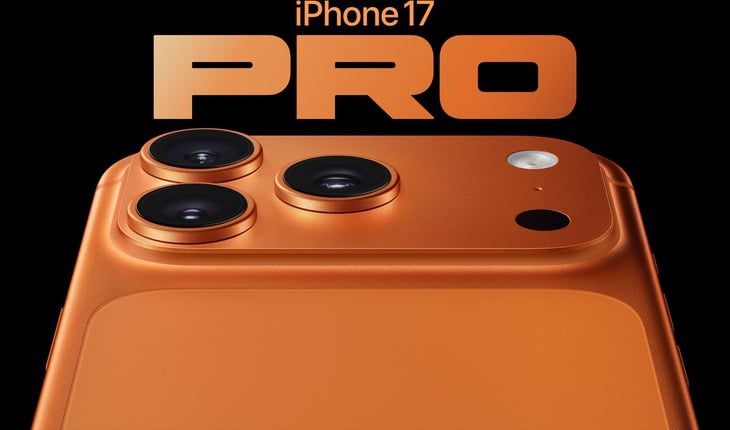
Apple launches the iPhone 17 series with a completely redesigned look - Photo: APPLE
In the early hours of September 10th (Vietnam time), Apple held its fall hardware launch event. As every year, the highlight of the September launch event was the latest generation of iPhone 17 series smartphones.
This time, Apple launched a total of four smartphone models, including the iPhone 17, 17 Air, 17 Pro, and 17 Pro Max. The iPhone Plus line was officially discontinued and replaced by the slim and lightweight 17 Air.
The iPhone 17 offers modest upgrades.
The most notable upgrade for the "regular" iPhone 17 is the inclusion of a 6.3-inch ProMotion display – a technology previously reserved only for the iPhone Pro models in earlier generations.
With the ProMotion display, Apple has finally popularized 120Hz display technology across its entire smartphone lineup, something Android phone manufacturers have been doing for years.
The design of the iPhone 17 is very similar to its predecessor, the iPhone 16. This model is equipped with the new A19 processor, which has a GPU that is 20% faster than the previous A18 and 90% faster than the A15 Bionic in the iPhone 14.
Like its predecessors, the cheapest iPhone model still features a dual-camera system. Notably, the ultra-wide-angle camera has been upgraded to 48MP resolution, instead of the previous 12MP.
The base storage capacity of the iPhone 17 has also been upgraded from 128GB to 256GB.
The iPhone 17 is considered to have received the fewest upgrades among this year's iPhone models. However, analysts believe that simply equipping it with a ProMotion display is enough to make it a very worthwhile smartphone to buy.
New design, new phone model
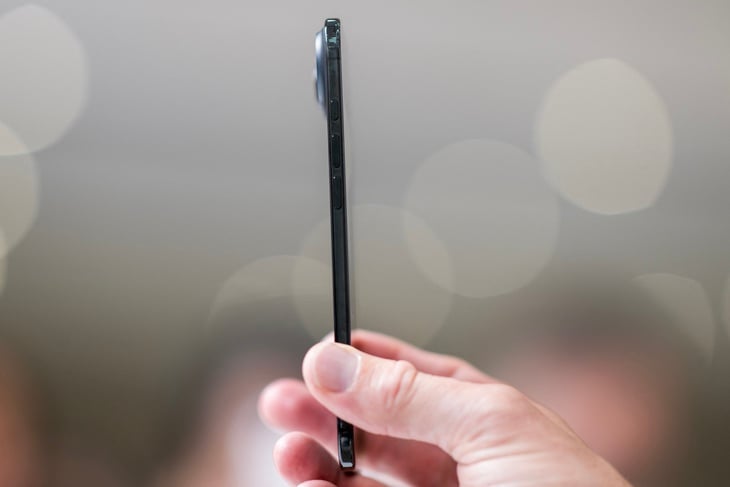
The newest feature of the iPhone 17 series is the "unprecedentedly thin" iPhone Air - Photo: AFP
As rumored for months, with the exception of the cheapest "regular" iPhone 17 model, all smartphones in the iPhone 17 generation feature a completely new design compared to their predecessors.
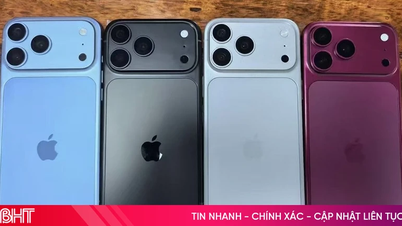
The rear camera module now extends almost the entire width of the device, instead of being a single square module as before. Apple calls this new camera module "plateau." The rest of the back panel features a two-tone design, instead of the previous monochrome.
The biggest highlight of the event was the iPhone Air – Apple's thinnest iPhone ever, measuring just 5.6mm thick. The iPhone Air boasts a 6.5-inch ProMotion display (with a maximum refresh rate of 120Hz).
Most of the phone's hardware is integrated into this camera array, leaving the rest of the device space solely for the battery, resulting in an "ultra-thin" body. However, the iPhone 17 Air only features a single rear camera, severely limiting its photography capabilities.
This "ultra-thin" phone model will compete directly with the Galaxy Edge model that Samsung launched earlier this year.
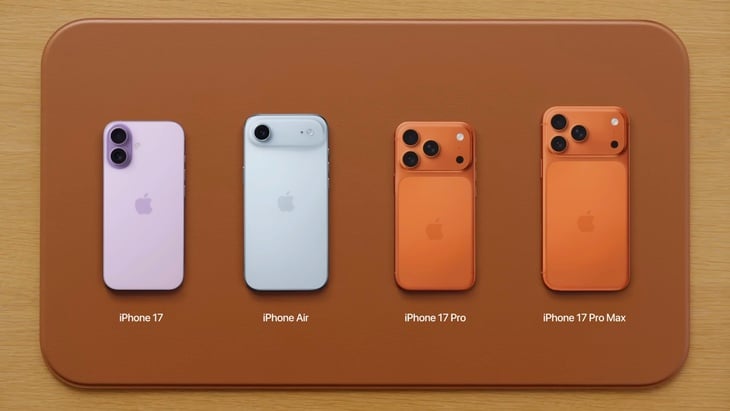
New back panel design on iPhone 17 series products - Photo: APPLE
Besides the new camera cluster and back panel color design, the frame of the iPhone 17 Pro and iPhone 17 Pro Max models has also been replaced from titanium to anodized aluminum.
Apple says the choice of aluminum improves heat dissipation while maintaining the device's light weight and durability.
Like the iPhone Air, the two most expensive models run on the A19 Pro chip – which Apple claims has processing power comparable to the MacBook Pro.
Besides its appearance, the most notable upgrade for the iPhone 17 Pro is the upgrade of the telephoto camera from 5x (equivalent to a 125mm focal length) to 8x (200mm), and the increase in resolution from 12MP to 48MP.
Thus, all three cameras on the iPhone 17 Pro have been upgraded to 48MP resolution.
iPhone Pro price increase for the first time in 8 years.

Apple CEO Tim Cook smiles during the product launch event on September 9th - Photo: AFP
As analysts predicted, while keeping the price of the iPhone 17 series unchanged at $799, Apple increased the price of the iPhone 17 Pro, with a starting price of $1,099. This marks the first time Apple has raised the $999 price point of the iPhone Pro model since 2017.
Meanwhile, the Pro Max model retains its price of $1,199. The iPhone Air will cost $999, an increase from the $899 price tag of the iPhone 16 Plus.
However, Apple Intelligence – the company's own artificial intelligence (AI) technology – has not announced any significant upgrades.
Giving iPhone products a "new look" is expected to boost sales of the latest generation of phones.
However, the modest hardware upgrades and the stagnation of Apple Intelligence still raise certain concerns, especially as Android phone manufacturers are making significant strides in both areas.
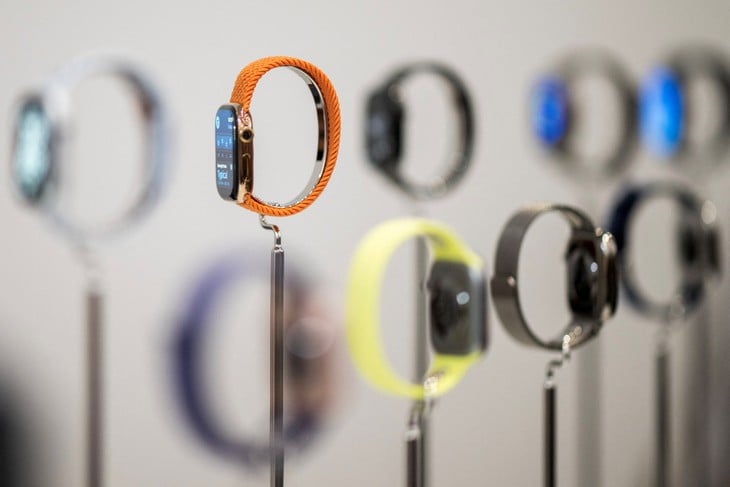
Apple has just launched the Apple Watch Ultra 3 - Photo: AFP
In addition to the iPhone, Apple also introduced the Apple Watch Ultra 3 with 5G connectivity, the Apple Watch Series 11, the Apple Watch SE 3, and the AirPods Pro 3 headphones.
The new generation of Apple Watch will feature blood pressure measurement, while AirPods Pro 3 will offer near-real-time multilingual translation thanks to artificial intelligence.
However, the blood pressure monitoring feature on the Apple Watch is currently awaiting regulatory approval from US authorities. Apple expects this feature to provide blood pressure information to 1 million people in 150 countries. Notably, Apple has decided not to increase the prices of its new high-end smartwatches and headphones.
All new products will go on sale starting September 19th.
Source: https://tuoitre.vn/ra-mat-iphone-17-ngoai-hinh-lot-xac-them-mau-moi-mong-nhe-20250910080131884.htm




























![[Photo] Reception to welcome General Secretary and President To Lam and his wife on their State visit to the Philippines](https://vphoto.vietnam.vn/thumb/1200x675/vietnam/resource/IMAGE/2026/06/01/1780295488620_vna-potal-chieu-dai-chao-mung-tong-bi-thu-chu-tich-nuoc-to-lam-va-phu-nhan-tham-cap-nha-nuoc-toi-philippines-8798060-7855-jpg.webp)







































































Comment (0)