

 |
| The "Turning Waste into Money" model of the Phu Xuan Ward Women's Union. Photo: Phu Xuan Front. |
Exchange trash for money.
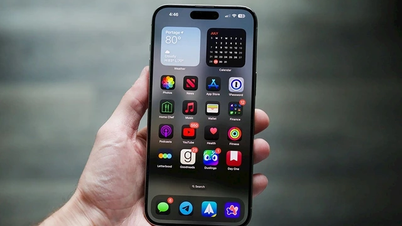
Since joining the Technology-Based Scrap Collection Cooperative more than two years ago, Ms. Tran Thi Xuan (An Cuu Ward) no longer has to knock on doors or go around hawking scrap as before. Holding a smartphone, she easily checks her regular scrap collection orders through the mGreen app (an app for sorting waste at source and earning points for rewards). “Now that people place orders through the app, I just need to go to the correct address, weigh the trash, and get paid. It’s less work and the income is much better,” Ms. Xuan shared.
Ms. Hoang Thi Ha Vi, Head of the Digital Technology Scrap Recycling Cooperative Group 3, said that those who buy scrap through the mGreen application receive prices equivalent to market rates, ranging from 2,000 to 6,000 VND/kg for paper; 8,000 to 25,000 VND/kg for plastic; and higher prices for metal depending on the type. Through the aforementioned application, scrap sellers receive money and accumulate points to redeem gifts; collectors have a stable source of orders, reduce search time, and increase the volume of scrap purchased.
From the story of buying and selling recyclable waste through the mGreen app, waste is becoming a commodity as it enters the circular economy model. According to statistics from the Hue - Plastic Reduction City in Central Vietnam project, Hue City generates more than 400 tons of household waste per day (in 2021), of which plastic waste accounts for about 13%. In reality, about 84 tons of waste are collected daily in the city, including 18.5 tons of scrap materials and 65.5 tons of organic waste, for recycling or reuse. Although this number is still modest compared to the total amount of waste generated, it partly shows that waste is being recognized as a resource that can be exploited.
Currently, nearly 3,000 households in Hue are sorting their waste through the mGreen mobile application. This change stems from how people perceive waste sorting: “Initially, I was lazy, but after getting acquainted with the mGreen app and learning that plastic bottles can earn points to redeem for money (1 mGreen point = 1 VND), gifts, and even arrange for waste collection, I started sorting waste more often. Now, my family has developed a habit of sorting waste to accumulate points,” said Mr. Nguyen Tuan Anh, a resident of Nera Garden apartment complex (To Huu Street).
Supporting the green transition
Previously, waste was simply collected and processed (incinerated or buried). However, in the context of Hue City prioritizing sustainable development, waste also has its own "cycle." "The waste cycle is a model that shifts from 'extraction - production - disposal' to a closed-loop process: design - production - consumption - collection - recycling/reuse. For plastic waste, after collection, it can be sent to factories for recycling into new plastic products. For organic waste, households can use it to make compost, fertilize plants, and thus create food," said Assoc. Prof. Dr. Hoang Cong Tin, Head of the Environmental Science Department, University of Science, Hue University, and a member of the advisory group for the Hue - A Plastic-Reducing City in Central Vietnam project.
Associate Professor Dr. Hoang Cong Tin reported that currently, the urban waste collection rate in Hue City is approximately 98%. The amount of plastic waste leaking annually in the Tam Giang - Cau Hai lagoon area is estimated at around 479 tons, of which about 74.1% enters the hydrological system, while the recovery rate is only about 16.6%. “I believe we can make greater efforts to increase the percentage of waste that enters the recycling cycle. If done well, Hue can both reduce environmental pressure and create economic value,” Associate Professor Dr. Hoang Cong Tin stated.
At the Vietnam Economic Summit 2025, Outlook 2026, held in Hanoi at the end of 2025, Ms. Francesca Nardini, Deputy Representative of the United Nations Development Programme (UNDP) in Vietnam, shared that implementing a circular economy model will not only help Hue City significantly reduce waste and greenhouse gas emissions but also open up new growth opportunities, expected to contribute an additional 4.5% to the city's GRDP by 2030, thereby supporting the local green transformation and sustainable development.
However, the biggest challenge today remains people's habits. In some areas, the practice of littering directly into the environment still occurs, indicating that changing behavior requires more time and more comprehensive solutions.
Source: https://huengaynay.vn/kinh-te/rac-cung-la-tai-nguyen-164787.html


![[Photo] Secretary of the National Assembly Party Committee, Chairman of the National Assembly presides over the meeting of the Standing Committee and Executive Committee of the National Assembly Party Committee.](https://vphoto.vietnam.vn/thumb/1200x675/vietnam/resource/IMAGE/2026/06/03/1780480353201_ndo_br_bnd-2585-jpg.webp)

![[Photo] General Secretary and President To Lam presides over a meeting with the Central Organizing Committee.](https://vphoto.vietnam.vn/thumb/1200x675/vietnam/resource/IMAGE/2026/06/03/1780482764658_a1-bnd-4741-3342-jpg.webp)














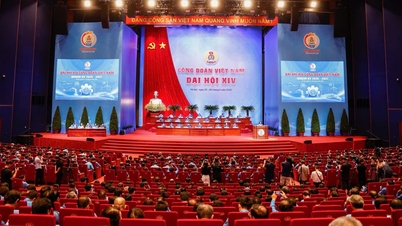
![[Photo] First session of the 14th Congress of the Vietnam Trade Union](https://vphoto.vietnam.vn/thumb/1200x675/vietnam/resource/IMAGE/2026/06/03/1780465947883_ndo_br_img-3852-jpg.webp)



















![[Video] Sunset at Lap An Lagoon – Where the sun sets over the fishing nets](https://vphoto.vietnam.vn/thumb/1200x675/vietnam/resource/IMAGE/2026/05/31/1780192137701_beach-landscape-sea-water-nature-grass-745871-pxhere-com.jpeg)


















Comment (0)