

On the last day of the Year of the Rabbit, while everyone was looking forward to the traditional Lunar New Year, we came to Can Loc ( Ha Tinh ) to gain a deeper understanding of the immense values of this heritage land, and to further appreciate the people who have beautified the rivers and mountains of our homeland, both in the past and present.
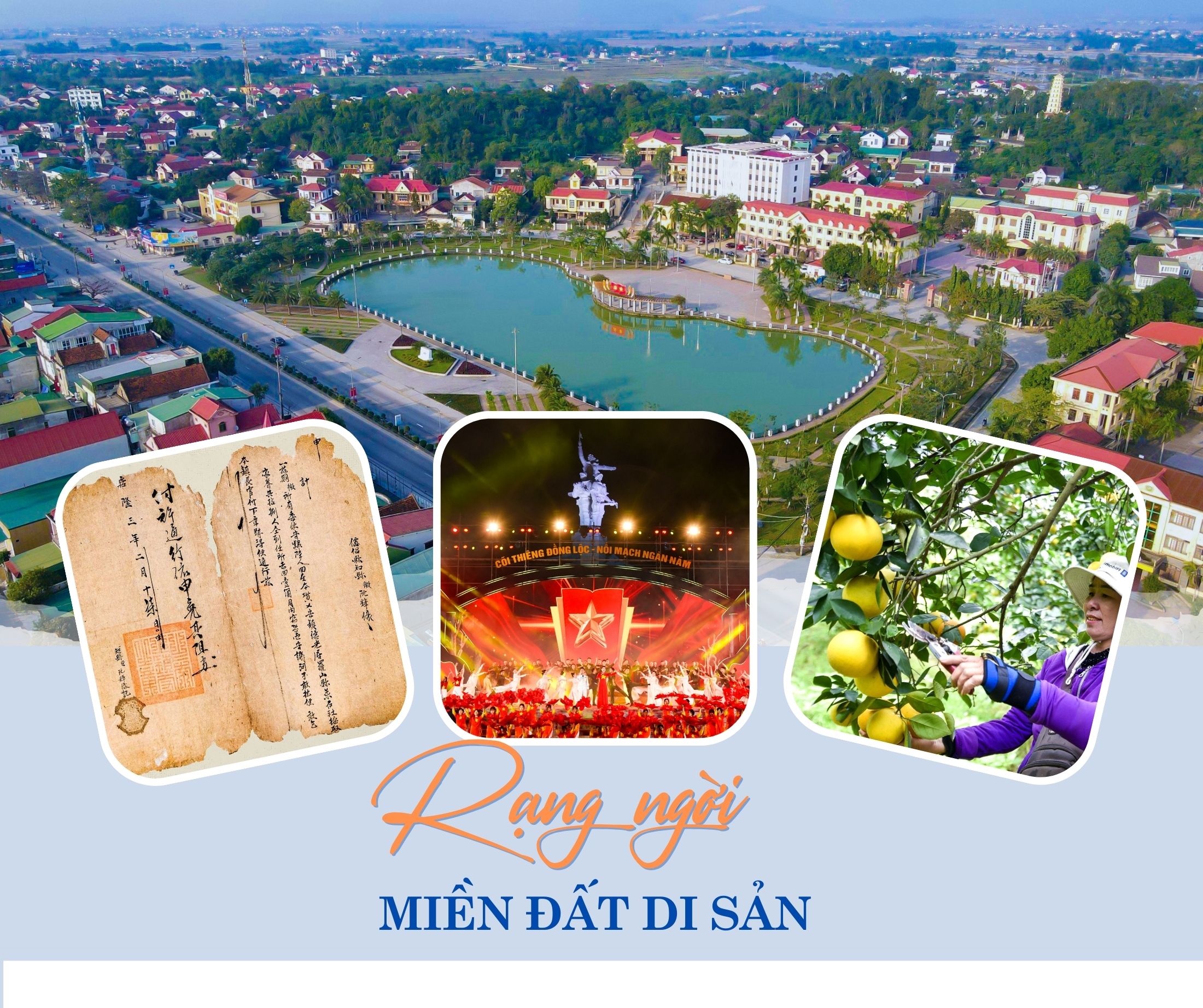
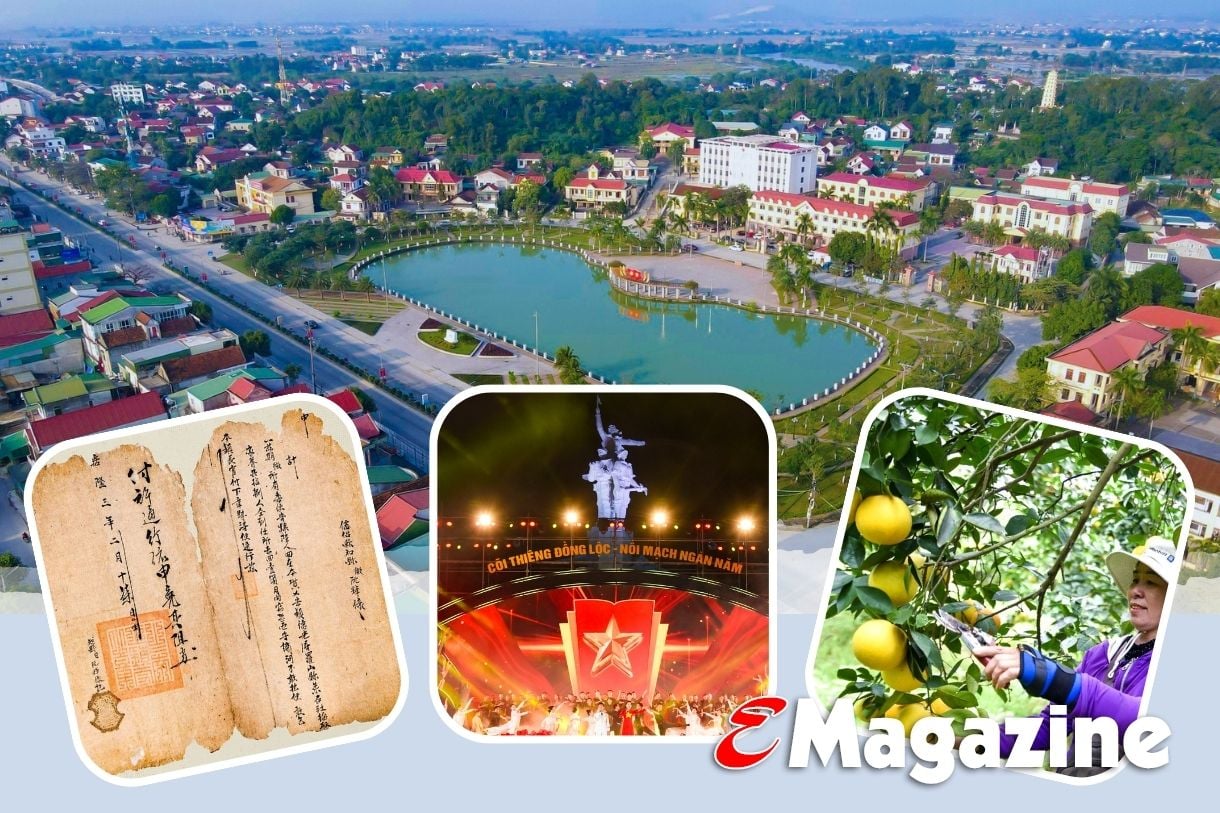
On the last day of the Year of the Rabbit, while everyone was looking forward to the traditional Lunar New Year, we came to Can Loc (Ha Tinh) to gain a deeper understanding of the immense values of this heritage land, and to further appreciate the people who have beautified the rivers and mountains of our homeland, both in the past and present.

The Trảo Nha area (now Nghèn town, Can Lộc district) is home to the renowned Ngô family, famous for generations. Around the 15th century, the Ngô family settled in this region, establishing themselves and becoming a prominent military clan. Notably, in the 7th generation, Duke Ngô Phúc Vạn (1577-1652) was appointed Deputy Commander of the elite army and granted the title of Thái Bảo. Ngô Phúc Vạn had 10 sons who were granted the title of Duke. During the Tây Sơn dynasty, out of 60 Dukes nationwide, the Ngô family of Trảo Nha had 18. In 2016, the Vietnam Record Organization recognized the Ngô family of Trảo Nha for three achievements: the family with the most Dukes (18); the family with the most consecutive generations granted the title of Duke (8 generations, from the 5th to the 12th); and the family with three brothers granted the title of Duke on the same day. Located facing south on a historical route, the Ngo family ancestral temple is a well-known national historical monument, annually welcoming descendants and visitors from all over the country to pay their respects.
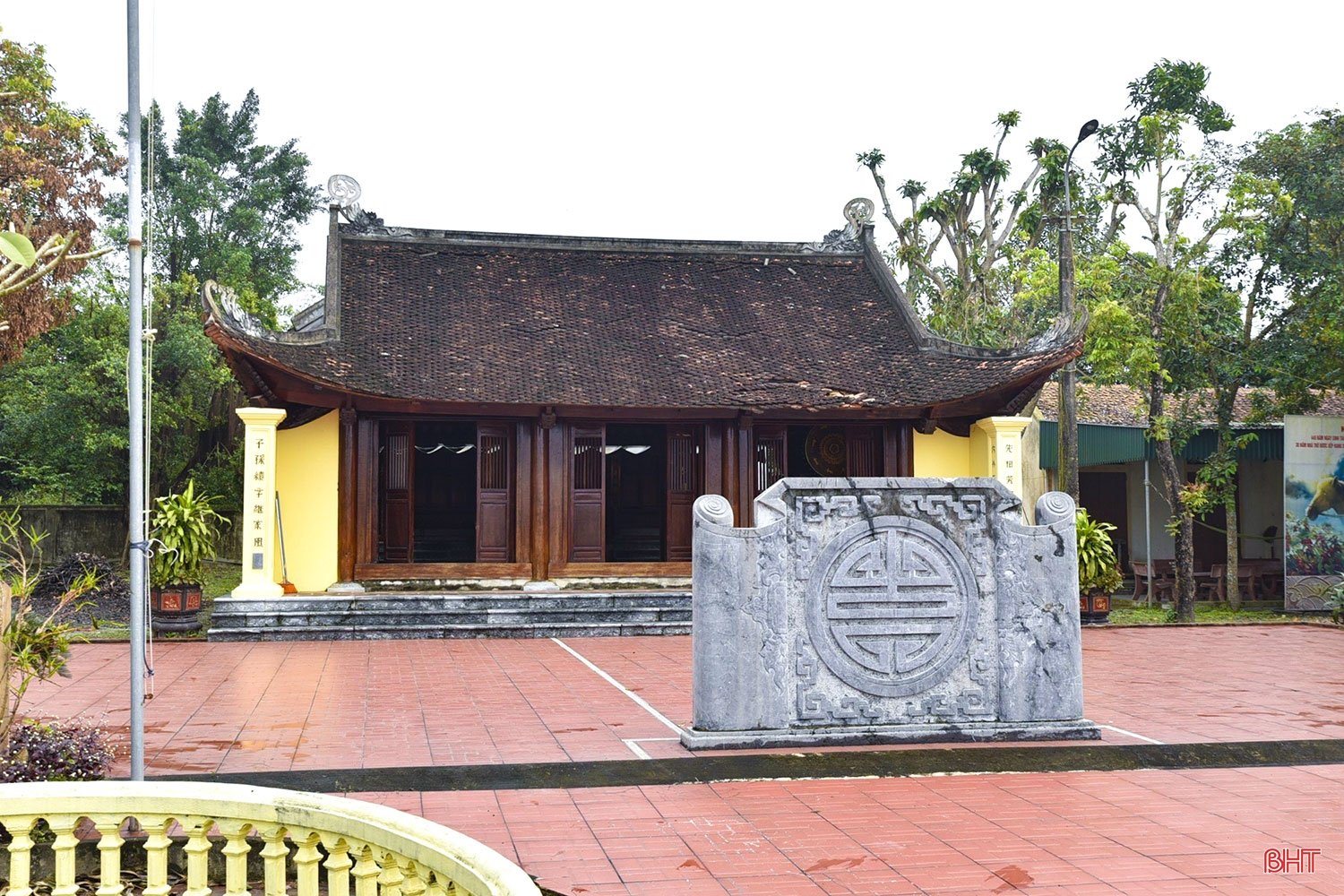
The temple of Cao Quan Cong Ngo Phuc Van. Photo by Giang Nam.
Next to the Ngo family church is the Ngo Xuan Dieu Memorial House (1916-1985), a renowned Vietnamese poet known and loved worldwide . Although not born in his ancestral homeland, the poet always carried a deep love and gratitude for the "narrow, arid land," his roots and the Tuy Phuoc - Binh Dinh region where he was born. "Two slopes of the Ngang Pass, one thread of love" shaped the character and soul of this great poet, leaving behind a poetic legacy spanning over half a century, especially love poetry. Even after so many years since his passing, the verses, photographs, and writings of the poet under the pen name Trao Nha still evoke profound emotion in viewers.
I am grateful to my teacher, and to my mother for giving birth to me.
Thank you, teacher, for braving the Ngang Pass!
Thank you, Mom, for knowing how to love people from Nghe An.
Therefore, the blood of the child is a mixture of both regions.
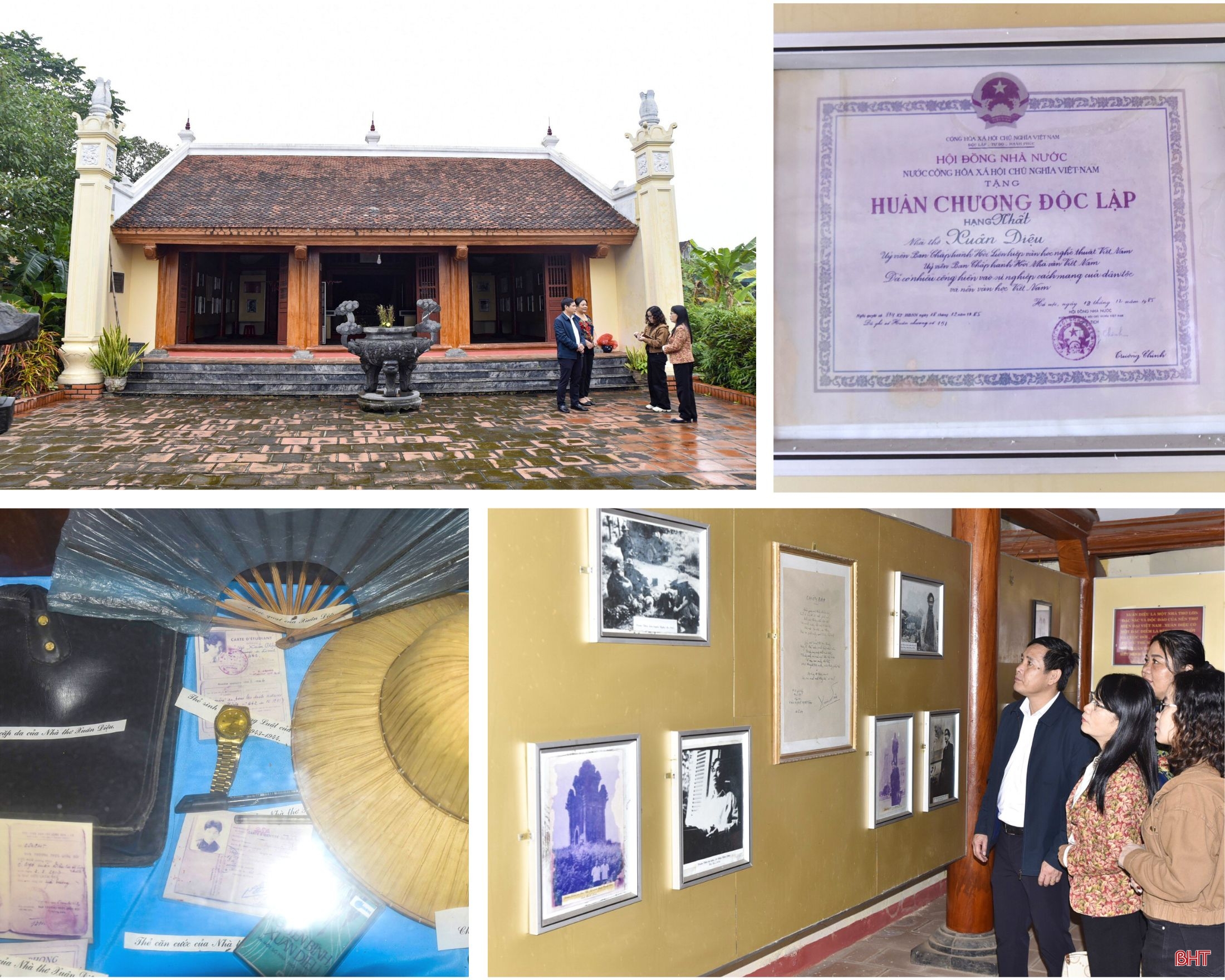
The memorial house and memorabilia of poet Ngo Xuan Dieu. Photo by Giang Nam.
This land of Can Loc is like that; heroes, generals, and writers and poets have brought glory to Vietnam throughout history. When there was war, they were soldiers and generals; when the country was at peace, they were poets. There were also those with great ambitions who fought the enemy and were both generals and poets, like Dang Dung (from Tung Loc commune) with his two famous lines: “The national vengeance is not yet avenged, my hair has turned white / How many times have I sharpened my sword under the setting moon?” The qualities of scholars diligently pursuing literature and academic achievements were always intertwined with patriotism, unwavering loyalty, serving the king and the country, pioneering national education , creating and preserving cultural heritage. Notable examples include La Son Phu Tu Nguyen Thiep, Nguyen Huy Oanh, Nguyen Huy Tu, and Nguyen Huy Ho in the 18th century...
In the 20th century, the scholarly and heroic Can Loc region rose to prominence with place names and village names that became legendary, forever etched in the history of the land and mountains, such as K130 Village, Dong Loc Crossroads, Nhe Bridge... The young men and women in their twenties who sacrificed themselves for the country, dedicating their youth to building these roads, were also the souls of poets. Many who read the letter from Vo Thi Tan, Squad Leader of A4-C552 Youth Volunteer Brigade, to her mother share the same thought: If there hadn't been a war, she might very well have been a writer or poet. Her heartfelt words touched millions: “The road is being built with the combined hearts and minds of us children. As dusk falls, the vehicles carrying the weight of love from the home front roll along the road to the front lines… Their bombs and bullets may shake the mountains and forests, but they cannot shake our hearts.”
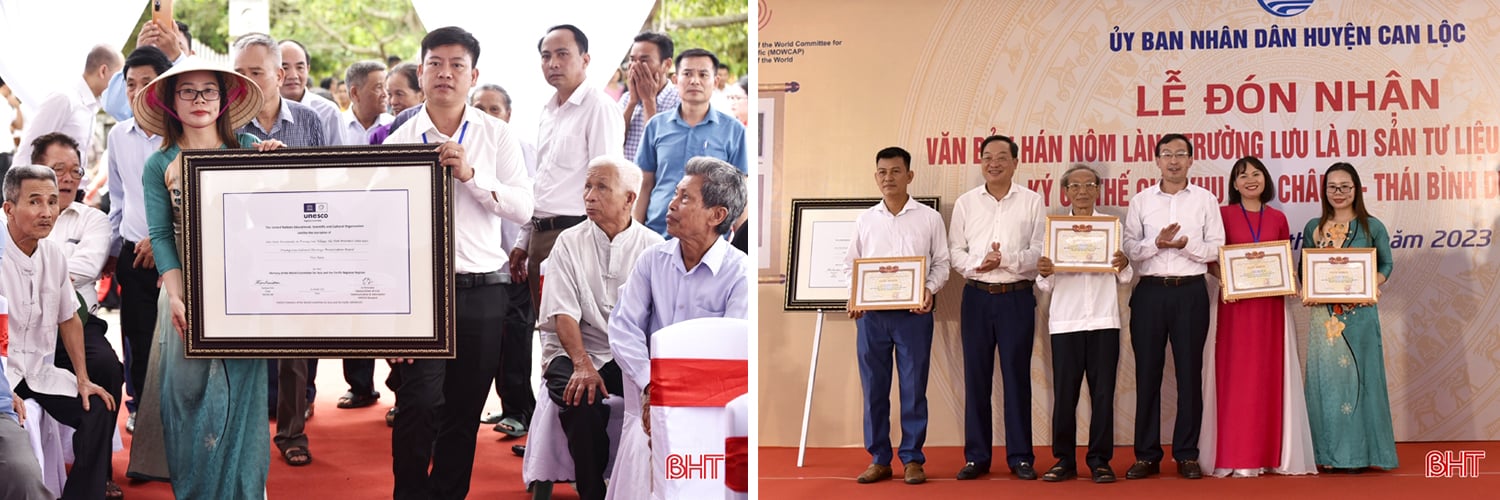
Residents of Kim Song Truong commune (Can Loc district) receive the Certificate recognizing the Han Nom documents of Truong Luu village as a documentary heritage under the Memory of the World Programme for the Asia-Pacific region (left photo). Leaders of Can Loc district present certificates of merit to individuals who have achieved success in building and completing the dossier for the Han Nom documents of Truong Luu village (right photo). Photo: Giang Nam
The inherent qualities of the people of Can Loc, with their "swords on their backs and delicate hands wielding brushes," have greatly contributed to the glorious history of the nation, building and nurturing cultural values, so that present and future generations can learn about three World Heritage Documentary Memory sites in the Asia-Pacific region: the Hoang Hoa Su Trinh Do, the Truong Hoc Phuc Giang Woodblocks, and the Han Nom texts of Truong Luu village; the Truong Luu folk singing (a form of folk singing in Nghe Tinh - a representative intangible cultural heritage of humanity); and other famous historical and cultural relics.
In early spring 2024, we returned to Can Loc to better appreciate the cultural values and people of this place. Along the historic road through Dong Loc Crossroads, we visited Thuong Loc, a major orange-growing area. This "frontier" region of the strategically important crossroads, once devastated by enemy bombs, is now bursting with vibrant life. People who love their homeland and are deeply connected to the land of their ancestors have awakened its potential, using their sweat and strength to transform the once barren hills into vast, sweet orchards of oranges and pomelos.
Mr. Nguyen Xuan Dieu, Chairman of the People's Committee of Thuong Loc commune, proudly boasted as he drove us through the vast orange groves on the hillsides: "Thuong Loc's land area is five times larger than other communes. The entire commune has 310 hectares of orange and pomelo orchards (170 hectares for income generation); 6 production and business cooperatives; and 7 products recognized as OCOP products (5 of which are oranges)."
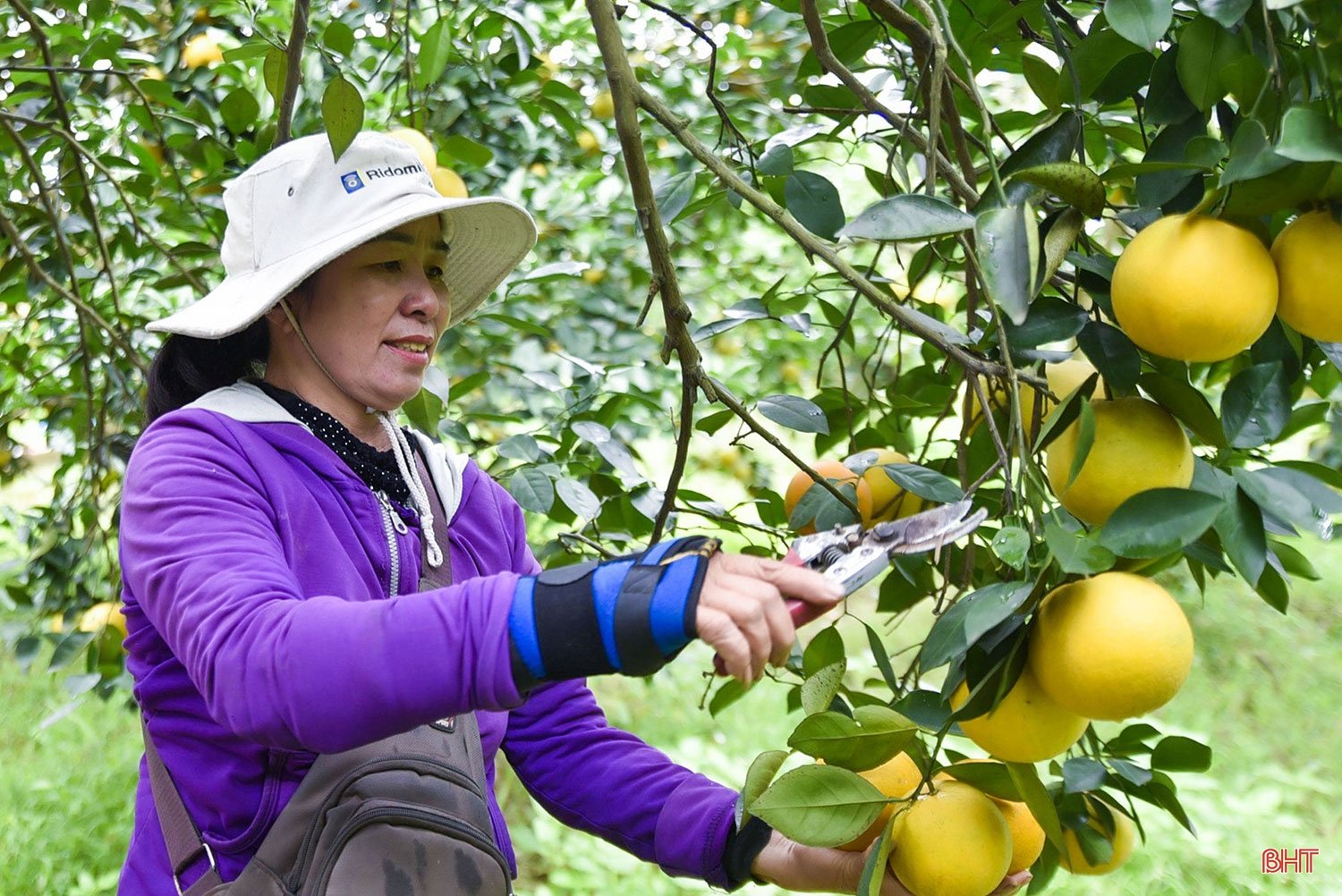
Cam Thuong Loc is one of the famous specialties known to consumers inside and outside the province. Photo: Giang Nam
In recent years, Thuong Loc oranges have won over consumers nationwide and have been granted geographical indication status. The hills of ripe oranges have become an ideal destination for outdoor tourism. Many travel companies have connected tours, bringing visitors to experience the area, such as Thanh Sen Travel Company and Tra Son Cooperative. The commune is developing a project for an experiential tourism village because the Can Loc - Huong Khe road is very beautiful, has a delicious orange orchard, and is close to the famous Dong Loc Crossroads.
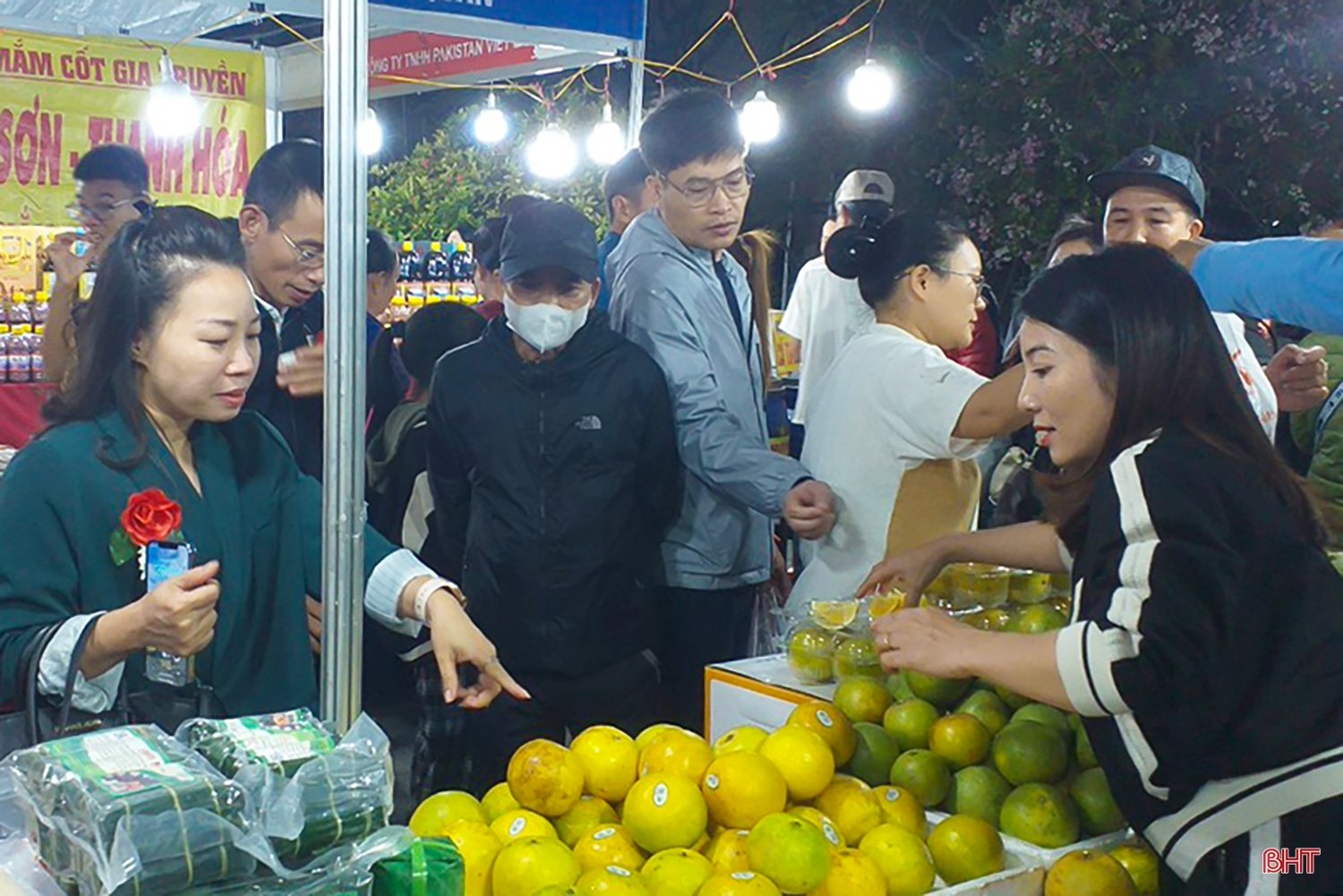
Tra Son Cooperative (Can Loc) participated in the Red River Delta - Hai Phong Trade Fair 2023. (Photo: Archival image)
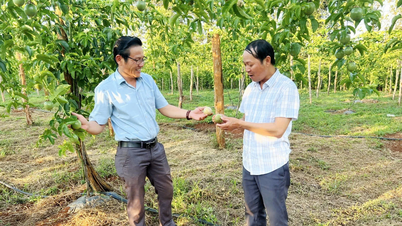
We stopped at Anh Hung village, a name that evokes the steadfast and heroic history of this land. Hien Thanh orange farm is one of the five farms here that produces many delicious oranges. With hundreds of orange trees of both types: crisp oranges and lemon oranges, Hien Thanh oranges are becoming well-known to consumers nationwide. This is the peak season, and both large and small trees are laden with juicy, golden fruit. Enjoying these sweet oranges makes us even more grateful to the people who have brought such great value to our homeland. Ms. Phan Thi Hien, the farm owner, shared: "During the harvest season, many groups of visitors come here to admire the orchard, take pictures, and buy oranges. Crisp oranges are incredibly sweet, selling for 65-70 thousand VND/kg at the farm, slightly higher closer to Tet (Lunar New Year). Lemon oranges are sweeter and more refreshing, with a lower price (35-40 thousand VND/kg)."
Mr. Dieu also said: Besides Hien Thanh oranges, Thuong Loc also has Trach Mai oranges, Tra Son oranges, and Dong Uyen oranges of very high quality. The Tra Son Production and Business Cooperative has invested in ozone treatment machines to polish the oranges, package them, and export them to all regions at prices ranging from 90-100 thousand VND/kg. Tra Son oranges have been recognized as a 4-star OCOP product.
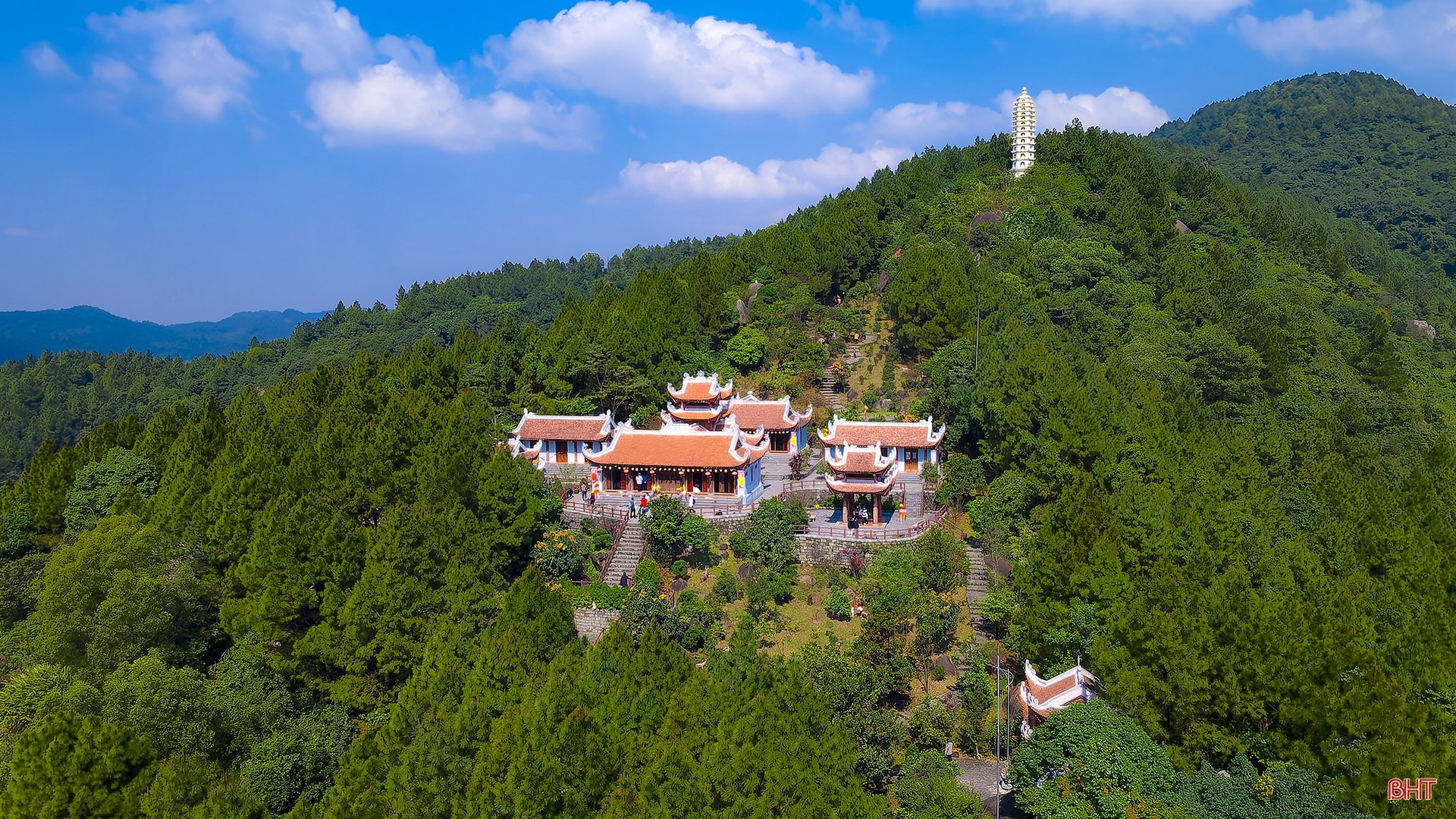
Panoramic view of Huong Tich Pagoda (Thien Loc commune). Photo: Dinh Nhat
We left Thuong Loc and headed towards Thien Loc. Although the Huong Tich Pagoda festival is still almost a month away, the atmosphere is already bustling. Along the road to the pagoda, the bauhinia flowers have bloomed, painting the sky purple. The land where the legend of Princess Ba, daughter of King Trang Vuong of the Chu Kingdom, came to practice asceticism and attain enlightenment, becoming the Bodhisattva Avalokiteshvara who saves sentient beings, and the Huong Tich Pagoda hidden behind layers of mist on the peak of Hong Mountain, are increasingly attracting tourists from near and far. Along with Huong Tich Pagoda, the Thuong Tru Ferry Terminal (Thien Loc commune), the site where the Ha Tinh Provincial Party Committee was established in late 1930, Nghen Crossroads, the Dong Loc Crossroads Special Historical Site, Truong Luu Ancient Village, the Nguyen Huy family church, the Nguyen Thiep church (Kim Song Truong commune), the Xuan Dieu Memorial House, the Thuong Loc orange groves... are all famous tourist destinations.
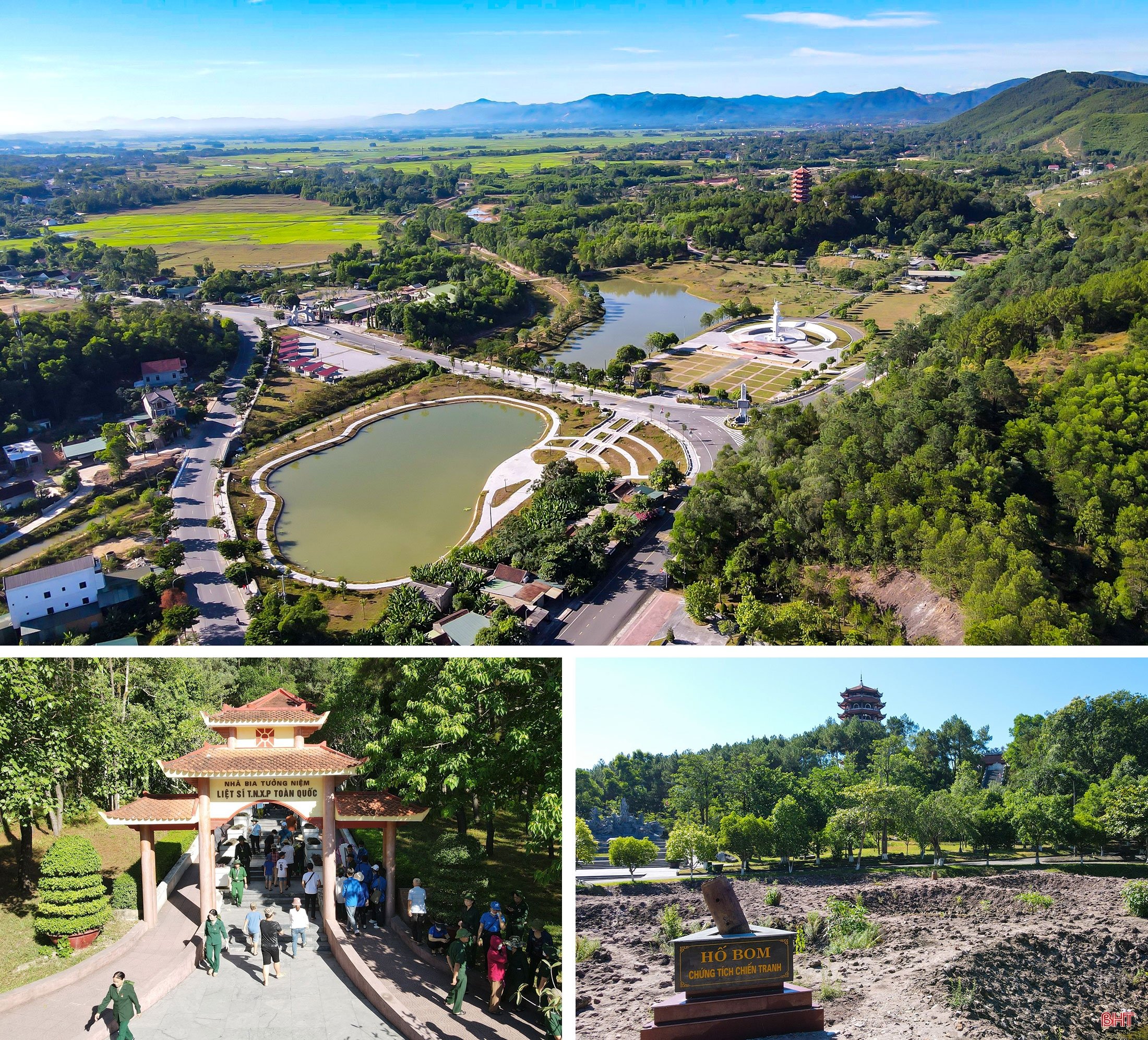
Dong Loc Crossroads, a place that preserves immense historical and cultural values, has inspired many generations of Vietnamese people. Photo: Giang Nam
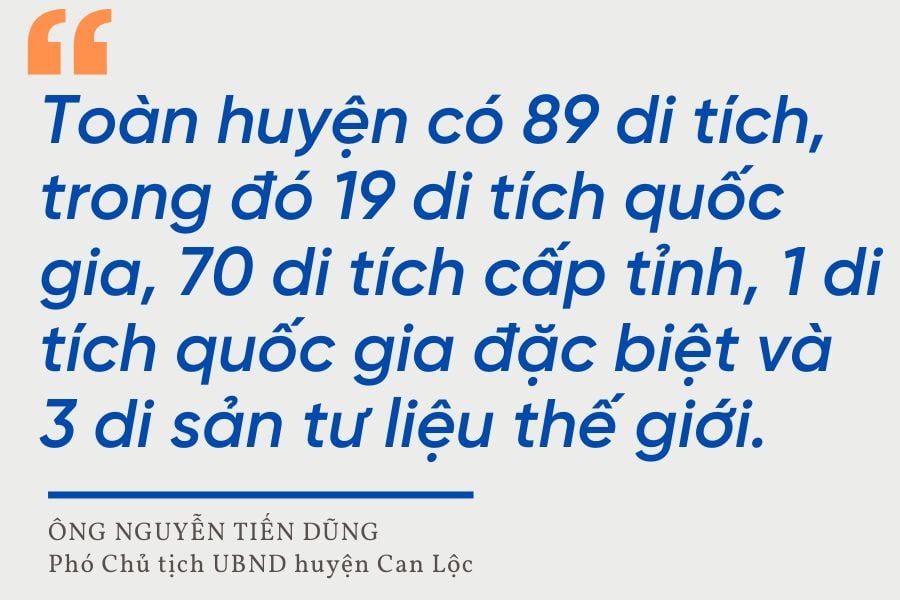
Mr. Nguyen Tien Dung, Vice Chairman of the People's Committee of Can Loc District, stated: The Resolution of the 36th District Party Congress has identified tourism as a key economic sector. The district has 89 historical sites, including 19 national sites, 70 provincial sites, 1 special national site, and 3 world documentary heritage sites. This represents significant potential for developing tourism and services, a central task in the district's socio-economic development. Can Loc has developed a plan to leverage the value of these heritage sites for cultural and tourism development, focusing on creating tourism products linked to cultural and historical tours, spiritual tourism, and experiential tourism, creating diversity to attract visitors to the heritage region of Can Loc. Simultaneously, the plan for the Truong Luu cultural heritage village is being finalized to create a tourism highlight.
Spring has returned to our country, our homeland, to the beloved countryside of Can Loc. Every step we take on this land touches upon a glorious past, and the scent of the land and the warmth of its people blend together today. Under the vast blue sky, amidst the myriad sounds of spring, this heritage land shines brightly, awakening with vibrant new colors.
Content: Minghui
Photo: Giang Nam - Dinh Nhat
Design: Khoi Nguyen
1:22:01:20 24:08:30
Source










![[Photo] Reception to welcome General Secretary and President To Lam and his wife on their State visit to the Philippines](https://vphoto.vietnam.vn/thumb/1200x675/vietnam/resource/IMAGE/2026/06/01/1780295488620_vna-potal-chieu-dai-chao-mung-tong-bi-thu-chu-tich-nuoc-to-lam-va-phu-nhan-tham-cap-nha-nuoc-toi-philippines-8798060-7855-jpg.webp)













































Comment (0)