

完善 policies to promote the "greening" of the economy.
2026 is considered a significant milestone in the process of perfecting the institutional framework for green and circular economic development in Vietnam. From a state management perspective, a series of new mechanisms and policies are being developed, refined, and implemented to promote the transformation of the growth model towards low emissions, efficient resource use, and sustainable development.
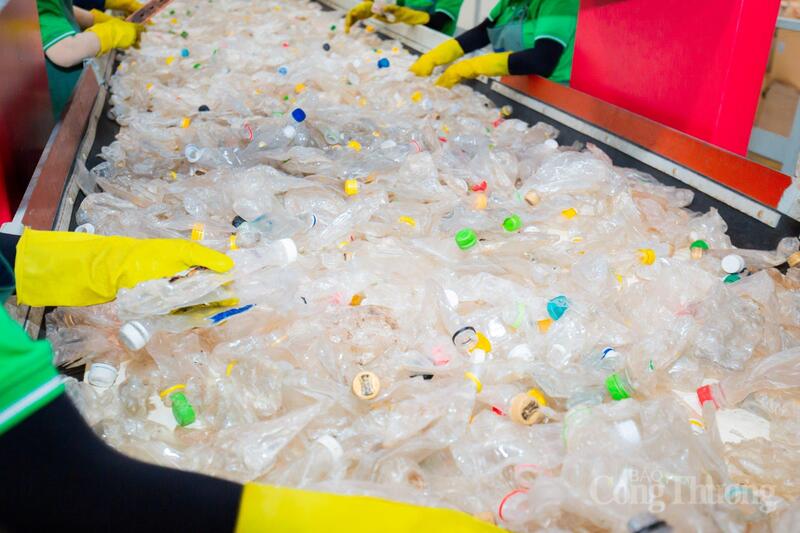
All plastic bottles are cleaned and sorted before being sent for recycling. Photo: Duy Tan Recycling
In particular, many important policies are being promoted, such as green credit mechanisms, incentives for businesses investing in clean technologies, regulations on extended producer responsibility (EPR), green product standards, recycled materials, along with a roadmap for implementing a domestic carbon market and carbon tax. These are considered important "leverages" for businesses to transition to cleaner production models and a circular economy.
According to Dr. Lai Van Manh, Head of the Economics, Resources and Environment Department at the Institute of Agricultural and Environmental Strategy and Policy, the state plays not only a facilitating role but also acts as a "leader" in the market through a system of policies, standards, and economic tools. The goal is to create a favorable ecosystem for businesses to transition to green, while simultaneously providing impetus for technological innovation and changes in production methods.
However, the transition to a circular economy and cleaner production faces many challenges. Firstly, there are significant investment costs as businesses must innovate technology, production lines, and environmental treatment systems. Secondly, the infrastructure for waste collection, sorting, and recycling is still inadequate; awareness of green consumption among some businesses and consumers remains insufficient. Most importantly, there is a shortage of high-quality human resources in the fields of environment, green technology, and sustainable development management.
With 2026 identified as a year of accelerated institutional reform and economic recovery, experts predict that the green economy and circular economy will become one of the new drivers of economic growth. To promote this process, it is necessary to strengthen communication about green consumption; provide financial and technical support to businesses, especially small and medium-sized enterprises; promote the development of carbon markets and green economic tools; and strengthen linkages between businesses to form circular value chains.
Many clean, circular production models are being strongly implemented.
In parallel with the policy, many businesses and localities have proactively implemented cleaner production and circular economy models with clear results.
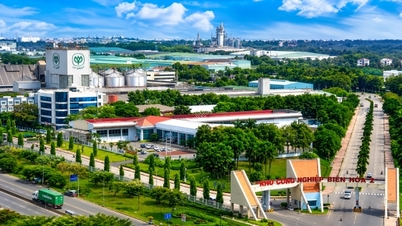
In Hai Phong and Bac Ninh , the eco-industrial park model is being piloted. Here, the waste of one enterprise becomes the input material for another. This industrial symbiosis model not only significantly reduces waste treatment costs but also improves resource utilization efficiency and reduces environmental emissions.
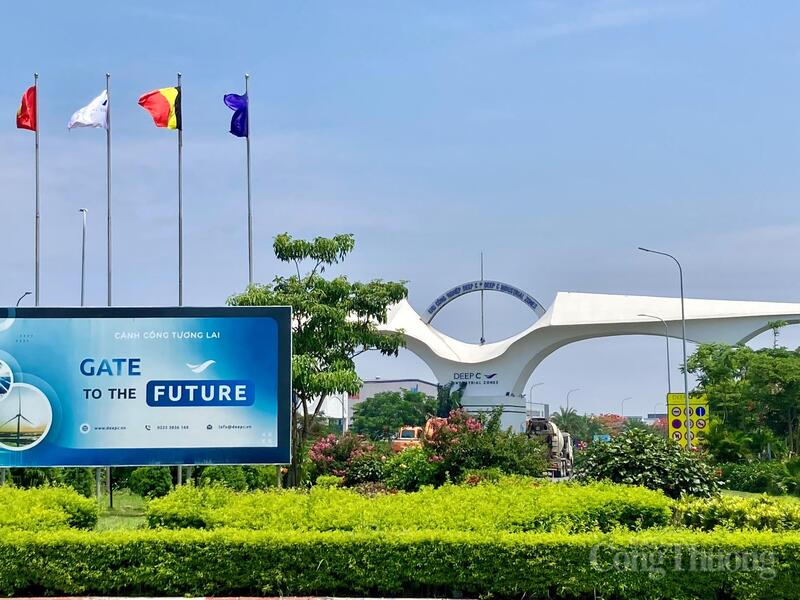
DEEPC eco-industrial park in Hai Phong city. Photo: Thu Huong
In the agricultural sector, many cooperatives have adopted a circular production model by utilizing agricultural by-products as animal feed, organic fertilizer, or for bioenergy production. As a result, businesses and farmers reduce input costs while increasing product value, meeting the market's green consumption trend.
Recycling, reuse, and sharing economy models are also rapidly developing in major cities. Activities such as plastic waste recycling, recycled material production, and platforms for exchanging and reusing goods are contributing to the formation of an increasingly evident circular economy ecosystem.
In the construction materials industry, many businesses have reused fly ash and blast furnace slag as input materials, replacing natural resources, thereby reducing emissions and saving production costs.
A prime example is SCG Vietnam. According to Mr. Burin Udomsub, General Director of SCG Vietnam, the company has proactively expanded its portfolio of green products, with 19 key cement lines achieving EPD certification according to international standards. This makes it easier for customers to choose environmentally friendly materials, while also enhancing the brand's reputation in the international market.
To meet green standards, SCG has invested in a comprehensive range of emission reduction solutions in cement production. Since 2014, the company has implemented a waste heat recovery system to generate electricity, utilizing approximately 30% of the heat generated during production. This solution saves about 60 million kWh of electricity annually, equivalent to a reduction of approximately 33,807 tons of CO₂.
Simultaneously, the company is promoting the use of biomass as a replacement for coal in the clinker burning process, with a replacement rate of approximately 30%, helping to reduce the demand for coal by about 90,000 tons per year, equivalent to a reduction of about 157,715 tons of CO₂. In addition, the application of high-quality clinker combined with modern blending technology helps SCG further reduce CO₂ by about 141,575 tons per year. As a result, the amount of carbon emissions in the company's cement production is currently reduced by about 20% compared to conventional production methods.

Textile products are made from materials of natural origin. Photo: Thu Huong
In the food and nutrition sector, TH Group is also one of the pioneering enterprises in implementing the circular economy model associated with cleaner production. TH invests in modern technology from Israel, New Zealand, Japan, the Netherlands, etc., to control product quality while minimizing environmental impact.
One of TH's exemplary models is its closed-loop livestock waste treatment system. Instead of being discarded, farm waste is transformed into raw materials for a bio-fertilizer factory, which then reuses the fertilizer in the fields or supplies it to the market.
The company has also invested in rooftop solar power systems at its farms and factories, currently meeting about 10-20% of the electricity needs of the farm cluster in Nghe An. This system helps reduce approximately 5,000 tons of CO₂ per year. At the same time, the average emission level at the TH true MILK fresh milk factory is now only about 0.088 kg CO₂/unit of product, significantly lower than the average of many milk factories in Southeast Asia.
Green transformation is not limited to manufacturing; it is spreading to technology and service industries. Digital payment platforms like VNPAY are contributing to promoting green consumption by reducing cash usage, lowering operating costs, and cutting indirect emissions.
Meanwhile, technology companies like MISA are providing digital management solutions that help businesses control energy consumption, raw materials, and emissions. This is considered a crucial foundation for building a circular production model in the context of digital transformation and green transformation occurring simultaneously.
In reality, the green economy and circular economy are no longer experimental trends but are gradually becoming the "new standard" in economic development. 2026 is considered a pivotal year when Vietnam transitions from pilot programs to widespread implementation of cleaner production models, reducing emissions and efficiently utilizing resources. With the support of the government, businesses, and society, the "greening" of the economy will not only contribute to environmental protection but also open up new growth opportunities, enhance competitiveness, and affirm Vietnam's position in the global value chain.
Source: https://congthuong.vn/san-xuat-sach-mo-duong-cho-kinh-te-tuan-hoan-457963.html
![[Image] Nearly 125,000 Hanoi students completed the Literature exam for the 10th grade entrance exam.](https://vphoto.vietnam.vn/thumb/1200x675/vietnam/resource/IMAGE/2026/05/30/1780117233041_ndo_br_thiet-ke-chua-co-ten-2-png.webp)




















![[Photo] Admire the coral "masterpiece" amidst the million-year-old heritage of Dak Lak province.](https://vphoto.vietnam.vn/thumb/1200x675/vietnam/resource/IMAGE/2026/05/30/1780107638639_y25-jpg.webp)



























































Comment (0)