

- Remembering the gratitude owed to the families of the martyrs of the Giồng Bốm battle.
- Giong Bom: Connecting the stream of gratitude through simple things.
- Restoration of the Giồng Bốm Battlefield National Historical Site has been completed.
The spirit of "saving the nation is saving the religion" displayed by Cao Dai Minh Chon Dao followers in the Battle of Giong Bom has become an enduring symbol of patriotism and the unwavering will to die for national independence.
 The appearance of the National Historical Monument of the Battle of Giồng Bốm within the Ngọc Minh Holy See complex (Hamlet 7, Phong Thạnh commune) has become more spacious and majestic thanks to the attention and investment in restoration by the authorities at all levels.
Eighty years have passed, but the historical significance of the Battle of Giong Bom remains undimmed. Although they did not achieve military victory, the tenacious fighting spirit of the Cao Dai soldiers contributed to inspiring and spreading patriotism and strengthening national unity.
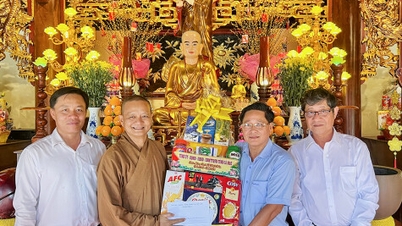
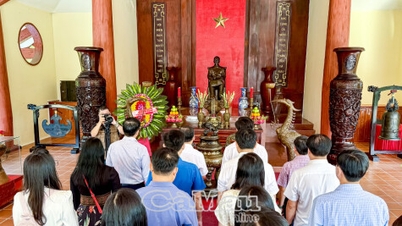
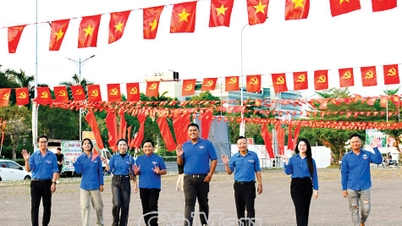
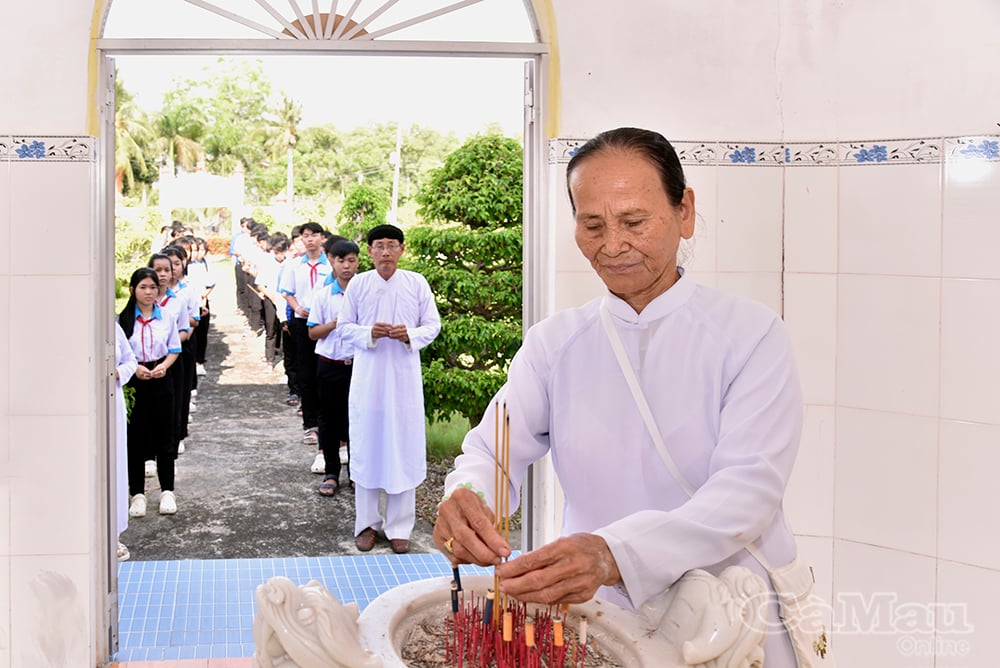 Followers of the Ngoc Minh parish organized a ceremony to offer incense in remembrance of the 137 brave soldiers who sacrificed their lives in the Giong Bom battle in 1946.
According to eyewitness accounts, in early 1946, when the French colonialists returned to invade our country, in response to the Southern resistance movement, Mr. Cao Trieu Phat, acting head of Hiep Thien Dai, Minh Chon Dao Church, decided to build a base in Giong Bom hamlet. This was where more than 4,000 religious leaders and followers lived around Ngoc Minh Holy See .
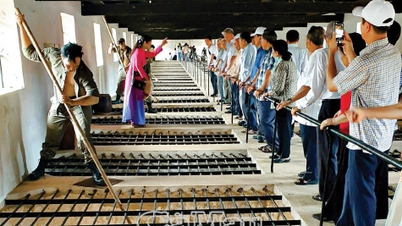
The Holy See was fortified as a resistance stronghold, equipped with all the necessary facilities for combat, such as a weapons forging workshop, a military training ground, and underground shelters for revolutionary cadres. At the same time, he mobilized and recruited healthy, patriotic young people from the faith to form the "white-clad" resistance army.
 The students returned to their roots, offering incense to commemorate the "white-uniformed" soldiers who sacrificed their lives in the Battle of Giồng Bốm.
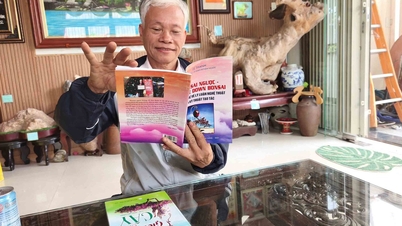
Mr. Tran Van Chua, Chief Administrator of Ngoc Minh Religious Community (Phong Thanh commune), recounted the history: “Faced with the enemy's sweep into Giong Bom, the Cao Dai Minh Chon Dao Church launched an uprising, gathering followers to unite and stand up against the oppression and exploitation of the invading colonialists. At that time, even though they had never held a gun, the followers were determined to fight a life-or-death battle against the enemy. They all shared the same will: to sacrifice themselves rather than be enslaved.”
Thousands of devotees from Bac Lieu, Ca Mau , and many other localities were called to gather at the Ngoc Minh Holy See. At that time, the village of Giong Bom was bustling with activity, filled with voices and laughter, mingled with the sounds of hoes and shovels digging trenches, hammers forging, and the sounds of martial arts training from the resistance fighters.
Under the command of Cao Trieu Phat, the force was organized into 18 platoots, undertaking tasks such as combat, patrolling, guarding, weapons forging, and logistical support.
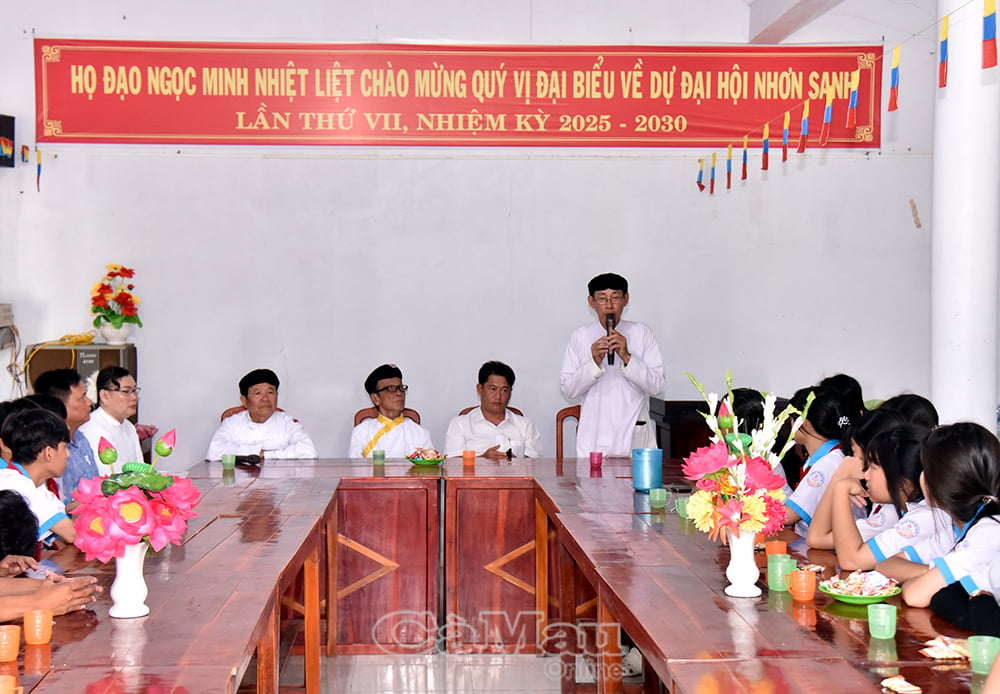 The students listened as the Executive Board of Ngoc Minh Parish recounted the Battle of Giong Bom, which took place 80 years ago.
On April 6th, 12th, and 13th, 1946, the French colonial forces launched successive attacks on Giong Bom, but were met with fierce resistance from the "white-shirt" militia. Thanks to their thorough preparation and proactive spirit, the militia repeatedly repelled the enemy's offensives.
By April 15th, after hours of fierce fighting, with their weapons depleted, the followers of Cao Dai Minh Chon Dao still used rudimentary weapons such as crowbars, swords, spears, and sticks to fight to the end. The battle ended tragically with the Ngoc Minh Holy See and the Giong Bom hamlet severely damaged.
Many years have passed, but the people of Phong Thanh commune still remember the image of the followers falling one by one while climbing tall trees to hang their religious flags amidst enemy gunfire. That image has become a typical symbol of the unwavering will, indomitable spirit, and patriotism of the Cao Dai Minh Chon Dao followers.
Huu Tho
Source: https://baocamau.vn/sang-ngoi-tinh-than-cuu-nuoc-la-cuu-dao--a128182.html
![[Image] Hanoi's urban life under the challenge of a "scorching hot" environment](https://vphoto.vietnam.vn/thumb/1200x675/vietnam/resource/IMAGE/2026/05/25/1779706979265_nang-nong-t5-2026-minh-duy-7-4636-jpg.webp)


![[Image] Close-up view of the interchange connecting the two expressways and Long Thanh Airport.](https://vphoto.vietnam.vn/thumb/1200x675/vietnam/resource/IMAGE/2026/05/25/1779703378210_ndo_br_z7863716673926-224453a31600126cce10622af6290afd-4549-jpg.webp)

































































Comment (0)