

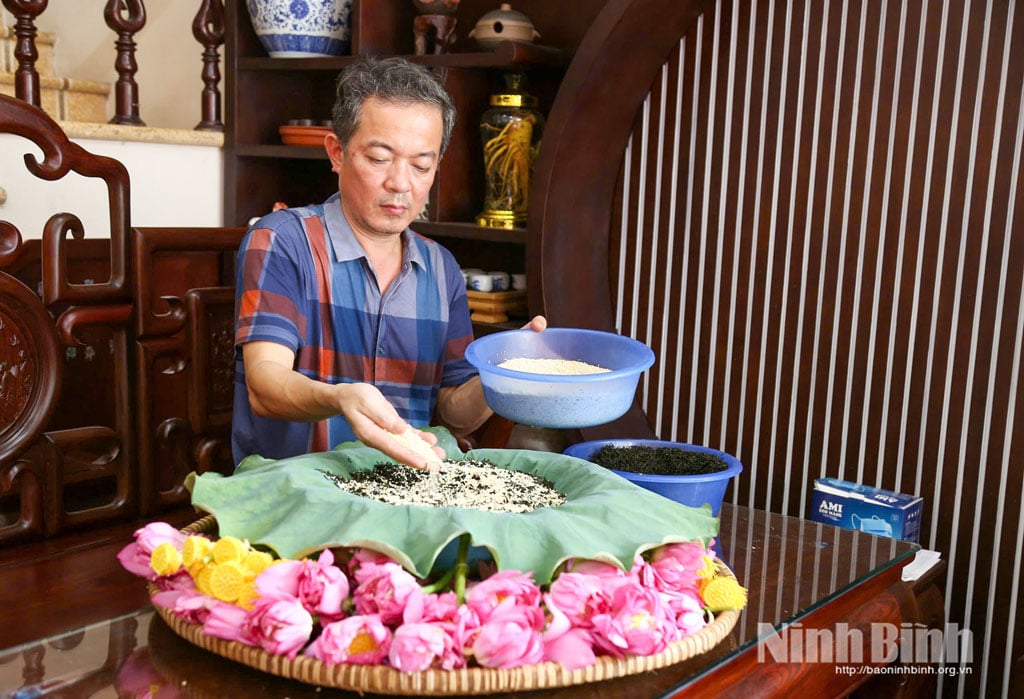
Known for its famous An Truong An lotus tea, every year, around the end of May and beginning of June, Nguyen Thanh Lotus Tea establishment in Duy Ha ward gets busy with the new lotus harvest.
Mr. Nguyen Thanh, owner of Nguyen Thanh Lotus Tea Production Facility, is the grandson of Mr. Truong An, determined to continue his grandfather's legacy of preserving and developing the family's lotus-infused tea making tradition. For many years, to ensure a stable supply of raw materials, he has partnered with households in Dong Van ward to cultivate over 20 hectares of lotus plants for lotus tea infusion. On average, his facility produces and supplies approximately 3,000 kg of lotus-infused tea annually. Mr. Nguyen Thanh, the owner, shared: "Customers know our local tea products primarily from the traditional lotus fragrance. Many people, after trying our lotus-infused tea once, regularly purchase and use our products. Over 60% of our lotus tea production is sold during the Lunar New Year."

Similar to Nguyen Thanh Lotus Tea Production Facility, Hoang Tra Cooperative in Liem Tuyen ward also chooses lotus-infused tea as one of its main product lines. To ensure a sufficient supply of lotus for tea infusion, the cooperative has partnered with local farmers to cultivate 25 hectares of lotus in Tam Chuc, Dong Van, and Phu Van wards. The total amount of tea used for lotus infusion is nearly 3,000 kg, all selected from safe, high-quality tea grown in Thai Nguyen . Each year, the cooperative sells 50,000 lotus flowers for tea infusion and nearly 2 tons of tea infused with lotus rice to the market. Hoang Tra Cooperative has invested in a modern freeze-drying (cold drying) system, ensuring the quality and appearance of the product, especially the lotus-infused tea, which retains the lotus flower's natural color.
Mr. Tran Dang Nhan, Director of Hoang Tra Cooperative, said: Lotus-infused tea is a characteristic product of Ninh Binh province, associated with the traditional lotus cultivation industry. Currently, consumer demand is increasing, and lotus-infused tea products are being produced in a more diverse range, with greater emphasis on quality, design, and packaging. The cooperative chose to develop this product line to exploit the value of the lotus plant of our homeland.
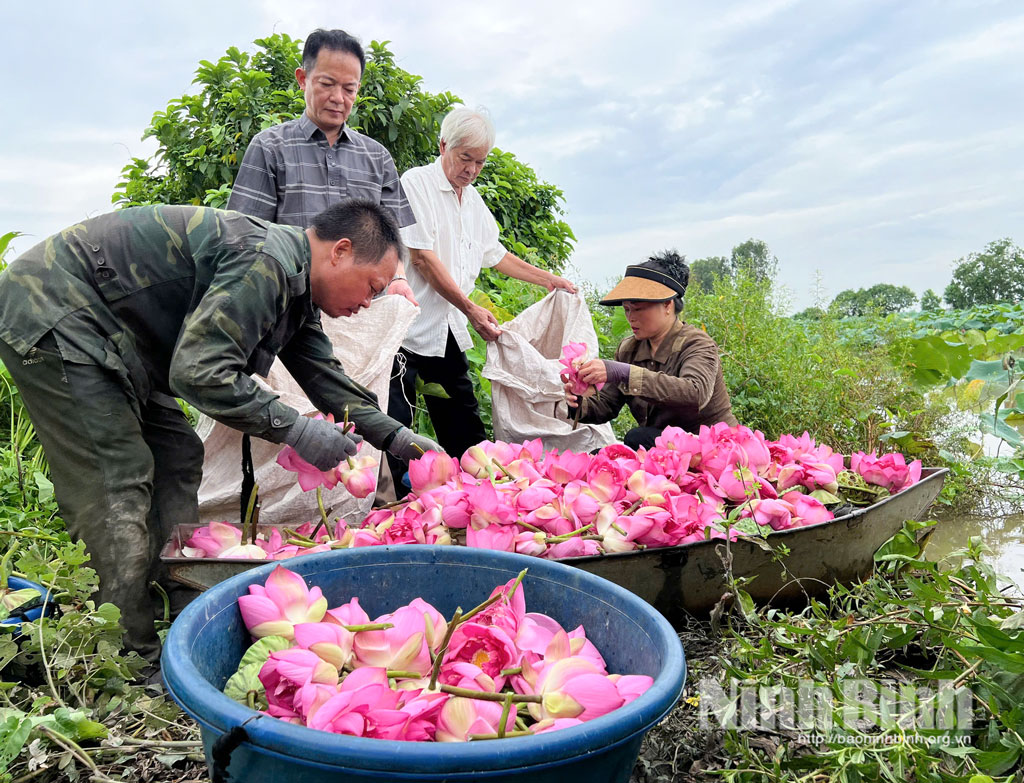
The province's lotus-infused tea products are now widely available in many provinces and cities nationwide, most notably in Hanoi. The exploitation of lotus flowers for tea production yields high economic returns. With the area dedicated to lotus cultivation, farmers earn a profit of approximately 60-80 million VND per hectare from selling the flowers to lotus tea processing facilities, which is twice as high as traditional lotus cultivation for seeds. In particular, tea infused with lotus fragrance significantly increases its value. Specifically, 1 kg of lotus-infused tea (infused with lotus seeds) sells for at least 1.3 million VND, with the lotus ingredient accounting for 60% of its value. Lotus-infused tea fetches 3-4 times the price of plain tea; typically, a single lotus flower used for tea sells for 60-80 thousand VND.
Currently, several lotus-infused tea products in the province have been recognized as OCOP (One Commune One Product Program), achieving a 3-star rating, including lotus-infused tea and lotus flower tea. In addition, some other lotus-based products have also been recognized as OCOP, such as lotus heart tea and lotus leaf tea.
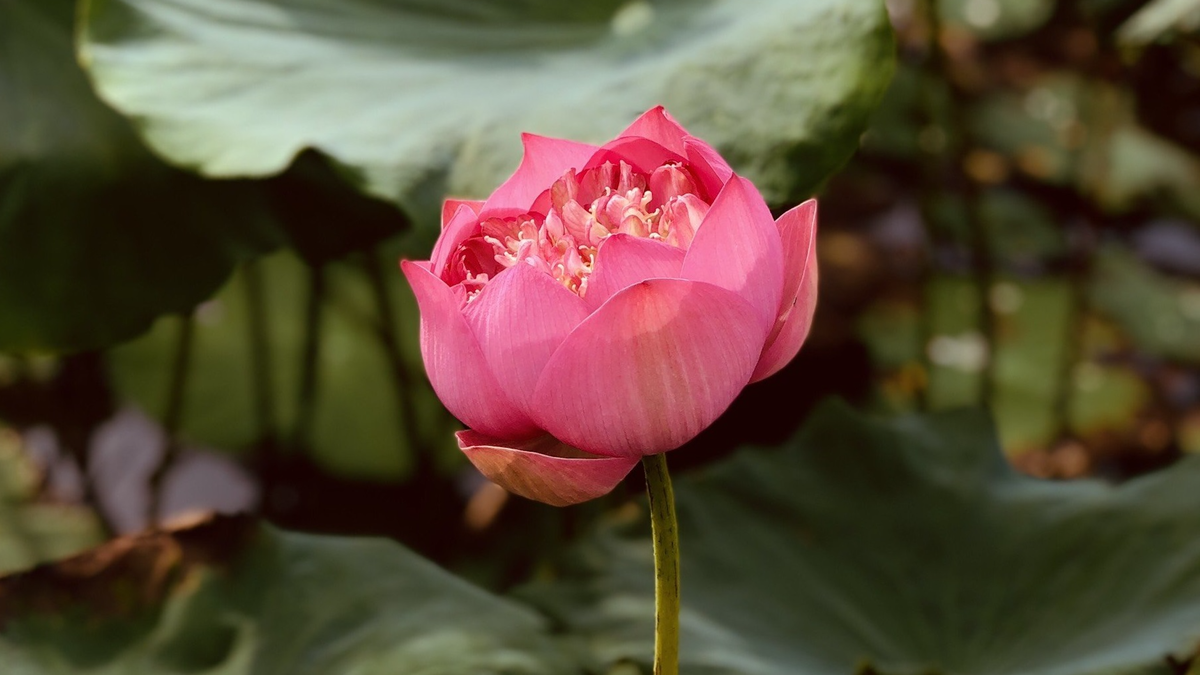
Many localities in the province have low-lying, flooded areas, and there is still a considerable amount of land suitable for developing lotus cultivation for tea infusion. Currently, along with expanding the area for growing lotus raw materials, lotus-infused tea production facilities are also continuing to invest in technology and improve product designs. For example, Hoang Tra Cooperative has invested in a freeze-drying system worth over 10 billion VND. Nguyen Thanh Lotus-Infused Tea facility is improving packaging and designs to suit the quality and tastes of consumers… It is known that to encourage localities to develop lotus cultivation, the Agricultural Extension Center (Department of Agriculture and Environment) is building a lotus cultivation model in Quy Nhat commune with an area of 40 hectares, including a portion of the area for growing hundred-petaled lotus for lotus tea infusion. According to Mr. Nguyen Van Thong, Deputy Director of the Agricultural Extension Center: The lotus plant truly thrives in low-lying areas. This is a plant that can be exploited to the maximum extent, from the flowers, seeds, stamens, leaves, to the tubers and rhizomes. The center is implementing a new lotus cultivation model and is ready to provide technical guidance to lotus growers who need it to improve product yield. At the same time, it is ready to act as a "bridge" to create links between producers and processing facilities, including those producing lotus-infused tea.
Lotus-infused tea is gradually developing its strengths and effectively exploiting the lotus growing areas in the province. In particular, the potential for converting low-lying, less productive rice-growing areas to lotus cultivation, including the hundred-petaled lotus used for tea infusion, is evident due to its ability to create a value chain. This contributes to increasing the value of the production area and the unique lotus products of the province.
Source: https://ninhbinh.gov.vn/kinh-te/sen-uop-tra-hieu-qua-kinh-te-tren-vung-dat-trung-381222




![[Photo] First session of the 14th Congress of the Vietnam Trade Union](https://vphoto.vietnam.vn/thumb/1200x675/vietnam/resource/IMAGE/2026/06/03/1780465947883_ndo_br_img-3852-jpg.webp)




































































Comment (0)