


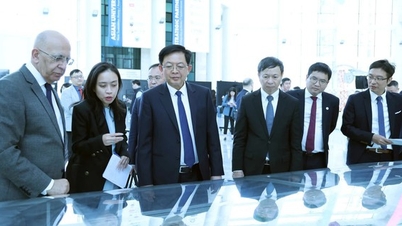
The State Bank of Vietnam has issued a series of new regulations on customer verification and account management to enhance the security of digital payments - Photo: QUANG DINH
In addition to fraud prevention measures, regulations on anti-money laundering have also been tightened. According to the State Bank of Vietnam (SBV), the system's operating mechanism allows participating members to proactively report suspicious accounts as soon as they are detected and share data with other units in the network.
Tighten identity verification requirements when opening an account.
Speaking to the press, Mr. Pham Anh Tuan, Director of the Payment Department of the State Bank of Vietnam, said that the new regulations on opening accounts, issuing cards and e-wallets have tightened customer identification, enhanced biometric verification through chip-embedded citizen identity cards and the VNeID application to accurately authenticate users.
These regulations are seen as a "shield" protecting customers from criminals exploiting "ghost" business accounts, Deepfake technology, and malware to commit fraud. Accordingly, at least once every three months, service providers must update their applications to the latest version and implement measures to prevent transactions when they detect a risk of being exploited by cybercriminals.
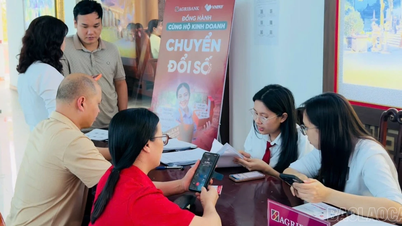
If serious vulnerabilities are detected, they must be promptly rectified and control measures implemented to protect customers. The new regulations also require business households and enterprises to verify biometric information of their representatives to prevent the misuse of organizational accounts for fraudulent activities.
Mobile banking applications must be able to detect and warn of risk signs, and automatically stop or exit the application in certain unusual circumstances to limit the risk of asset misappropriation.
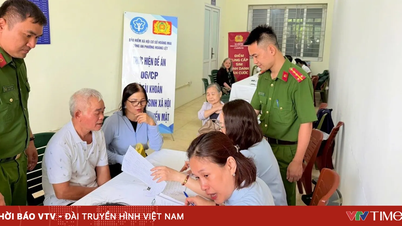
The State Bank of Vietnam also collaborates with the Ministry of Public Security to utilize population data, chip-embedded citizen identification cards, and the VNeID application to clean up customer data and prevent impersonation and the use of forged documents to open accounts for illegal purposes.
As of April 24th, over 156.6 million customer records had been verified using biometric data. The Vietnam National Credit Information Center also verified approximately 57 million records, cleaning nearly 44.5 million customer files.
Credit institutions and payment intermediaries have also integrated biometric matching features into their mobile banking applications to enhance customer identification.
On centralized data platforms, credit institutions can instantly decide to block transactions or require additional authentication and identification before allowing customers to conduct online transactions. This is considered a crucial layer of defense in the context of increasingly sophisticated financial fraud schemes.
Increase the level of risk warning for trading.
To ensure a consistent user experience, the State Bank of Vietnam also requires units to synchronously implement alert services across all transaction channels, including mobile banking, online banking, over-the-counter transactions, and ATMs.
In the coming period, the regulatory agency will continue to expand data collection on accounts, e-wallets, bank cards, and payment acceptance units suspected of fraud, while upgrading the technical infrastructure to provide additional services for querying the status of suspicious accounts to credit institutions and payment intermediaries that require it.
Furthermore, according to Circular 27/2025, transactions of 500 million VND or more are subject to monitoring and reporting. Therefore, banks may conduct additional checks, especially for unusual transactions. In some cases, this results in longer processing times compared to smaller amounts.
Along with increased monitoring of large-value transactions, many banks are also proactively implementing early warning tools to mitigate the risk of customers transferring money to accounts suspected of fraud.
Agribank is one of the pioneering banks to implement this function, applying it to transactions conducted at the counter. The system will automatically analyze the recipient's account information and classify the risk level into three levels: high risk, medium risk, and unverified.
In case any unusual activity is detected, the teller will alert the customer before completing the money transfer order. According to Agribank, after the implementation period, the system has recorded hundreds of thousands of transaction alerts.
Similarly, Vietcombank has also launched the VCB Alert system on its mobile app and at its branches to warn customers about suspicious accounts suspected of fraud. Accordingly, when customers make transactions, the system will automatically cross-reference and analyze the recipient account information.
A warning will be issued if the recipient's information does not match the national population database, or if they are on the bank's list of suspected high-risk transactions... This feature is pre-installed on the VCB Digibank application and has promptly warned hundreds of thousands of money transfer transactions showing signs of risk.

Many banks and e-wallets implement mechanisms to warn customers about the reliability of their receiving accounts - Photo: QUANG DINH
Early warning of unusual transactions
To ensure transactions are conducted with the rightful owner, Vietcombank announced that it has implemented biometric authentication via chip-embedded citizen ID cards, integrated VNeID, remote digital signatures, and advanced authentication solutions such as SoftOTP. By the end of 2025, the bank aims to have collected biometric data for over 15 million customers.
Many other banks, such as BIDV and VPBank, are also implementing risk warning mechanisms on their mobile banking platforms. If a risk warning is received, users should stop the transaction and verify the recipient's information through an independent communication channel, not through the link or phone number provided directly by the transaction partner during the ongoing conversation.
VPBank has also warned that many people, due to a lack of legal knowledge, have been renting, lending, or buying and selling bank accounts. Scammers often contact users via social media, text messages, or phone calls, offering to sell them accounts to receive money from online scams, gambling, or betting.
According to VPBank, this is a violation of the law. Account holders may face administrative penalties of up to 200 million VND or criminal prosecution depending on the nature and severity of the violation. The bank advises customers to absolutely not rent, lend, or sell their accounts in any form.
Recently, MoMo also announced that when transferring money via MoMo, customers will receive a warning about the reliability of the receiving account with three statuses: green: safe - no risk detected in the account; yellow: need to consider - potential risk in the account; red: dangerous - account at risk of fraud.
By combining reliable data sources, user reports, and artificial intelligence technology, MoMo can provide early warnings, helping users proactively avoid risks in each transaction. MoMo's security system will also automatically analyze and detect unusual transactions early.
Upon identifying a risk, MoMo will temporarily block the transaction, send a clear warning, and guide the customer to call a safe hotline. When the customer calls, the system will share typical scam scenarios, helping the customer better understand and decide whether or not to continue the transaction.
The business's bank account must also be in the owner's name.
According to Circular No. 25/2025 of the State Bank of Vietnam, from March 1st, the bank account of a business household must match the name on its business registration certificate.
Accordingly, business households can no longer use personal accounts or accounts belonging to relatives to receive money from the sale of goods or provision of services as before. All cash inflows and outflows must be conducted through accounts registered in the business household's name.
Stop using nicknames for payment accounts.
Some banks allow customers to use nicknames alongside their official account numbers (original accounts), helping to personalize customer account information. However, this has led to several problems during transactions, such as easy confusion, difficulty in identifying the recipient, and the risk of transferring money to the wrong person.
From April 1st, according to Circular No. 30/2025 of the State Bank of Vietnam, the account name of individual customers must match the information on their citizen identification card or national identity card, in order to enhance security and safety for all transactions. Therefore, banks will have to discontinue the service allowing customers to set nicknames for their accounts.
Source: https://tuoitre.vn/siet-xac-thuc-ngan-tai-khoan-ma-20260528232559092.htm





![[Image] Nearly 125,000 Hanoi students completed the Literature exam for the 10th grade entrance exam.](https://vphoto.vietnam.vn/thumb/1200x675/vietnam/resource/IMAGE/2026/05/30/1780117233041_ndo_br_thiet-ke-chua-co-ten-2-png.webp)




















![[Photo] Admire the coral "masterpiece" amidst the million-year-old heritage of Dak Lak province.](https://vphoto.vietnam.vn/thumb/1200x675/vietnam/resource/IMAGE/2026/05/30/1780107638639_y25-jpg.webp)



































































Comment (0)