

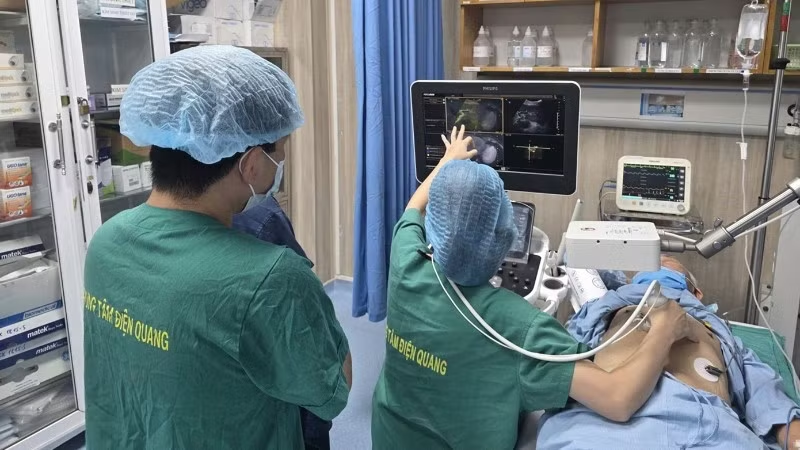
Using echocardiography, a difficult liver tumor case was successfully treated.
A 72-year-old male patient was referred for treatment of recurrent liver cancer at Bach Mai Hospital. The MRI scan clearly showed two lesions; however, when switched to ultrasound – the primary method for tumor ablation – the images were blurry and difficult to identify.
According to experts, ultrasound is a popular method due to its advantages of safety, no radiation exposure, reasonable cost, and the ability to observe in real time. However, with small lesions, low contrast, or those located in hard-to-reach areas, accurate identification on ultrasound is not simple.
In many cases, doctors have to rely on memory and compare with CT or MRI images to estimate the location of the lesion during intervention. Meanwhile, organs such as the liver and kidneys are constantly moving with breathing, increasing the risk of misplacement, leading to inaccurate biopsies or incomplete tumor ablation.
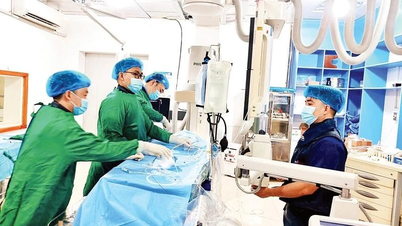
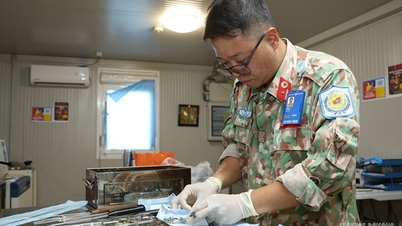
To address this problem, the Institute of Diagnostic and Interventional Radiology, Bach Mai Hospital, has implemented Real-time Ultrasound Fusion Imaging – a technology that combines current ultrasound images with previously taken CT or MRI data.
Through an electromagnetic positioning system, the ultrasound probe's position is precisely synchronized with the CT/MRI images. On the same screen, the doctor can simultaneously observe real-time ultrasound images and detailed data from other diagnostic imaging methods.
As a result, lesions that are difficult to observe with conventional ultrasound can be identified more clearly.
In the case of the 72-year-old male patient mentioned above, the doctors accurately identified the location of the two liver tumors and successfully performed radiofrequency ablation (RFA), completely covering the lesions in the treated area.
Enhance the ability to detect lesions.
Beyond its applications in liver cancer, stereotactic ultrasound is also highly effective in many other fields such as prostate cancer, kidney tumors, and musculoskeletal lesions that are difficult to identify. In particular, in prostate biopsy, combining MRI imaging helps accurately pinpoint the suspected area, improving the ability to detect disease in cases where lesions have low contrast on ultrasound.
For small tumors or those located near blood vessels or nerves, this technique also helps doctors plan a safer needle insertion path, minimizing damage to surrounding healthy structures.
Associate Professor, Dr. Vu Dang Luu, Director of the Institute of Diagnostic and Interventional Radiology, Bach Mai Hospital, said that the benefits of this technique are not only for doctors but also clearly felt by patients thanks to the less invasive procedure, reduced pain, fewer complications, shorter hospital stay, and reduced need for re-intervention. At the same time, patients also reduce radiation exposure by taking advantage of the benefits of ultrasound.
The implementation at Bach Mai Hospital has shown many positive results. In 20 cases of liver tumor ablation using RFA with echocardiography, the success rate reached 100%, with no complications recorded. Similarly, 14 cases of prostate biopsy using this technique were also technically successful and ensured patient safety.
Associate Professor, Dr. Vu Dang Luu, Director of the Institute of Diagnostic and Interventional Radiology, assessed that the "real-time stereotactic ultrasound" technique is a significant step forward in improving the accuracy of interventional procedures, especially for lesions that are difficult to observe with conventional ultrasound. The technique helps to accurately guide the lesion, increasing treatment effectiveness and providing comprehensive control of the lesion before, during, and after intervention.
In the modern medical trend toward personalized treatment, technologies like fusion imaging not only help doctors "see more clearly," but also ensure patients receive the right treatment from the start. And sometimes, even a tiny error, measured in millimeters, can make a huge difference in the journey to reclaiming life.
Source: https://nhandan.vn/sieu-am-hoa-hinh-thoi-gian-thuc-mat-than-trong-can-thiep-ung-thu-post960837.html

![[Photo] Ba Lang An Lighthouse - the "eye of the sea" amidst the "rock museum" of Quang Ngai province.](https://vphoto.vietnam.vn/thumb/1200x675/vietnam/resource/IMAGE/2026/05/29/1780038698840_anh-man-hinh-2026-05-29-luc-14-10-42.png)
![[Image] Pleasant weather helps students enter the 10th grade entrance exam with confidence.](https://vphoto.vietnam.vn/thumb/1200x675/vietnam/resource/IMAGE/2026/05/29/1780034401612_ngay-1-thi-lop-10-minh-duy-8-5009-jpg.webp)















































































Comment (0)